Music Generation with Magenta - Using Machine Learning in the Arts
Explore machine learning for music generation using Magenta. Learn about neural networks, train models on your style, and create new rhythms, melodies, and audio clips.
Faceswap - Developing a Platform for Practical Deepfakes
Explore AI-powered Deepfakes: technology, applications, ethics, and future. Learn about face detection, alignment, recognition, and image reconstruction using Python, Keras, and TensorFlow.
TensorFlow & Deep Learning, without a PhD
Comprehensive introduction to TensorFlow and deep learning concepts, covering neural networks, machine learning techniques, and practical applications without requiring advanced expertise.

Deep Stupidity - What Neural Networks Can & Cannot Do
Explores limitations of neural networks and AI, challenging assumptions about machine intelligence and discussing philosophical implications for consciousness and cognition.

The Narrated Transformer Language Model
Visual introduction to the Transformer architecture, explaining its components and applications in AI/ML. Accessible to various experience levels, covering tokenization, embedding, and output projection.
Neural Structured Learning in TensorFlow
Explore TensorFlow's Neural Structured Learning framework for training robust neural networks with structured signals, applicable to vision, language understanding, and general prediction tasks.
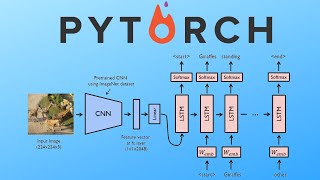
Pytorch Image Captioning Tutorial
Learn to build an image captioning system from scratch using PyTorch, covering CNN and RNN implementation, training setup, and evaluation on the Flickr8k dataset.

Introducing PyTorch 1.0 - A Research-Focused, Production-Ready Deep Learning Framework
Explore PyTorch 1.0, a powerful deep learning framework that bridges research and production, accelerating AI development with innovative features and tools.
Two Examples of Thermodynamic Limits in Neuroscience
Explore thermodynamic limits in neuroscience through two examples, gaining insights into stochastic analysis and numerical probability in mathematical biology.
Learning Operators - Lecture 3
Explore learning operators for scientific machine learning, covering numerical experiments, generalization, and applications in inverse problems and imaging.
Embeddings - What They Are and Why They Matter
Discover how embeddings work in machine learning, from basic concepts to practical applications in semantic search and content relationships, with hands-on examples and implementation techniques.
Troubleshooting Unstructured Data with Embeddings
Explore embedding techniques for troubleshooting unstructured data models, gaining insights into internal representations and improving ML workflows.
Tracing the Path to Self-adapting AI Agents
Discover how Trace, a groundbreaking AutoDiff-like framework, enables end-to-end training of AI workflows using general feedback, revolutionizing how AI agents learn and adapt through Python-based implementation.
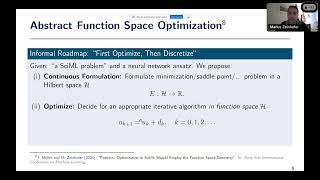
Infinite Dimensional Optimization for Scientific Machine Learning
Explore advanced optimization techniques in scientific machine learning, focusing on infinite-dimensional perspectives and the "first optimize, then discretize" paradigm for neural network applications.
Spatial Modeling of Single-Cell Data Using Deep Learning
Explore deep learning approaches for spatial modeling of single-cell data, focusing on Hi-C reads imputation and transcriptomic data prediction through graph-based methodologies.
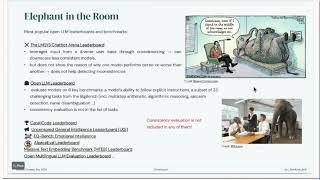
The Dual Nature of Consistency in Foundation Models - Challenges and Opportunities
Explore the complexities of consistency in Large Language Models, including measurement methods, mitigation strategies, and leveraging opportunities for improved model reliability.
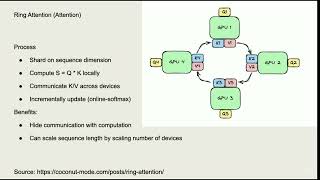
Unraveling Long Context: Existing Methods, Challenges, and Future Directions
Explore the complexities of scaling transformer models for longer context, examining current methodologies, implementation hurdles, and emerging solutions in AI development.
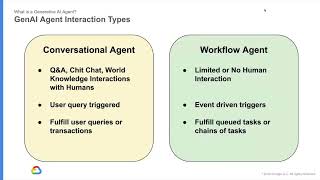
Agentic AI: Unlocking Emergent Behavior in LLMs for Adaptive Workflow Automation
Explore emergent AI capabilities and learn how agents combine LLMs with reasoning loops and tools to create adaptive, self-directing systems for advanced workflow automation.

Interpretable and Data-Efficient Learning for Autonomous Systems
Explore cutting-edge approaches to autonomous systems through interpretable learning methods and data-efficient techniques, focusing on the intersection of symbolic AI and deep learning.
Helping the PyTorch Community Improve the Security Posture of this Popular AI Framework
Discover how to enhance PyTorch's security through OpenSSF Best Practices, dependency management, and proactive measures for safer AI framework implementation and neural network development.
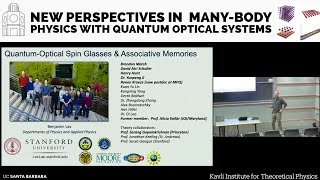
Quantum-Optical Spin Glasses and Associative Memories
Explore quantum interactions between atoms and light, focusing on spin glasses and associative memories in quantum optical systems through advanced experimental platforms and theoretical frameworks.