
Installing Flux in ComfyUI - A Step-by-Step Guide
Learn how to integrate and configure Flux within ComfyUI, including installation steps, workflow setup, and essential resources for enhanced AI image generation capabilities.
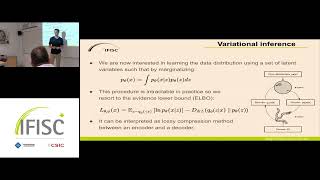
Compressed Representations in Deep Learning: From Algorithmic Information to Autoencoders and Neural Networks
Dive into compressed representations and algorithmic information theory, exploring deep learning concepts and autoencoder applications in modern neural networks.

AI with JavaScript: Building Machine Learning Applications in the Browser
Explore browser-based AI development using TensorFlow.js and Transformers.js, covering practical implementations, benefits, and challenges of running machine learning models directly in web browsers.
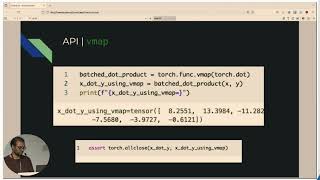
Functional Transforms in PyTorch Using Torch.func
Master functional transforms in PyTorch with torch.func module, covering per-sample-gradients, function vectorization, and model ensembles. Learn practical applications and avoid common pitfalls.
Spectral Analysis of LoRA vs Full Fine-Tuning in Language Models
Delve into the technical comparison between LoRA and full fine-tuning methods for language models, exploring their structural differences, spectral properties, and impact on model performance.

Understanding Task Vectors in Vision-Language Models - Cross-Modal Representations
Explore how Vision-Language Models create task vectors - internal representations enabling cross-modal performance through text and images, revolutionizing AI's ability to understand and execute diverse tasks.
Layer Increasing Network Scaling (LiNeS) - Preventing Catastrophic Forgetting in Language Models
Explore LiNeS, a novel post-training layer scaling technique that prevents catastrophic forgetting in large language models while enhancing multi-task performance and model merging capabilities.

Detail Daemon - Adding Fine Details to ComfyUI Generations
Master ComfyUI's Detail Daemon nodes to enhance image generation with intricate details and refined textures, focusing on skin details and subtle features through 4 specialized nodes.

Stable Diffusion 3.5 Medium - A Review of the New Text-to-Image AI Model
Explore Stable Diffusion 3.5 Medium's capabilities, comparing its performance against SDXL and other models while learning about its advantages for users with lower-end GPUs.
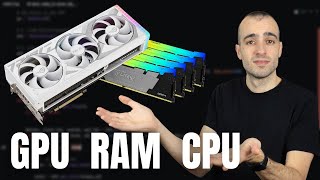
Perfect PC for AI, Object Detection and LLMs - Complete Guide
Learn how to build the optimal PC setup for AI development, focusing on computer vision, object detection, and large language model implementation.
Neuroscience and AI - What Artificial Intelligence Teaches Us About the Brain and Vice Versa
Explore the fascinating intersection of neuroscience and AI with Stanford expert Surya Ganguli, examining how modern AI systems inform our understanding of biological intelligence and brain function.

Samba: Simple Hybrid State Space Models for Language Modeling
Dive into the mechanics of Samba, a hybrid state space model built on Mamba that enables efficient unlimited context language modeling for advanced AI applications.
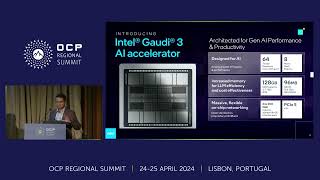
Scaling Systems for Generative AI - Building and Deploying Large Language Models
Discover key strategies for efficiently scaling and deploying generative AI models and large language models across distributed systems using Intel's advanced technologies.
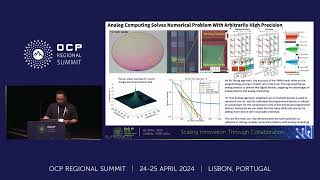
Analog In-Memory Computing with Multilevel Memristive Devices for High Performance Computing
Discover how multilevel memristive devices revolutionize computing by enabling analog in-memory processing, boosting throughput and energy efficiency for deep learning applications and high-performance computing.

Designing Data Centers for Tomorrow's AI Workloads - GPU Architecture and Rack-Scale Solutions
Discover how NVIDIA's GB200 NVL72 architecture tackles power, cooling, and networking challenges for trillion-parameter AI workloads, revolutionizing data center design for next-gen computing.
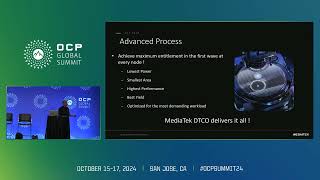
Navigating the AI ASIC Frontier: Trends, Challenges, and Technological Breakthroughs
Explore cutting-edge AI hardware developments and silicon solutions, focusing on data center innovations, technological constraints, and future advancements in AI training infrastructure.
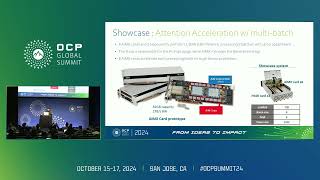
LLM Service Revolution Through Memory Computing Fusion Technology - From Datacenter to On-Device AI
Discover how SK Hynix's AiM technology revolutionizes LLM services through processing-in-memory solutions, offering enhanced efficiency and reduced costs for both datacenter and device-level AI applications.
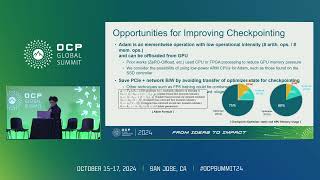
Checkpoint Offloading SSD - Enhancing Performance and Scalability in LLM Training
Discover how checkpoint offloading SSD technology optimizes LLM training by reducing GPU memory usage and improving data movement efficiency between storage components.
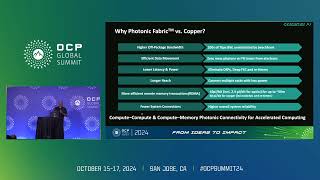
Photonic Fabric for AI Interconnect
Explore cutting-edge photonic fabric technology and its transformative applications in AI interconnect systems, focusing on advanced networking solutions for artificial intelligence.
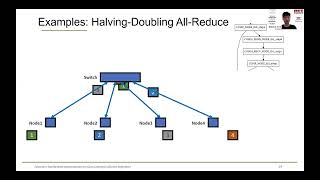
Towards a Standardized Representation for Deep Learning Collective Algorithms
Explore standardized approaches for representing collective algorithms in deep learning, focusing on optimization techniques and implementation strategies for enhanced performance.
Characterizing Communication in Distributed Parameter-Efficient Fine-Tuning for LLMs
Explore communication patterns and optimization techniques in distributed parameter-efficient fine-tuning for Large Language Models, focusing on network performance and scalability challenges.