
Fine-grained Textual Inversion Network for Zero-Shot Composed Image Retrieval - Multimedia 1
Explore advanced techniques for zero-shot composed image retrieval using fine-grained textual inversion networks in this cutting-edge research presentation.
Neural Passage Quality Estimation for Static Pruning - Efficiency for Search
Explore neural passage quality estimation for static pruning in search efficiency, enhancing information retrieval systems.

Unsupervised Cross-Domain Image Retrieval with Semantic-Attended Mixture-of-Experts
Explore unsupervised cross-domain image retrieval using semantic-attended mixture-of-experts, enhancing retrieval accuracy across diverse visual domains.
GUITAR: Gradient Pruning toward Fast Neural Ranking - Efficiency for Search
Explore gradient pruning techniques for optimizing neural ranking models, enhancing search efficiency and performance.

Training Llama 2 in Julia - Scaling Large Language Models
Explore scaling techniques for training large neural networks like Llama2 using Julia, including multi-GPU parallelization and fine-tuning methods for efficient model adaptation.
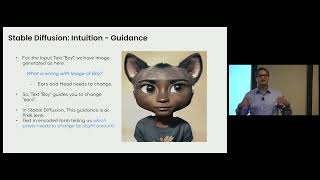
Dreambooth - Stable Diffusion for Custom Images
Explore stable diffusion techniques for creating custom images using Dreambooth. Learn color manipulation, texture enhancement, and image blending to transform ordinary photos into extraordinary art.
Leaner, Greener and Faster PyTorch Inference with Quantization
Explore PyTorch quantization techniques to optimize neural networks, reducing size and improving speed without sacrificing accuracy. Learn implementation strategies and real-world applications.

Deploying Efficient Data-Centric AI 100x Faster
Accelerate AI application development and deployment 100x using dedicated platforms, data labeling, pre-built models, and iterative design. Explore region classification and deep-trained object detection approaches.
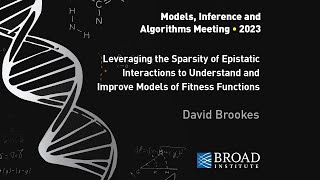
Sparsity, Epistasis, and Models of Fitness Functions - Leveraging Interactions in Protein Function Prediction
Explore sparsity in epistatic interactions to enhance fitness function modeling. Learn about Walsh-Hadamard transform, Graph Fourier transforms, and Epistatic Net for improved protein function prediction.
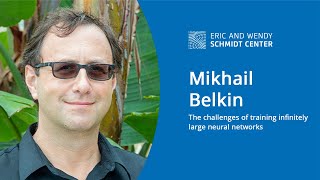
The Challenges of Training Infinitely Large Neural Networks
Explore challenges in training infinitely large neural networks with Mikhail Belkin. Gain insights into foundational advances in machine learning for biomedical applications.
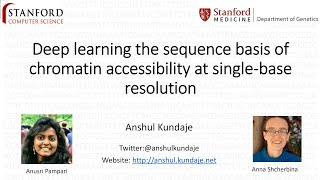
Deep Learning for Genomic Discovery
Explore deep learning techniques for genomic discovery, focusing on high-resolution assays, footprint shapes, and bias correction methods in neural networks.
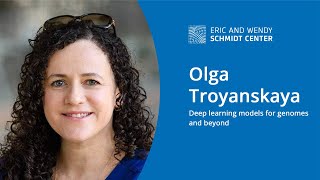
Deep Learning Models for Genomes and Beyond
Explore deep learning models for genomic analysis and their applications beyond, presented by Olga Troyanskaya in this Broad Institute colloquium on AI in biomedicine.
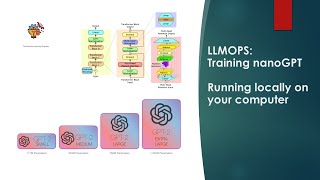
LLMOPS: Training a Small LLM (GPT-2) - Machine Learning and Data Science
Explore training a small LLM (GPT2) locally, understanding challenges and limitations of LLM development for individuals and small teams.

The Mathematics of Scaling Laws and Model Collapse in AI
Explore the mathematics behind AI scaling laws and model collapse, focusing on the shift from linear to flattened performance relationships in large language models.
The Price of Implicit Bias in Robust Machine Learning
Explore the impact of implicit bias on robust machine learning, examining challenges in neural network performance and generalization gaps in worst-case scenarios.
A Framework for Designing Non-Diagonal Adaptive Training Methods
Explore a framework for designing non-diagonal adaptive training methods in deep learning optimization, leveraging Fisher-Rao geometry and quasi-Newton approaches for large-scale neural networks.
Neural Network Scaling Limits
Explore neural network scaling limits and their impact on learning models, focusing on depth, width, and training data parameters in deep learning theory.
Re-thinking Transformers: Searching for Efficient Linear Layers over a Continuous Space
Explore efficient alternatives to dense linear layers in neural networks, examining structured matrices and their compute-optimal scaling laws for improved performance in large language models.

Building Generalist Robotics Policies from Scratch
Build a Generalist Robotics Policy from scratch, reimplementing the "Octo" model step-by-step. Learn to create, train, and evaluate large models for robotics using interaction data and transformer architecture.
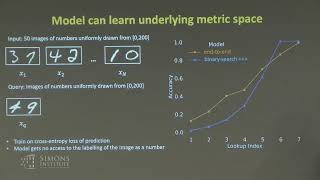
Using Algorithms to Understand Transformers and Using Transformers to Understand Algorithms
Explore algorithmic tools and optimization theory to uncover Transformer mechanisms for computational tasks, and discover how Transformers design data structures for tasks like nearest neighbor search.
Associative Memories as a Building Block in Transformers
Explore associative memories in Transformers, their role in storing knowledge, and how gradients and over-parameterization affect their learning and capacity.