Clifford Group Equivariant Neural Networks
Explore Clifford Group Equivariant Neural Networks for E(n)-equivariant network construction. Discover theoretical foundations, methodology, and applications in various dimensions and tasks.
Register Tiling for Unstructured Sparsity in Neural Network Inference
Explore a novel technique for optimizing sparse matrix multiplication in neural networks, improving performance for unstructured sparsity patterns in ML models on CPUs and edge devices.
Challenges and Opportunities for Sparse Compilers in Large Language Models
Explore challenges and opportunities for sparse compilers in large language models, focusing on advancements in compiler technology for AI applications.
Predicting Dynamic Properties of Heap Allocations using Neural Networks Trained on Static Code
Explore neural network models predicting heap allocation properties from static code, examining trade-offs, promising directions, and challenges in this innovative approach to memory management.

One Pixel Adversarial Attacks via Sketched Programs
Explore a novel approach for one-pixel adversarial attacks using program synthesis, achieving state-of-the-art success rates with fewer queries and transferable programs for neural network classifiers.
Falcon: A Scalable Analytical Cache Model
Explore a scalable analytical cache model for affine programs, improving performance prediction efficiency and enabling faster optimization decisions in large-scale software development.
ReLU Hull Approximation - Fast and Precise Convex Hull Over-Approximation for Neural Network Verification
Explore a fast, precise approach to over-approximating ReLU function convex hulls in neural network verification, improving efficiency and precision for large-scale networks.
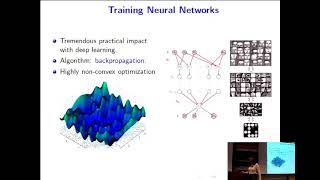
Guaranteed Training of Neural Networks Using Tensor Methods - 2015
Explore guaranteed neural network training using tensor methods. Learn about overcoming non-convexity, risk bounds, and combining unsupervised learning with supervised tasks.
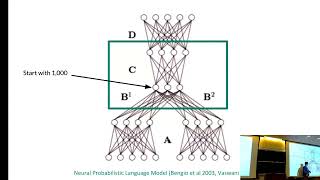
Learning Neural Network Hyperparameters for Machine Translation - 2019
Explore neural network hyperparameter optimization for machine translation, focusing on efficient methods to learn parameters during training without extensive grid searches.
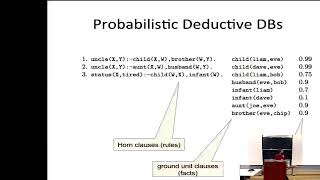
Deep Learning and Reasoning - 2018
Explore integrating logical reasoning with neural systems using TensorLog, a probabilistic first-order logic system for scalable symbolic reasoning and neural learning in AI tasks.
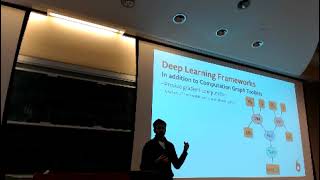
An Overview of Deep Learning Frameworks and Introduction to PyTorch
Explore deep learning frameworks, focusing on PyTorch. Learn about research workflows, data processing, and model building from Facebook AI researcher Soumith Chintala.
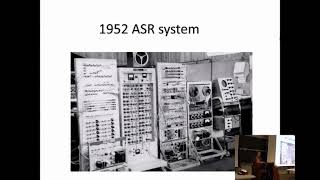
Neural Networks for Speech Recognition - 2013
Explore the evolution of neural networks in speech recognition, from early experiments to modern hybrid HMM/MLP approaches, with insights from a leading expert in the field.
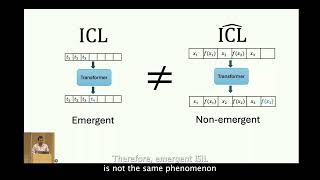
Do Pretrained Transformers Learn In-Context by Gradient Descent?
Explore the relationship between In-Context Learning and Gradient Descent in large language models, examining theoretical connections and empirical evidence from pre-trained transformers.
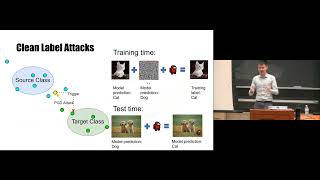
Clean Label Poisoning Attacks: From Classification to Speech Recognition
Explore poisoning attacks in speech recognition, from adversarial manipulations to innovative defenses. Uncover strategies, mechanisms, and future research in AI security.
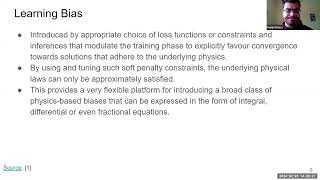
Intersection of Physics and AI - Incorporating Physics into Data-Driven Computer Vision
Explore the fusion of physics and AI, covering applications in NLP, healthcare, and computer vision. Learn innovative approaches to incorporate physics into data-driven models.
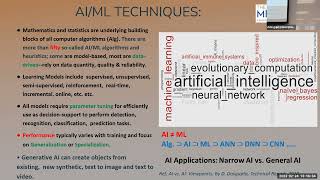
Adversarial AI/ML Issues and Defense Strategies
Explore adversarial AI/ML challenges and defense mechanisms with Dr. Dipankar Dasgupta, gaining insights into critical cybersecurity strategies for machine learning systems.
Deep Learning of Generative Models - 2014
Explore generative models in deep learning with Yoshua Bengio, covering motivations, applications, and fundamental challenges in AI and machine learning.
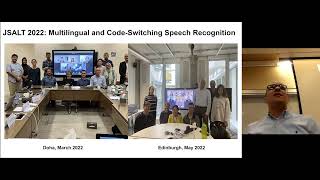
Multilingual and Code-Switching Speech Recognition
Explore multilingual and code-switching speech recognition techniques, enhancing your understanding of advanced language processing methods.
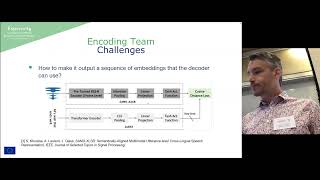
Multilingual Speech-to-Speech Translation for Under-Resourced Languages
Explore multilingual speech-to-speech translation techniques for under-resourced languages, focusing on encoding, decoding, and analysis strategies.
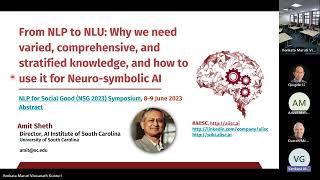
Neuro Symbolic AI
Explore Neuro Symbolic AI with Dr. Amit Sheth, delving into cutting-edge concepts and applications in this emerging field of artificial intelligence.
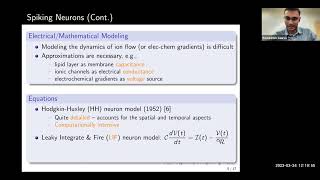
Neuromorphic Computing - An Overview
Explore neuromorphic computing principles and applications with expert Ramashish Gaurav, gaining insights into brain-inspired computational models and their potential impact on AI.