The Art of Leaderboarding in the Era of Extreme-Scale Neural Models
Explore how smaller models with knowledge and reasoning algorithms can outperform larger neural models in NLP tasks, challenging the notion that scale alone determines AI performance.
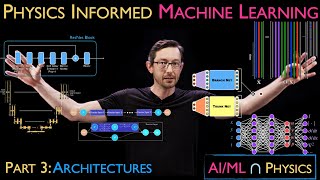
Designing an Architecture for Physics-Informed Machine Learning - Part 3
Explore various neural network architectures for physics-informed machine learning, including ResNets, UNets, and PINNs. Learn how to incorporate physical principles and symmetries into model design for improved performance.
High-Resolution Advanced Inpainting with ComfyUI - SDXL and IP-Adapter Integration
Explore advanced high-resolution inpainting techniques in ComfyUI, including SDXL integration, IP-Adapter usage, and workflow optimization for enhanced image editing and generation.
Feature Encoded and Multi-Resolution Physics-Informed Machine Learning for Musculoskeletal Digital Twins
Innovative machine learning approaches for musculoskeletal digital twin applications, focusing on parameter identification and motion prediction using surface electromyography signals.
Robust Learning of a Single Neuron - Bridging Computational Gaps Using Optimization
Explore robust learning of a single neuron with ReLU activation, focusing on optimization techniques to achieve near-optimal mean square loss in adversarial settings. Discover novel approaches for various activation functions.
A Perceptron Trio - Computational vs Statistical Gaps in Learning and Optimization
Explore perceptron algorithms in machine learning, focusing on computational and statistical aspects in optimization and learning theory.
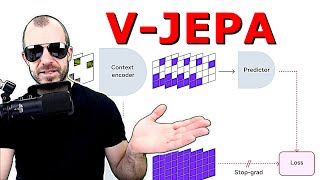
V-JEPA: Revisiting Feature Prediction for Learning Visual Representations from Video
Explore V-JEPA, an unsupervised learning method for video data using latent representation prediction. Learn about its architecture, concept, and performance in various visual tasks.

MIT Introduction to Deep Learning - Foundations of Deep Learning - Lecture 1
Comprehensive introduction to deep learning fundamentals, covering perceptrons, neural networks, loss functions, gradient descent, backpropagation, and regularization techniques for effective model training.

Deep Generative Modeling - MIT 6.S191 Lecture 4
Explore deep generative modeling, including autoencoders, VAEs, GANs, and recent advances. Learn about latent variables, training techniques, and applications in AI-driven content creation and data analysis.
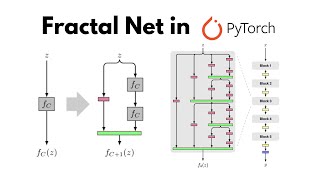
FractalNet Deep Neural Network Explained
Explore FractalNet, an alternative to residual networks, through paper analysis and PyTorch implementation. Learn about fractal expansion, drop path, and performance comparisons with ResNet.
The Challenges of Training Infinitely Large Neural Networks
Explore challenges in training infinitely large neural networks, including feature learning incorporation and scaling kernel machines to large datasets, with Professor Mikhail Belkin.

Neural Distributed Source Coding
Explores a framework for lossy distributed source coding using conditional VQ-VAE, achieving state-of-the-art performance on complex correlations and high-dimensional data without relying on hand-crafted source modeling.
Why a Forefather of AI Fears the Future
Renowned AI pioneer explores potential futures with advanced AI, discussing implications and concerns for humanity's trajectory in a world of increasingly sophisticated mechanical minds.
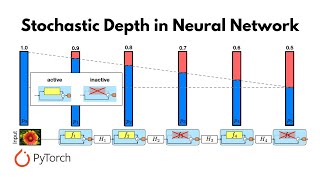
Stochastic Depth for Neural Networks - Implementation and Analysis
Explore stochastic depth in neural networks: a regularization method for residual networks that enhances training speed and test performance. Includes methodology explanation and PyTorch implementation.

Creating Keras 3 - An Interview with François Chollet
Explore Keras 3 creation, AI research, and AGI with François Chollet. Gain insights on intelligence, machine learning advancements, and the future of AI in this engaging discussion.
Neural Networks - Lecture 1
Comprehensive introduction to neural networks, covering fundamental concepts, architectures, and applications in machine learning and artificial intelligence.
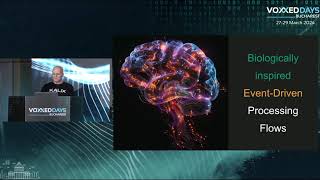
AI is Coming - Now What? Architecting the Future of Software
Explore an architecture paradigm for resilient, self-optimizing software that adapts perpetually. Learn to view software as adaptive living systems and implement strategic patterns for autonomous, self-learning capabilities.
GPT-4 Coding Skills: Real-time Voice Changer and Small Neural Network
Explore GPT-4o's coding capabilities through practical tests, including a real-time voice changer and small neural network implementation. Gain insights into AI's potential for software development.

Basic Aspects of Convolutional Neural Networks - Tutorial
Explore fundamental concepts of convolutional neural networks, their architecture, and applications in deep learning. Gain insights into this powerful technique for image and pattern recognition.

xLSTM - Extended Long Short-Term Memory
Explore xLSTM architecture combining LSTM recurrency with transformer-scale training, achieving impressive language modeling results through exponential gating and modified memory structures.
Generative AI Crash Course for Beginners
Comprehensive introduction to Generative AI, covering AI fundamentals, machine learning basics, neural networks, deep learning, and large language models for beginners.