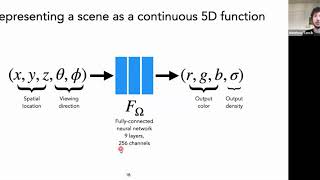
Neural Radiance Fields for View Synthesis
Explore neural radiance fields for view synthesis, combining coordinate-based neural representations with volumetric rendering to achieve state-of-the-art results in synthesizing novel views of complex scenes.
EfficientDet - Scalable and Efficient Object Detection
Explore EfficientDet, a scalable object detection model that improves accuracy and efficiency through innovative techniques like BiFPN and compound scaling.
StyleGAN Explained
Comprehensive exploration of StyleGAN architecture, detailing its innovations over traditional GANs. Covers mapping networks, style control, and noise injection for high-quality image generation.

What Are GANs - Generative Adversarial Networks Explained
Explore generative adversarial networks (GANs), their working principles, training phases, and applications in AI and deep learning. Learn how GANs generate realistic data through generator-discriminator competition.
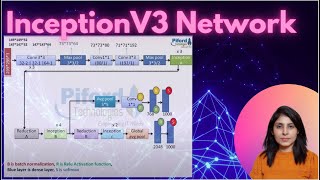
InceptionV3 - Inception Network
Detailed exploration of InceptionV3 architecture, covering its improvements over previous versions, including factorized convolutions, RMSProp optimizer, and label smoothing for enhanced CNN performance.
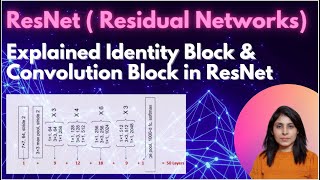
Explained Identity Block and Convolution Block in ResNet - Residual Networks
Practical explanation of identity and convolutional blocks in ResNet, including line-by-line code breakdown and discussion of residual concepts in deep learning architectures.
Face Detection with OpenCV
Learn face detection using OpenCV and Python on Raspberry Pi Zero. Explore object detection, AI, neural networks, and computer vision fundamentals. Practical implementation and insights provided.
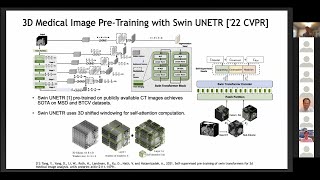
Modern Medical Image Segmentation, AutoML, and Beyond
Explore advanced medical image segmentation techniques, including AutoML and deep learning, for improved disease understanding and clinical diagnosis.

Getting Started with Caffe - Deep Learning Framework Introduction - Class 3
Learn to define, train, and deploy Deep Neural Networks using Caffe framework. Covers data management, network definition, training monitoring, and deployment for classification or feature extraction.
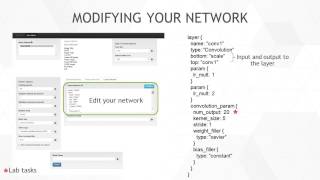
NVIDIA Deep Learning: Getting Started with DIGITS - Class 2
Learn to create, test, and optimize deep neural networks using NVIDIA's DIGITS tool for image classification tasks, with hands-on examples and practical deployment strategies.
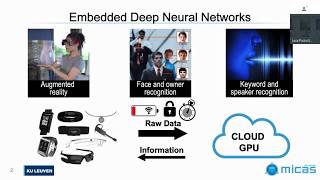
From Small to Tiny: Co-designing ML Models, Computational Precision, and Circuits - Energy-Accuracy Trade-offs
Explore co-designing ML models, computational precision, and circuits for energy-efficient tinyML systems. Learn about cross-layer optimization and cascaded networks for embedded applications.

Build Your Own AI Assistant - Object Classification with Python
Learn to build an AI assistant using Python, TensorFlow, and Google Colab for object classification. Covers neural networks, image processing, and hands-on demos for practical implementation.

Avoiding Loss of Quality in Tiny Models - Neuton.ai Partner Session
Explore compact AI models without sacrificing quality. Learn to assess model quality, understand decision-making logic, evaluate training data, and interpret model outputs for tinyML applications.
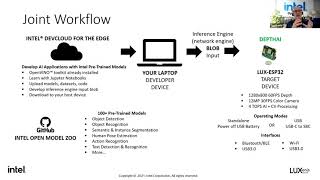
tinyML Vision Challenge - Intel-Luxonis DepthAI Platform Overview
Explore Intel and Luxonis' DepthAI platform for advanced vision solutions. Learn about AI inference, OpenVINO toolkit, and developing spatial edge applications using the LUX-ESP32 device.
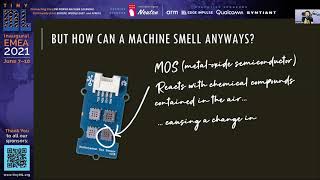
Lessons Learned from Building a TinyML-Powered Artificial Nose
Explore building a TinyML-powered artificial nose, from concept to implementation. Learn about hardware, sensors, models, and integrating TinyML applications into IoT ecosystems.
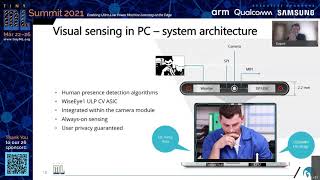
TinyML Journey: From Face Detection Demo to Real-Life Commercial Deployment
Exploring the journey from tinyML face detection demos to large-scale commercial deployment, addressing real-world challenges and bridging the gap between prototypes and practical applications.
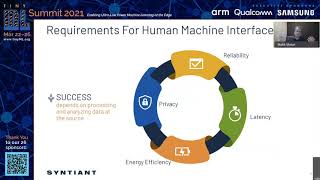
tinyML: Impact and Growth of Always-On Devices
Explore the growing impact of tinyML devices in everyday life, from always-on voice in phones to environmental sensing in machines, and learn about the market's rapid expansion and technological requirements.
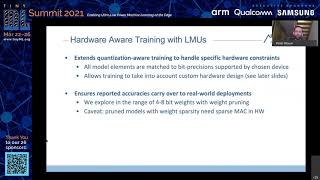
Hardware Aware Training for Efficient Keyword Spotting - tinyML Research Symposium 2021
Explore hardware-aware training for efficient keyword spotting, focusing on Legendre Memory Unit networks to achieve state-of-the-art accuracy and power efficiency on various hardware platforms.
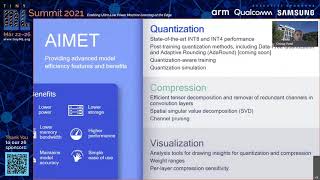
Advanced Network Quantization and Compression Using AIMET - tinyML Summit 2021
Explore advanced network quantization and compression techniques using AIMET to optimize AI models for efficient deployment on end devices, addressing memory, compute, and energy constraints.
Constraining 3D Fields for Reconstruction and View Synthesis
Explore advanced techniques in 3D field reconstruction and view synthesis, covering RegNeRF, MonoSDF, and TensoRF for improved neural rendering and geometric representation in computer vision.
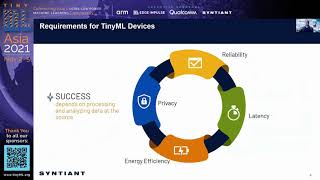
Accelerate Edge Compute with Syntiant's TinyML Platform
Explore Syntiant's TinyML platform for efficient edge AI in battery-powered devices, featuring Neural Decision Processors for enhanced processing and power efficiency compared to MCUs.