
Deep Learning with Neural Networks and TensorFlow
Learn to build a deep neural network using TensorFlow and the MNIST dataset. Explore feature extraction, model creation, and digit prediction techniques in this hands-on tutorial.
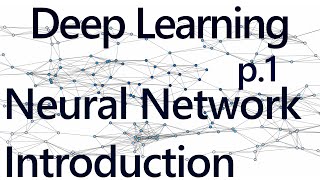
Deep Learning with Neural Networks and TensorFlow Introduction
Introduction to deep learning with neural networks, covering theory, models, optimization, and TensorFlow. Explore biologically-inspired machine learning techniques and their evolution in the field of artificial intelligence.

Stable Diffusion- Applying ControlNet to Character Design - Part 1
Comprehensive tutorial on using ControlNet for character design in Stable Diffusion, covering pose creation, 3D modeling, image generation, and advanced editing techniques for realistic digital art.
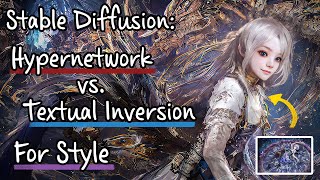
Stable Diffusion Style Technique Comparison - Hypernetwork vs. Textual Inversion
Explore hypernetworks and textual inversion in Stable Diffusion for stylized character art. Learn techniques for generating, refining, and enhancing digital illustrations using AI-assisted tools and traditional methods.
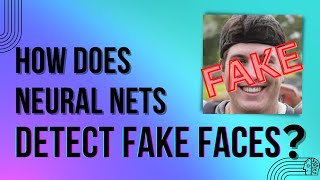
How Can Neural Networks Identify Fake Face Images?
Explore neural networks' ability to detect fake face images using Grad-CAM algorithm. Learn about datasets, model training, and visualization techniques for understanding AI decision-making in image classification.

How to Use ControlNet in Your AI Art - Stable Diffusion Tutorial 2023
Learn to enhance AI art using ControlNet in Stable Diffusion. Master photobashing, settings optimization, result mixing, and inpainting techniques for creating stunning, customized AI-generated images.
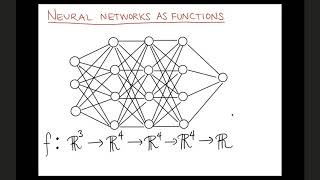
On the Topological Expressiveness of Neural Networks
Explore the topological constraints of neural network architectures and their impact on function representation, with insights from recent research and ongoing work in the field.
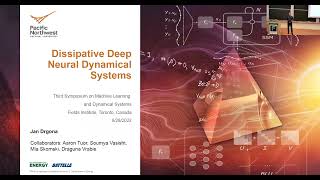
Dissipative Deep Neural Dynamical Systems
Explore dissipative deep neural dynamical systems and their applications in machine learning, presented by Jan Drgona from Pacific Northwest National Laboratory.
Generalization Bounds for Neural Network Based Decoders
Explore generalization bounds for neural network decoders, examining their implications for information-theoretic approaches in trustworthy machine learning.
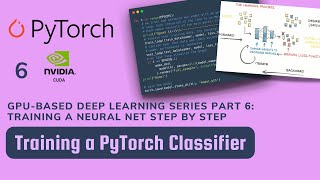
Train a PyTorch Neural Network Step-by-Step - PyTorch Deep Learning
Learn to build and train a PyTorch neural network for image classification, achieving 85% accuracy on Fashion MNIST. Covers data preparation, network architecture, loss functions, optimization, and model visualization.
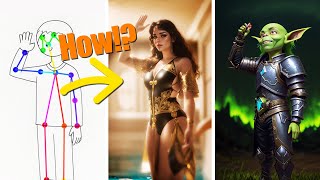
ControlNet Tutorial
Comprehensive tutorial on ControlNet 1.1 for Stable Diffusion, covering installation, usage, input creation with PoseMyArt, and new features. Ideal for AI art enthusiasts looking to enhance their image generation skills.

ControlNET - What You Need to Know
Comprehensive guide on ControlNET 1.1, covering installation, new models, OpenPose features, and Tile-Resampling for enhanced image quality and detail in AI-generated visuals.
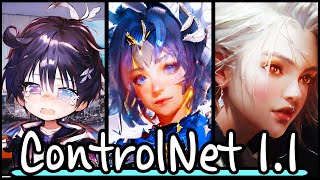
Stable Diffusion- Applying ControlNet to Character Design - Part 2
Explore advanced techniques in AI-powered character design using ControlNet 1.1, including inpainting, targeted variations, and contextual upscaling for enhanced digital illustrations and PNGtubers.
Approximating Many-Electron Wave Functions Using Neural Networks - IPAM at UCLA
Explore neural network applications in quantum mechanics, focusing on Fermionic neural networks for approximating many-electron wave functions and enhancing variational quantum Monte Carlo methods.
Message Passing Neural Networks for Atomistic Systems - Molecules
Explore message passing neural networks for molecular systems, focusing on their application in quantum mechanics and multiscale approaches to atomistic modeling.
Neur2SP- Neural Two-Stage Stochastic Programming - IPAM at UCLA
Explore Neur2SP, a novel approach to two-stage stochastic programming using neural networks. Learn how this method efficiently solves complex decision-making problems under uncertainty.
Reasoning Algorithmically- From Toy Experiments to AGI Modules
Explore neural networks' potential in algorithmic computation, from toy experiments to groundbreaking applications in mathematics and AI reasoning, with insights on their transformative impact on machine learning and computer science.
AI-Guided Nonlinear Optimization for Real-World Problems - IPAM at UCLA
Explore AI-guided optimization techniques for complex real-world problems, focusing on nonconvex objectives and slow-to-evaluate functions in applications like embedding table sharding and antenna design.
From A to B via a Synthesis of Rare-Event Sampling and Machine Learning
Explore machine learning and rare-event sampling techniques for analyzing molecular transitions and generating pathways between energy basins, with applications in materials science and biomolecules.
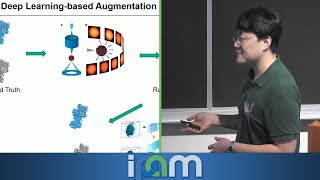
Neural Network-Assisted Atomic Electron Tomography - IPAM at UCLA
Neural network-assisted atomic electron tomography for 3D atomic structure measurement of nanoparticles, enabling precise surface characterization and functional property analysis at single-atom level.
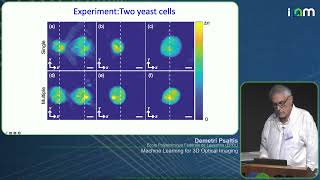
Machine Learning for 3D Optical Imaging - IPAM at UCLA
Explore machine learning techniques for enhancing 3D optical diffraction tomography, including digital phantom-based training and physics-constrained neural networks for improved image reconstruction.