
Gradient Descent and the Backpropagation Algorithm
Explore gradient descent and backpropagation algorithms, covering supervised learning, parametrized models, loss functions, and neural network architectures with PyTorch implementation.
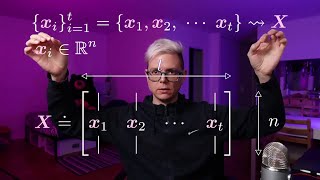
Self - Cross, Hard - Soft Attention and the Transformer
Explore attention mechanisms and Transformer architecture, covering self/cross and hard/soft attention, key-value stores, and practical implementation in PyTorch for advanced deep learning applications.

AE, DAE, and VAE with PyTorch - Generative Adversarial Networks and Code
Explore autoencoders, VAEs, and GANs with PyTorch. Learn implementation, visualization, and comparison of generative models through hands-on coding and insightful analogies.

From LV-EBM to Target Prop to Autoencoder
Explore various autoencoder types, from target propagation to variational autoencoders, understanding their mechanisms, applications, and differences in deep learning and neural network architectures.
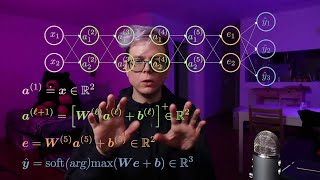
Recurrent Neural Networks, Vanilla and Gated - LSTM
Explore recurrent neural networks, including LSTM, covering architectures, training methods, and practical implementations using PyTorch for sequence-based tasks in deep learning.

Neural Nets - Rotation and Squashing
Explore neural network fundamentals, including affine transformations, non-linearities, and PyTorch implementation. Learn about ReLU, tanh, and deep network architectures through intuitive explanations and coding examples.
Tools, Classification with Neural Nets, PyTorch Implementation
Explore neural network classification, PyTorch implementation, and advanced concepts like space-fabric stretching and regression uncertainty estimation in this comprehensive tutorial.
Structured Prediction with Energy Based Models
Explore energy-based models for structured prediction, covering factor graphs, efficient inference, Graph Transformer Networks, loss functions, and variational inference in deep learning applications.

Deep Learning for Natural Language Processing
Explore NLP architectures, transformers, language models, and advanced techniques for text generation and embedding learning in this comprehensive deep learning lecture.
Attention and the Transformer
Explore self-attention, key-value stores, and transformer architecture in deep learning. Learn to implement attention mechanisms and understand encoder-decoder paradigms for advanced neural network design.
PyTorch Activation and Loss Functions
Explore activation and loss functions in PyTorch, including kink vs. smooth activations, margin-based losses, and designing effective loss functions for Energy-Based Models (EBMs).

Group Sparsity, World Model, and Generative Adversarial Networks
Explore advanced deep learning concepts: sparse auto-encoders, world models for autonomous control, and generative adversarial networks (GANs). Gain insights into cutting-edge AI techniques and their applications.
Energy Based Models and Self-Supervised Learning
Explore energy-based models, latent variables, and self-supervised learning. Dive into EBM training, inference, and comparison with probabilistic models. Discover contrastive methods and applications like K-means and BERT.

CNN Applications, RNN, and Attention
Explore CNN applications in digit recognition, object detection, and semantic segmentation. Dive into RNNs, addressing their challenges with attention mechanisms, GRUs, LSTMs, and Seq2Seq models.
Convolutional Neural Networks
Explore convolutional neural networks, from basic concepts to modern implementations. Learn about kernels, biological inspirations, CNN evolution, and their advantages in image processing and feature extraction.
Stochastic Gradient Descent and Backpropagation
Explore stochastic gradient descent, backpropagation, and neural network implementation in PyTorch. Learn practical tricks, basic modules, and gradient computation for effective deep learning.

History, Motivation, and Evolution of Deep Learning
Explore the history, motivation, and evolution of deep learning, covering key concepts like gradient descent, backpropagation, CNNs, and feature extraction in neural networks.
Convolutional Neural Nets - CNNs
Explore locality, stationarity, and compositionality in natural input data using convolutional neural networks. Learn CNN components, parameter sharing, and hands-on implementation.

CNN Loss
Explore convolutional neural network loss functions, including mean square error, cross-entropy, and negative log likelihood, with practical examples and implementation insights.
Deep Recurrent Q-Networks
Explore deep reinforcement learning with recurrent neural networks, focusing on LSTM units, Q-learning, and their applications in sequential decision-making problems.
Autoencoders
Explore autoencoders, from basic concepts to advanced applications, covering compression, PCA, deep architectures, sparse representations, and denoising techniques.