
Machine Learning Methods for Climate Science - Lecture 2
Explore machine learning applications in climate science, focusing on advanced techniques and their impact on understanding and predicting climate phenomena.
Formalizing Explanations of Neural Network Behaviors
Explores strategies for formally explaining neural network behaviors, discussing alternatives to informal interpretations and rigorous proofs, aiming to provide safety benefits in AI research.
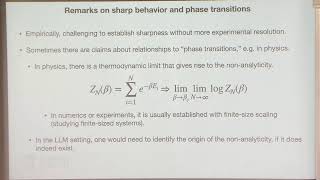
Understanding the Origins and Taxonomy of Neural Scaling Laws
Explore the foundations and classification of neural scaling laws, examining their impact on large language models and transformers in AI development.

A Friendly Introduction to Codeless Deep Learning with KNIME Analytics Platform
Explore codeless deep learning with KNIME Analytics Platform. Learn neural network basics, convolutional networks for computer vision, and build a classification model using KNIME's Keras integration.

How to Use Stable Diffusion, SDXL, ControlNet, LoRAs for Free Without a GPU on Kaggle Like Google Colab
Learn to use Stable Diffusion, SDXL, ControlNet, and LoRAs for free on Kaggle without a GPU. Step-by-step guide covers setup, model downloads, extensions, and troubleshooting for AI image generation.

Machine Learning Methods for Climate Science - Lecture 3
Explore machine learning applications in climate science, focusing on advanced techniques for analyzing and predicting complex atmospheric and oceanic processes.
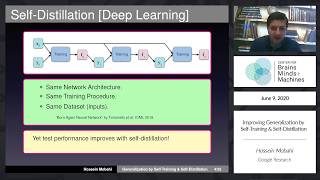
Improving Generalization by Self-Training & Self Distillation
Explore self-training and self-distillation techniques to improve model generalization, with insights on regularization effects and applications in deep learning.
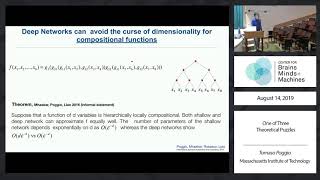
One of Three Theoretical Puzzles - Generalization in Deep Networks
Explore deep network generalization, dimensionality challenges, and optimization techniques with MIT's Tomaso Poggio. Gain insights into overparameterized networks and gradient descent for RELU architectures.
Multilingual Representations for Low-Resource Speech Processing
Explore multilingual speech representations to reduce data requirements for new language speech recognition systems, focusing on low-resource scenarios and keyword search performance.
Generative Model-Based Text-to-Speech Synthesis
Explore cutting-edge generative modeling techniques for text-to-speech synthesis, covering recent advancements, probabilistic approaches, neural network models, and future directions in speech technology.

Connections Between Physics and Deep Learning
Explore the fascinating intersections of physics and deep learning, from neural networks to scale-invariant behavior, with insights from MIT's Max Tegmark.

Demis Hassabis: Towards General Artificial Intelligence
Explore cutting-edge AI research with DeepMind's CEO, covering breakthroughs like AlphaGo and potential impacts on science and healthcare. Gain insights into AI's future and its implications for understanding human cognition.
William Marshall – A Measure for Intrinsic Information
Explores a unique information measure reflecting intrinsic perspectives in communication, with implications for integrated information theory and consciousness.
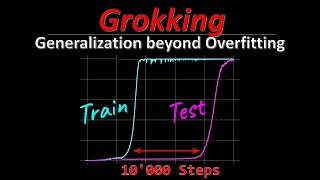
Grokking - Generalization Beyond Overfitting on Small Algorithmic Datasets
Explore the fascinating "grokking" phenomenon in neural networks, where sudden pattern recognition leads to perfect generalization. Discover its implications for deep learning and algorithmic datasets.

Self-Driving from Vision Only - Tesla's Self-Driving Progress by Andrej Karpathy - Talk Analysis
Analysis of Tesla's vision-only self-driving progress, discussing data labeling, edge-case sampling, neural network training, and the advantages of camera-only systems over multi-sensor approaches.
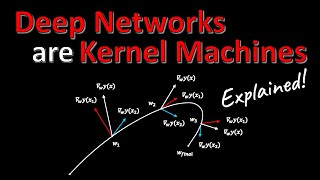
Deep Networks Are Kernel Machines
Explores the theory that deep neural networks function as kernel machines, challenging the view that they discover new data representations. Discusses implications for interpretability and algorithm development.
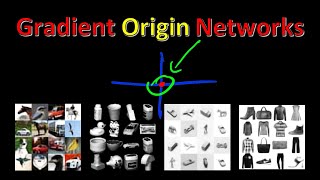
Gradient Origin Networks - Paper Explained with Live Coding
Explore Gradient Origin Networks: a novel implicit generative model for efficient latent representation learning, with live coding demonstration and in-depth explanation of the paper's key concepts.
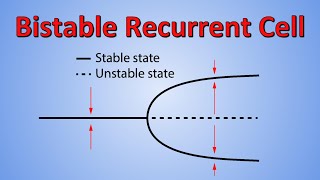
A Bio-Inspired Bistable Recurrent Cell Allows for Long-Lasting Memory
Explore a bio-inspired recurrent cell design that enhances long-term memory in neural networks, inspired by neuronal bistability and offering improved performance on time-series tasks requiring extended recall.
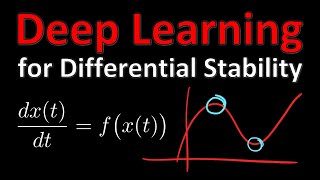
Deep Differential System Stability - Learning Advanced Computations from Examples
Explore how language models can learn complex mathematical computations for differential systems, including stability analysis and controllability, through example-based training.

A Critical Analysis of Self-Supervision, or What We Can Learn From a Single Image
Explores self-supervision in deep learning, revealing that a single image with data augmentation can effectively train lower network layers, challenging assumptions about large dataset requirements.
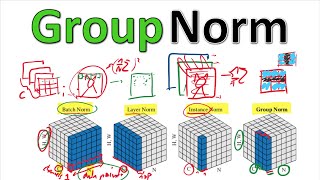
Group Normalization - Paper Explained
Explore Group Normalization as an alternative to Batch Normalization, addressing batch size limitations and improving performance in various deep learning tasks.