Capsule Networks: An Introduction
Explore capsule networks and their potential to revolutionize computer vision, addressing limitations of convolutional neural networks in image recognition tasks.

Ultra-Efficient On-Device Object Detection with AI-Integrated Smart Glasses Using TinyissimoYOLO
Explore ultra-efficient object detection using AI-integrated smart glasses and TinyissimoYOLO for on-device applications in this cutting-edge presentation.
Utilizing the Power of Machine Learning in Healthcare - Heart Failure Prediction
Explore machine learning's potential in healthcare through heart failure prediction, addressing diagnostic limitations and leveraging neural networks with real-world data.
Understanding Hallucinations in Generative AI
Explore the phenomenon of hallucinations in Generative AI, delving into their causes, implications, and potential solutions in this insightful lecture by Zico Kolter.
Reconsidering Overfitting in the Age of Overparameterized Models
Explore modern machine learning paradigms, focusing on overparameterized models' ability to generalize well despite near-zero training error, challenging classical overfitting concepts.

Turaco: Complexity-Guided Data Sampling for Training Neural Surrogates of Programs
Explore a novel methodology for sampling datasets to train neural network-based program surrogates, focusing on complexity-guided sampling for improved accuracy in real-world applications.

Automatic Differentiation - Session Preview at POPL 2023
Explore automatic differentiation techniques and their applications in programming languages, presented by expert Sasa Misailovic at POPL 2023.

Synthesizing Precise Static Analyzers for Automatic Differentiation
Explore Pasado, a technique for synthesizing precise static analyzers for Automatic Differentiation, improving precision in nonlinear operations and demonstrating applications in various domains.

Deep Learning Robustness Verification for Few-Pixel Attacks
Explore a novel L0 robustness verifier for neural networks, addressing few-pixel attacks through dynamic programming, sampling, and covering designs to enhance verification efficiency.

Powerful Machine Learning at Your Fingertips - ElixirConf EU 2023
Explore efficient numerical computation and Neural Networks in Elixir using Nx, Axon, and Bumblebee. Learn to implement powerful machine learning models with minimal code.

On-Device Training Under 256KB Memory
Discover cutting-edge techniques for on-device machine learning training with minimal memory requirements, presented by MIT's Song Han in this technical seminar on resource-efficient AI deployment.
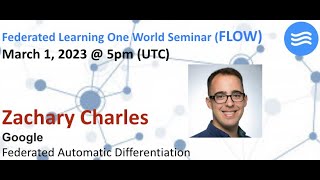
Federated Automatic Differentiation - Seminar 96
Explore advanced concepts in federated automatic differentiation with Google researcher Zachary Charles, covering innovative approaches to distributed machine learning and privacy-preserving computation.
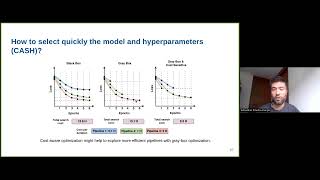
Quick-Tune: Quickly Learning Which Pretrained Model to Finetune and How
Discover a methodology for efficiently selecting and fine-tuning pretrained models through meta-learning, optimizing model selection and hyperparameter configurations for new datasets.
MotherNet: A Foundational Hypernetwork for Tabular Classification
Discover how MotherNet hypernetwork architecture revolutionizes tabular classification by generating optimized neural networks through in-context learning, offering faster training and competitive performance against XGBoost.
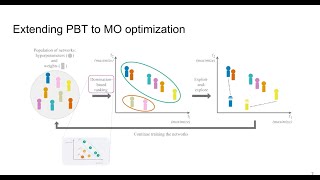
Multi-Objective Population Based Training for Hyperparameter Optimization
Discover advanced hyperparameter optimization techniques through Population Based Training (PBT) and its multi-objective evolution, focusing on real-world applications in precision, fairness, and robustness.
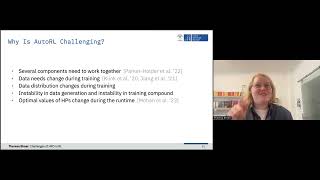
Challenges in Hyperparameter Optimization for Reinforcement Learning - Understanding AutoRL Through AutoML
Explore the complexities of hyperparameter optimization in Reinforcement Learning, examining AutoML tools and methods to better understand and tune RL algorithms for improved performance.
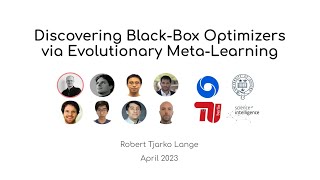
Discovering Black-Box Optimizers via Evolutionary Meta-Learning
Delve into evolutionary meta-learning techniques for discovering black-box optimizers, exploring advanced concepts in evolution strategies and genetic algorithms through self-attention architectures.
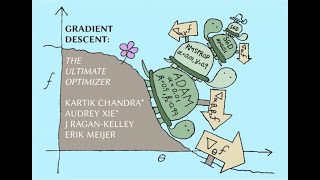
Gradient Descent: The Ultimate Optimizer - Automating Hyperparameter Optimization
Discover how to automatically optimize hyperparameters in gradient-based ML algorithms through an elegant modification to backpropagation, making optimizer tuning more efficient and less sensitive to initial choices.

When BERT Plays the Lottery, All Tickets Are Winning - Paper Explained
Exploring BERT pruning and the Lottery Ticket Hypothesis, revealing that even pruned components can be fine-tuned for good accuracy in NLP tasks, with implications for model efficiency and knowledge utilization.
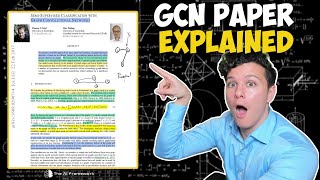
Graph Convolutional Network Paper Explained
Comprehensive explanation of Graph Convolutional Networks (GCNs), covering theory, derivation, and practical applications in node classification, with insights into their functionality and effectiveness.

Variational Autoencoder From Scratch in PyTorch
Learn to implement a Variational Autoencoder from scratch using PyTorch, covering architecture, training loop, and inference with practical examples and code demonstrations.