
What's New in Android Machine Learning
Explore Android's on-device machine learning advancements, including platform updates, ML Kit features, and TensorFlow Lite developments for enhanced mobile AI capabilities.
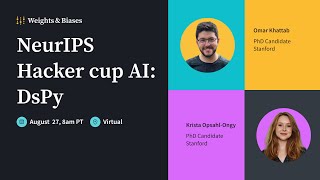
DSPy for Code Generation - NeurIPS Hacker Cup AI
Explore DSPy's innovative approach to code generation, enhancing AI capabilities for developers and researchers in neural information processing systems.

Distributed Mesh Processing and Geometric Deep Learning for Wind Prediction
Discover how Ray's distributed computing powers real-time wind prediction in urban design through mesh processing, geometric deep learning, and CFD data analysis for architectural innovation.
Interpretable Graph Routing Network for Knowledge-based Visual Question Answering
Explore an innovative graph routing network approach for knowledge-based visual question answering, focusing on interpretable step-by-step reasoning and enhanced accuracy.

Stable Diffusion 3.5 and ComfyUI Comparison Review
Discover the key differences between Stable Diffusion 3.5 and ComfyUI.exe through hands-on testing and comparative analysis of their image generation capabilities and workflows.
Untargeted Adversarial Attack on Knowledge Graph Embeddings
Explore advanced techniques for executing untargeted adversarial attacks on knowledge graph embeddings, focusing on privacy and security implications in federated learning environments.
Disentangling ID and Modality Effects for Session-based Recommendation
Explore advanced techniques for disentangling identity and modality effects in session-based recommendation systems, focusing on long-term user behavior analysis and pattern recognition.
Mathematical Problems in Machine Learning - Lecture 4
Delve into advanced mathematical probability concepts applied to machine learning through Stanford expert Andrea Montanari's comprehensive theoretical exploration and analysis.

Building AI Pipelines with Hugging Face and Kedro - From ChatGPT to Production
Discover how to build robust AI systems using Hugging Face's open models and Kedro pipelines, moving beyond commercial AI to create customizable and transparent machine learning solutions.
Making AI Truly Open Source - Challenges and Solutions
Explore the complexities of truly open-source AI, examining transparency challenges, data attribution issues, and practical solutions for creating genuinely open AI systems.
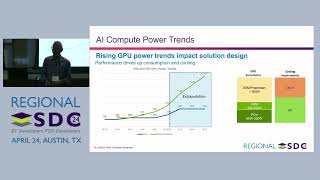
Technical Trends in AI Infrastructure for Developers - 2024
Explore the evolving landscape of AI infrastructure, from accelerators and storage to deployment models, focusing on technical trends and future solutions for developers working with AI workloads.
Training Neural Networks for Temporal Difference Model Predictive Control - Part 2
Dive into the technical aspects of training neural networks in TD-MPC, covering TD learning, Q network optimization, and data collection strategies for robotic control systems.
Multi-teacher Multi-stage Knowledge Distillation for Reasoning-Based Machine Reading Comprehension
Explore multi-teacher and multi-stage knowledge distillation techniques for enhancing machine reading comprehension and reasoning capabilities in question-answering systems.
Pacer and Runner: Cooperative Learning Framework for Single and Cross-Domain Sequential Recommendation
Explore a cooperative learning framework that bridges single and cross-domain sequential recommendations, enhancing recommendation systems through innovative data integration techniques.

EfficientML.AI - Introduction to Efficient Machine Learning
Master efficient machine learning techniques and optimization strategies for deploying ML models in resource-constrained environments, focusing on practical implementation methods.
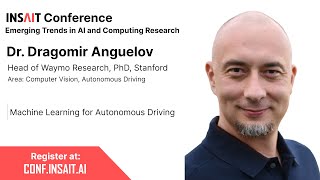
Machine Learning for Autonomous Driving
Explore cutting-edge machine learning applications in autonomous vehicle technology through insights from Waymo's expert Dr. Dragomir Anguelov at INSAIT 2022.
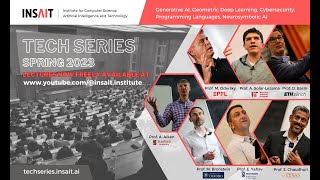
Neurosymbolic Programming - An Emerging Subarea of AI
Explore neurosymbolic programming's fusion of deep learning and program synthesis, discovering how it enhances AI robustness, interpretability, and efficiency through symbolic and neural approaches.
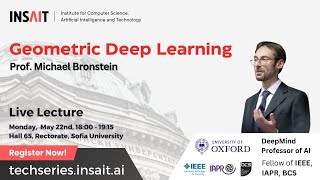
Geometric Deep Learning
Dive into geometric deep learning principles and advanced mathematical concepts with Prof. Michael Bronstein's comprehensive exploration of this cutting-edge field in artificial intelligence.
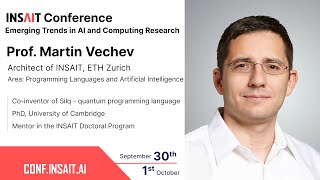
Provably Fair and Robust Machine Learning
Explore cutting-edge methods for building fair and robust machine learning systems, covering tabular and vision data alongside deterministic and statistical certification approaches.
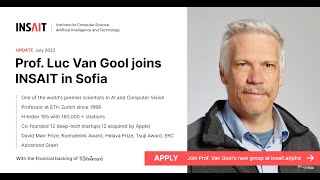
Deep Learning: Uncharted Territory in Sensors and Neural Networks
Explore deep learning's future through sensor optimization and neural network architectures, examining nature-inspired approaches and cross-modal processing principles in signal processing.

Adversarial Attacks in Deep Neural Networks - Understanding Vulnerabilities and Countermeasures
Explore the world of adversarial attacks in Machine Learning, understanding how malicious inputs can deceive Deep Neural Networks and the ongoing challenges in developing effective defenses.