Anatomy of a Software 3.0 Company - AI in Production Keynote
Explore the design space of AI-native applications and learn Conviction's framework for assessing value, defensibility, and strategy in Software 3.0 companies.

Seeing Like a Language Model - Understanding Embeddings and Meaning in AI
Explore how language models process text and represent meaning through embeddings. Gain insights into building better retrieval-augmented LLM systems and designing natural interfaces for reading and writing.

From Data-Aggregative Learning to Cognitive Knowledge Learning
Explore advanced autonomous machine learning beyond data-driven AI, focusing on cognitive knowledge acquisition, causal reasoning, and robust decision-making for unprecedented artificial intelligence technologies.
Geometric Algebra Transformers: Revolutionizing Geometric Data
Explore GATr's revolutionary approach to geometric data processing, enhancing computer vision, robotics, chemistry, and physics with efficient 16-dimensional vector space representations and E(3) equivariance.
Cooperative Data-driven Modeling: Addressing Catastrophic Forgetting in Neural Networks
Explore cooperative data-driven modeling techniques to address catastrophic forgetting in deep neural networks for class-incremental learning scenarios.
Programming Novel AI Accelerators for Scientific Computing - Part 2 - Tutorial 5
Explore advanced techniques for programming AI accelerators in scientific computing, focusing on optimization and performance enhancement.
SambaNova DataScale SN30 and Platform Architecture - Tutorial 5
Explore SambaNova DataScale SN30 architecture and platform features for advanced AI computing solutions.
Programming Novel AI Accelerators for Scientific Computing - Part 1 - Tutorial 5
Explore programming techniques for AI accelerators in scientific computing, focusing on novel approaches and optimization strategies.
Groq Tutorial - Part 5
Explore Groq's innovative AI hardware and software solutions for accelerating machine learning workloads and enhancing computational efficiency.
Example Memorization in Learning: Batch and Streaming - Differential Privacy for ML
Explore example memorization in machine learning, covering batch and streaming scenarios, space requirements, and implications for natural models and future research directions.
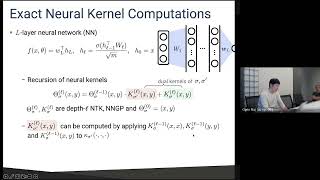
Fast Neural Kernel Embeddings for General Activations
Explore fast sketching methods for approximating multi-layered NNGP and NTK matrices with various activation functions, overcoming limitations of prior works and achieving significant speedups.
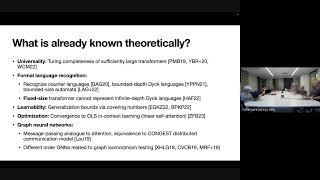
Representational Strengths and Limitations of Transformers
Explore the mathematical analysis of attention layers in transformers, comparing their representation power to other architectures and examining complexity parameters in various tasks.
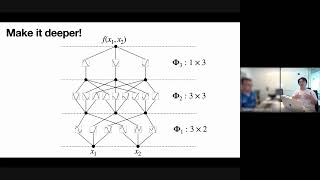
Kolmogorov-Arnold Networks - Alternatives to Multi-Layer Perceptrons
Explore Kolmogorov-Arnold Networks as alternatives to MLPs, offering improved accuracy and interpretability in data fitting and PDE solving. Discover their potential for scientific collaboration and law discovery.
Mixing Precisions in Numerical Algorithms - HPC Perspective with Modern Hardware Context
Explore mixed precision algorithms in HPC, focusing on convergence properties and performance considerations for modern hardware implementations of floating-point arithmetic.
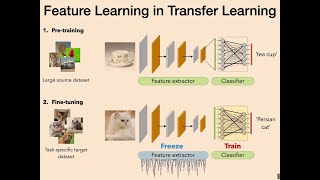
Foundations for Feature Learning via Gradient Descent
Explore the theoretical foundations of feature learning in modern machine learning models, focusing on gradient descent's role in extracting useful features and representations from data.
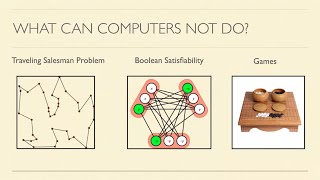
Are Neural Networks Optimal Approximation Algorithms for Constraint Satisfaction Problems?
Explore neural networks' capability to solve NP-hard optimization problems, focusing on constraint satisfaction and their potential as optimal approximation algorithms.
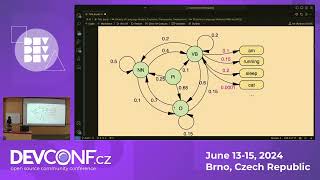
History of Language Models: Evolution, Frameworks, and Deployment
Explore language models' evolution from early systems to neural networks, transformers, and large-scale pretraining. Gain insights on key frameworks and real-world deployment strategies.
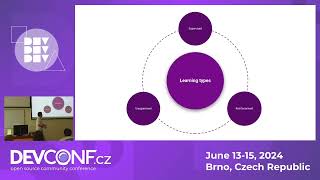
Overview of Image Segmentation with AI
Explore AI-powered image segmentation techniques, from basic concepts to advanced deep learning structures, and learn steps to create effective models for object identification and edge detection.
Learning Sparse Boolean Functions: Neural Networks Need a Hierarchical Degree Chain
Explore neural networks' hierarchical degree chain for learning sparse Boolean functions. Gain insights from EPFL expert E. Abbé.
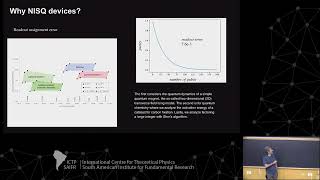
Calibrating Question Answering Systems with Quantum Neural Networks
Explore quantum neural networks for calibrating question answering systems, enhancing AI capabilities through advanced quantum computation techniques.
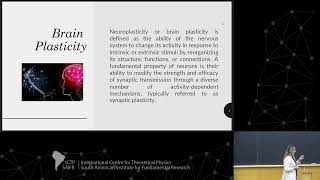
Plasticity: An Incredible Brain Capacity
Explore brain plasticity's incredible capacity for adaptation and learning, uncovering its role in neural networks and cognitive processes.