
Detectando RAT Malware en Teléfonos Celulares usando el IDS Slips
Detección de malware RAT en teléfonos Android utilizando el IDS Slips, una herramienta innovadora del laboratorio Stratosphere para proteger a personas en riesgo de ataques silenciosos y difíciles de detectar.

IT-Sicherheit in vernetzten Gebäuden
Einführung in Sicherheitsprobleme und Lösungsansätze für vernetzte Gebäude am Beispiel des KNX-Standards. Beleuchtet Risiken, Datenschutzaspekte und Möglichkeiten zur nachträglichen Verbesserung der IT-Sicherheit in Gebäudeautomatisierungssystemen.
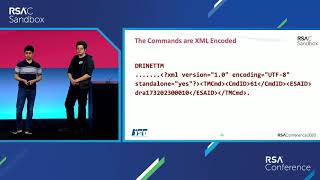
IoT Bug Hunting - From Shells to Responsible Disclosure
Explore techniques to circumvent security controls in IoT devices, from uncovering vulnerabilities to responsible disclosure. Gain insights into remote attacks and manufacturer security shortcomings.

pMap - The Silent Killer
Discover network vulnerabilities with pMap, a tool that silently extracts information from auto-configuration protocols to identify hosts, perform port scans, and fingerprint systems without sending packets.

Trick or Treat - Unveil the "Stratum" of the Mining Pools
Unveil mining pool strategies, identify Stratum servers, and explore cryptomining malware detection techniques through static and dynamic analysis, web scraping, and network scanning.
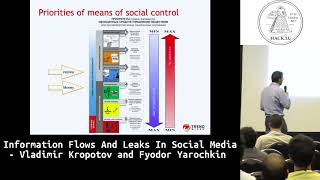
Information Flows and Leaks in Social Media
Explore social media's impact on information flow, opinion formation, and real-world events. Analyze case studies of online campaigns and their consequences across different regions and contexts.
Radio Experimentation - Dispositivos Inteligentes, ¿Decisiones Inteligentes? - Luis Lubeck - Ekoparty Security Conference - 2020
Explora los riesgos de seguridad en dispositivos inteligentes, analizando su código fuente, tráfico de red y configuraciones inseguras para tomar decisiones informadas sobre su uso.
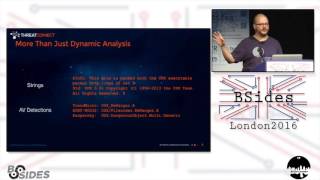
Open Source Malware Lab
Explore open-source tools for malware analysis, including Cuckoo Sandbox, Thug, Bro Network Security Monitor, and Volatility Framework. Learn to build an automated lab for comprehensive threat assessment.
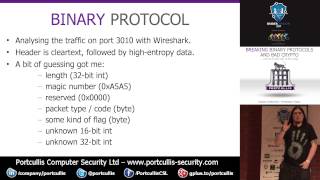
Breaking Binary Protocols and Bad Crypto
Explore reverse-engineering techniques for binary protocols and cryptography, focusing on methodologies to uncover vulnerabilities in network devices through real-world examples.
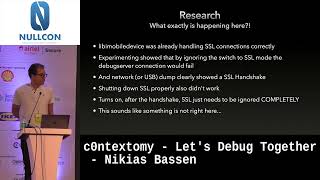
Contextomy - Let's Debug Together
Explore a critical iOS design flaw allowing remote code execution through debug session hijacking. Learn about the vulnerability's discovery, research, exploitation, and Apple's fix.
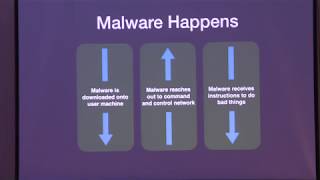
Deep Learning for Realtime Malware Detection
Explore an ensemble deep learning model for real-time malware detection, combining CNN, LSTM, and NLP techniques to analyze domain names and identify potential threats with high accuracy.
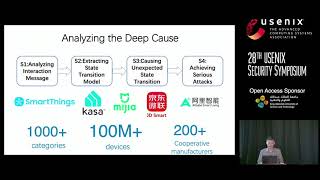
Discovering and Understanding the Security Hazards in the Interactions between IoT Devices, Mobile Apps, and Clouds on Smart Home Platforms
Exploring security vulnerabilities in smart home platforms through reverse engineering and phantom device testing, revealing unexpected state transitions and potential attacks.

Cognitive Automation With Machine Learning In Cybersecurity
Explore cognitive automation and machine learning in cybersecurity, covering risk analytics, threat detection, and incident management. Learn how ML enhances fraud detection and security operations.

From False Positives to Actionable Analysis
Modeling human behavior in network traffic to automatically label security events, using distributed forensic AI for threat detection and response optimization.

No Easy Breach Challenges and Lessons from an Epic Investigation
Explore advanced attack techniques, stealthy network traffic, and lessons from a major cybersecurity investigation. Gain insights into evolving tactics and improving threat detection.
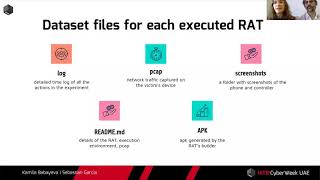
Android RATs Detection With a Machine Learning-Based Python IDS
Explore Android RATs detection using machine learning and Python IDS. Learn about dataset creation, Slips IDS implementation, and live demo of RAT activity detection in mobile device network traffic.
Secure and Scalable Anomaly-Based Network Intrusion Detection
Presentation on a secure, scalable framework for anomaly-based network intrusion detection, implemented in Go. Explores feature extraction, data collection, and machine learning applications for detecting network threats.
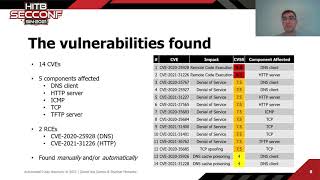
Squashing Low-hanging Fruit in Embedded Software
Discover advanced techniques for identifying and mitigating critical vulnerabilities in embedded systems, focusing on NicheStack TCP/IP stack vulnerabilities and automated vulnerability detection methods.
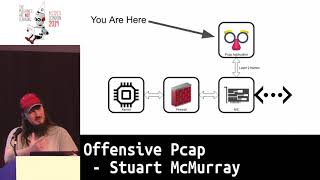
Offensive Pcap
Explore libpcap for offensive security: bypass firewalls, intercept traffic, manipulate network connections, and evade detection. Hands-on techniques with source code provided.
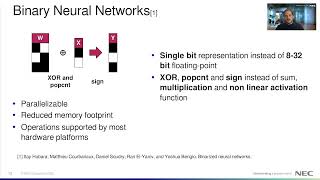
Re-architecting Traffic Analysis with Neural Network Interface Cards
Innovative approach to enhance network traffic analysis using binary neural networks on SmartNICs, offering improved scalability, lower latency, and higher throughput compared to traditional software-based systems.

The Use of Covert Communications in Modern Cyber Attacks
Explore covert communication techniques in cyber attacks, including behavior patterns, encryption, and common methods. Learn to identify and mitigate risks in modern digital threats.