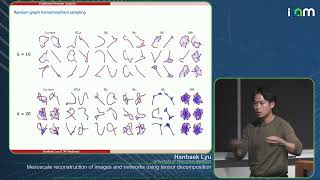
Mesoscale Reconstruction of Images and Networks Using Tensor Decomposition
Explore mesoscale reconstruction of images and networks using tensor decomposition, focusing on a unified framework, error bounds, and online CP-dictionary learning for multi-modal datasets.
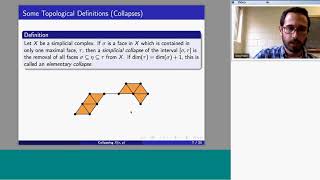
Greg Malen - Collapsibility of Random Clique Complexes
Explore k-collapsibility in random clique complexes, examining dimensional faces, strong connectivity, and homology implications for topological data analysis.
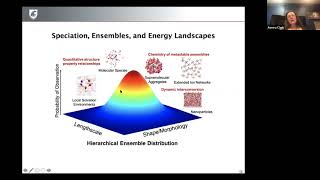
Topology in Chemistry Applications
Explore topological data analysis in chemistry, focusing on molecular relationships, graph theory, and network analysis to extract new insights from chemical data.
Applied Algebraic Topology Network - Student Seminar Introduction to JavaPlex
Learn to use JavaPlex for topological data analysis, covering key concepts like witness complexes, data representation, and visualization tools. Ideal for students exploring computational topology.
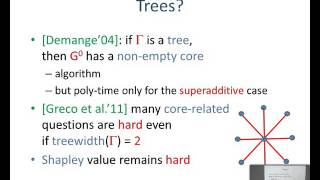
Edith Elkind- Coalitional Games on Sparse Social Networks
Explore coalitional games on social networks, analyzing graph structures, computational complexity, and solution concepts for connected subsets of agents.
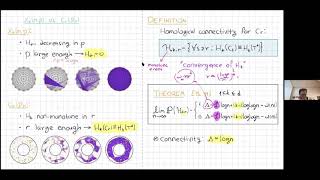
Omer Bobrowski - Random Simplicial Complexes
Explore higher-dimensional generalizations of random graphs, focusing on random d-complexes and Cech complexes. Learn about connectivity, cycle formation, and giant components in these structures.
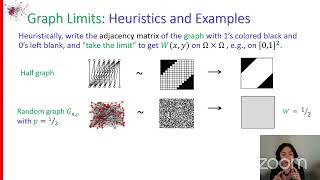
Graphons and Graphexes as Limits and Models of Large Sparse Graphs
Explore graphons and graphexes as mathematical tools for analyzing large sparse graphs, with applications in network science and complex systems modeling.
Alignment of Random Graphs: Informational and Computational Limits - Lecture 2
Explores informational and computational limits in aligning random graphs, focusing on advanced probabilistic techniques for data science and graph theory applications.
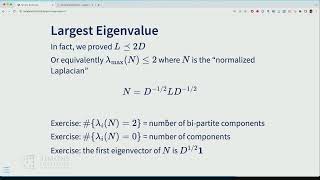
Graph Linear Algebra Part 1
Explore fundamental concepts of graph linear algebra, focusing on matrices, spectral theory, and their applications in algorithmic graph theory and network analysis.
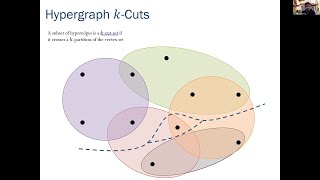
Graph Algorithms and Coding - Session 5C
Explore advanced graph algorithms and coding techniques in this IEEE session, focusing on cutting-edge research and practical applications in computer science.
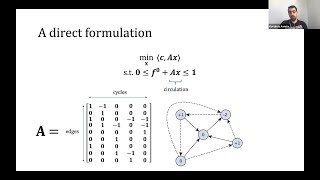
Graph Algorithms and Graph Theory - Session 1B
Explore advanced concepts in graph algorithms and theory, delving into cutting-edge research and applications presented at FOCS 2020.
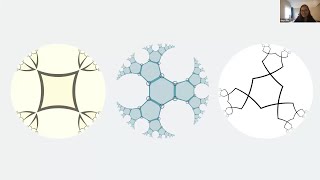
Graph Algorithms and Graph Theory - Session 7A
Explore advanced concepts in graph algorithms and theory, delving into cutting-edge research and applications presented at the FOCS 2020 conference.
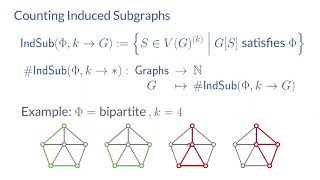
Counting Small Induced Subgraphs Satisfying Monotone Properties
Explore techniques for enumerating small induced subgraphs with specific properties, focusing on algorithmic approaches and complexity analysis in graph theory.
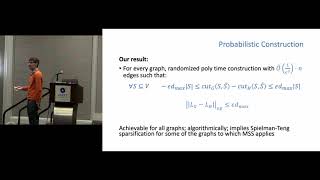
New Notions and Constructions of Sparsification for Graphs and Hypergraphs
Explore innovative concepts and techniques for graph and hypergraph sparsification, advancing understanding of network structures and algorithms in computer science.
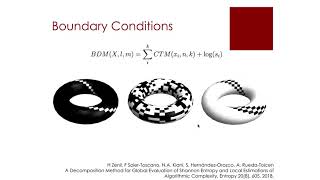
Graph and Tensor Algorithmic Complexity - Unit 6, Module 5
Explore algorithmic complexity in graphs and tensors, focusing on computational approaches to causality and living systems from networks to cells.
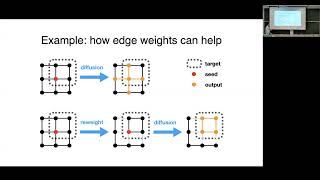
Local Graph Clustering with Noisy Labels
Explore techniques for local graph clustering with noisy labels, focusing on applications in complex networks and data analysis.
Property Testing for Graphs
Explore advanced techniques in property testing for graphs, focusing on sublinear algorithms and their applications in large-scale network analysis.
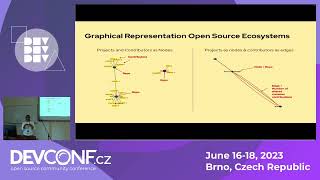
Uncovering New Open Source Communities Graphically
Explore graph theory techniques to visualize and analyze open source ecosystems, uncovering emerging communities and their relationships to established projects.
Graphs in the Modern World: Analyzing Infectious Disease Dynamics
Explore graph-based models for analyzing infectious diseases, from deterministic compartmental models to agent-based simulations in modern epidemiology.
Beyond the Basics of Graphs and Networks
Explore advanced concepts in graph theory and network analysis, delving into complex structures and algorithms for deeper insights into interconnected systems.
Progress in Graphs and Networks
Explore advancements in graph theory and network analysis, uncovering applications in various fields and enhancing problem-solving skills.