Pre-Training BERT from Scratch - Building, Fine-Tuning, and Running Inference with KERAS NLP
Master BERT model pre-training, fine-tuning, and inference using TF2 and KERAS NLP through hands-on implementation of transformers for domain-specific tasks.

Sparrow - Google's Second Generation Conversational AI After BARD
Explore Google's Sparrow AI system, its architecture, and comparison with ChatGPT, featuring demonstrations and insights into next-generation conversational search technology and language models.

Pre-Training BERT from Scratch for Domain-Specific Knowledge Using PyTorch - Part 51
Master BERT model pre-training from scratch using PyTorch, focusing on domain-specific data. Build custom tokenizers, design architecture, and implement masked language modeling for specialized neural information retrieval systems.

Performance Analysis of 12 AI Language Models for Clinical Decision Making in Healthcare
Explore the comparative analysis of 12 AI language models in clinical settings, examining their effectiveness in processing health records and performance against specialized medical systems.
Fine-tuning ChatGPT with In-Context Learning - Chain of Thought, AMA, and ReAct Reasoning
Master advanced in-context learning techniques like Chain-of-Thought and ReAct to optimize ChatGPT's performance without expensive fine-tuning, based on latest research insights and practical applications.
Cohere Embed V3: Innovations in Content Quality and Compressed Embeddings
Discover state-of-the-art embedding models featuring content quality assessment and vector compression techniques, with practical insights on implementation and scaling in vector database setups.

AI-Powered Music Recommendations Based on Mood and Vibe
Discover how AI and vector embeddings can revolutionize music recommendations by analyzing song vibes and moods through LLMs and transformer models for more personalized listening experiences.
Deep Learning: RLHF, ChatGPT, and Alignment in LLMs - Lecture 14
Dive into advanced concepts of RLHF, ChatGPT training, and LLM alignment, exploring efficient transformers and the technical foundations behind modern language models.

Deep Learning: BERT and GPT Models - Lecture 11
Dive into the evolution and architecture of transformer models, exploring BERT, GPT series, and T5 to understand their impact on modern natural language processing.
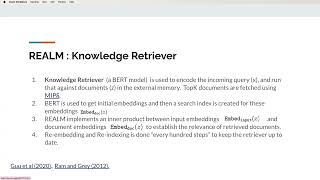
Retrieval Augmented Generation (RAG) - Advances in Generative AI
Dive into retrieval augmented generation (RAG) to enhance AI systems with external knowledge retrieval, improving accuracy and context awareness in generative AI applications.

AI, Large Language Models and University Education
Explore the impact of AI and large language models on university education through expert insights from Prof. Ioannis Pitas in this thought-provoking lecture.
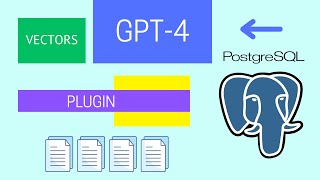
Visualizing Data Integration Between ChatGPT and Enterprise Systems
Discover how to integrate enterprise data with ChatGPT through OpenAI plugins, vector stores, and semantic search capabilities, focusing on GPT-4's dynamic data flow and PostgreSQL integration.
From Documents to Vectors: Understanding ChatGPT's Technical Architecture with OpenAI Plugins
Dive into the technical architecture of ChatGPT plugins, exploring vector databases, API endpoints, and real-time data retrieval methods for enhanced AI capabilities.
Prompt Engineering: Implementing Tree of Thoughts with GPT-4 - AI Education Case Study
Explore the implementation of Tree of Thoughts (ToT) framework in GPT-4, examining its application for AI education planning and demonstrating advanced prompt engineering techniques for complex problem-solving.

Chain of Thought and Instruction Fine-Tuning for Enhanced Language Model Performance
Explore how Chain of Thought and instruction fine-tuning techniques enhance language models' performance, from basic reasoning tasks to simulating human behavior and decision-making processes.
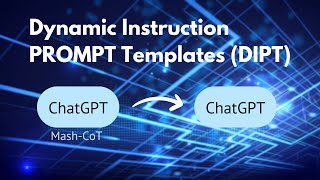
Connecting Multiple ChatGPT Sessions with Dynamic Instruction Prompt Templates
Master advanced prompt design techniques to connect and optimize multiple ChatGPT sessions using Dynamic Instruction Prompt Templates (DIPT), enabling continuous learning and improved effectiveness across conversations.

Instruction Fine-Tuning and In-Context Learning of Large Language Models with Symbols
Delve into advanced concepts of LLM instruction fine-tuning and in-context learning, exploring symbol tuning, FLAN-PaLM models, and cutting-edge research developments.

The Inner Workings of Large Language Models - Visualizing Self-Attention Mechanisms
Dive into the mechanics of Large Language Models, exploring self-attention mechanisms, architectural designs, and performance optimization through clear visualizations and practical examples.

AI in Political Science and Social Psychology - Predicting Public Opinion with Language Models
Explore how AI language models predict public opinion, analyze media effects on society, and revolutionize political science research through cutting-edge BERT systems and transformer architectures.

Building a Multi-AI System: Upgrading Vector Databases with BERT and GPT-4
Master building a cost-effective multi-AI system by integrating GPT-4 and BERT, transforming vector databases into interactive AI components with or without LangChain framework.

AutoGPT and BabyAGI - Understanding Autonomous AI Agents for Large Language Models
Explore autonomous AI agents AutoGPT and BabyAGI, understanding their capabilities, risks, and integration with GPT-4 and LangChain for automated resource management and task execution.