Comparing Direct Input vs Plugin Data Processing for LLMs - GPT-4 Case Study
Explore the impact of data input methods on GPT-4's performance, comparing direct PDF text input versus plugin-based processing, with focus on mathematical formula preservation and interpretation.
Fine-tuning ChatGPT with Synthetic GPT-4 Datasets - A Python Implementation
Master fine-tuning ChatGPT using Python and synthetic GPT-4 datasets through hands-on implementation of multi-GPT system interactions and advanced prompt engineering techniques.
AI Agents: Understanding LLM Systems and Task-Specific Tools - An Introduction
Discover the fundamentals of AI agents, their interaction with LLMs, and practical implementation methods in this beginner-friendly exploration of modern artificial intelligence.
Tool LLM for API Calls - Understanding Fine-Tuned Language Models for API Performance
Explore how Tool LLama, a fine-tuned LLM, leverages API capabilities through ToolBench dataset to achieve ChatGPT-level performance in handling API interactions.
ChatGPT Prompt Engineering with In-Context Learning - 7 Examples
Master prompt engineering techniques through 7 practical examples, from zero-shot prompting to reverse Turing tests, while exploring innovation theory and strategic AI applications.
Evaluating LLM Embeddings for Information Retrieval and Multilingual Applications
Explore the latest evaluation of LLM embedding APIs, focusing on OpenAI and Cohere's performance in domain generalization and multilingual retrieval capabilities for information retrieval tasks.
ChatGPT Prompt Engineering with In-Context Learning Using OpenAI API
Master prompt engineering techniques for ChatGPT with hands-on practice using In-Context Learning and OpenAI API integration in Python through a practical COLAB environment.

Stanford ALPACA 7B LLM: Fine-tuning Guide with Code and Datasets
Discover how to fine-tune and implement Stanford's ALPACA 7B language model using LLaMA, exploring practical applications and cost-effective methods for creating custom AI solutions.
Generative AI and LLM Technologies - A Comprehensive Tutorial
Explore essential concepts and technologies behind generative AI systems, from pre-training and fine-tuning to prompt engineering and advanced data structures for LLMs.
ChatGPT vs Flan-T5: Comparing Proprietary and Free LLMs with Performance Tuning
Explore the differences between ChatGPT and Flan-T5 LLM models, comparing their capabilities, accessibility, and performance optimization through practical demonstrations and hyperparameter tuning techniques.
The Art of Text to Vector Transformation - A Comprehensive Look at AI and NLP Transformers
Dive into the fundamentals of converting text to mathematical vectors, understanding tokenization methods like BERT and BPE for NLP applications and AI transformer models.
Train a Domain-Specific BERT Tokenizer Using SBERT - Part 50
Master BERT tokenizer training for scientific domains using SBERT, focusing on byte-pair encoding and specialized pre-training for complex domain-specific knowledge like bio-pharmacological content.
Domain-Specific AI Models - Creating Customized BERT and SBERT Models for Business Applications
Discover how to effectively train and fine-tune BERT and SBERT models for specialized domains, focusing on medical and biochemical terminology, with practical solutions for business applications.
Feature Vectors - Understanding BERT and SBERT Transformer Models
Dive into feature vectors and their crucial role in BERT and SBERT transformer models, exploring vectorization techniques, Python implementation, and practical applications in NLP.
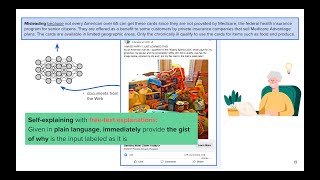
Uncertainty, Prompting, and Chain-of-Thoughts in Large Language Models - Part 2
Dive into advanced AI concepts including temperature scaling, Bayesian calibration, prompt-based finetuning, and chain-of-thought techniques for more reliable and explainable language models.
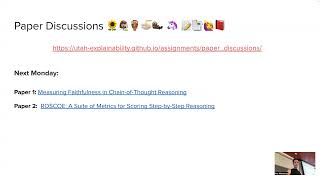
Prompting for Evaluation of Free-Text Explanations - Part 2
Dive into advanced techniques for evaluating free-text explanations in AI prompting, focusing on methodologies and practical applications for data science analysis.

Building Search and RAG for OpenAPI Specifications
Discover how to implement vector search and RAG capabilities for OpenAPI specifications, focusing on code summarization, metadata management, and practical UI development techniques.
Building a RAG Chatbot with LangChain, OpenAI, and Groq
Learn to build a RAG-powered chatbot from scratch using LangChain, OpenAI's GPT-3.5-turbo, and Qdrant vector database for enhanced knowledge retrieval and response generation.
Getting Started with DSPy - Building LLM Programs Tutorial
Discover how to build robust LLM programs using DSPy framework, from basic concepts to creating retrieve-then-read RAG systems with optimized instructions and structured data handling.

LLM Reasoning Limitations: Understanding Linear Order and Logical Hallucinations
Delve into groundbreaking research from Stanford and DeepMind revealing LLMs' limitations in causal reasoning, premise ordering, and mathematical logic, highlighting key challenges in AI development.

LLM Prompt Personalization: A Step-by-Step Guide to Creating Custom AI Prompts
Master the art of creating personalized LLM prompts through a straightforward, code-free approach that optimizes your interactions with AI language models for better results.