How to Do Research That Matters
Discover strategies for conducting impactful research in AI safety and cooperation, focusing on multi-agent systems and responsible technology development.
Lagrangian, Eulerian and Kantorovich Formulations of Multi-Agent Optimal Control
Explore Lagrangian, Eulerian, and Kantorovich formulations of multi-agent optimal control in this mathematical conference talk by Giuseppe Savaré.

Advanced Python Multi-Agent AI Development with RAG, Streamlit, and Langflow
Master advanced Python AI development by building a multi-agent system using Langflow, Streamlit, and AstraDB. Create interactive applications with multiple LLMs, task routing, and a user-friendly frontend interface.
Fighting Fire with Algorithms - Lockheed's Reinforcement Learning-Based Wildfire Solution
Discover how Lockheed Martin uses deep reinforcement learning to revolutionize wildfire management through an AI-powered decision support system that achieves 80% containment success in simulated scenarios.
Modeling Communication Flows in Multiagent Systems
Explore formal specification of agent communication flows using process algebra and the Awkward πnguin framework, with practical demonstrations of generating functional multiagent systems.
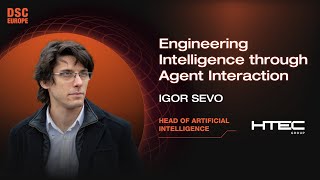
Engineering Intelligence Through Agent Interaction - From RPA to Agentic Process Automation
Explore how Generative AI transforms robotic process automation into agent-based systems, focusing on intelligent solutions for digital workflows and the challenges of engineering complex automated systems.
Multi-Agent Function Calling with Large Language Models - Building AI Agents
Dive into building AI agents using OpenAI's function calling capabilities and GPT-4, learning to integrate external APIs without LangChain for streamlined development and enhanced functionality.
LLM as Next-Generation Operating System - Memory Augmented Systems and Continuous Chat
Explore how memory-augmented LLMs can revolutionize operating systems, focusing on multi-AI integration and continuous chat capabilities for next-generation computing architectures.
Multi-Agent AI Systems with AutoGen - Complete Code Tutorial
Dive into Microsoft's AutoGen framework, exploring multi-agent AI systems through practical code examples, communication protocols, and agent control mechanisms for advanced LLM applications.
LLM-augmented Autonomous Agents - Achieving Goals with One Prompt Without LangChain
Discover how to orchestrate multiple AI agents using advanced prompt engineering, enabling complex task resolution through collaborative interactions and digital twin simulations - no LangChain required.
Reinforcement Learning: From Policy Optimization to Multi-Agent Systems
Explore reinforcement learning fundamentals, from reward systems and policy optimization to transformer architectures in robotics and multi-agent systems, with practical implementation insights.
Multi AI-Agents Reasoning with LLMs - Python Code Examples
Master the creation and implementation of multi-agent LLM systems in Python, from basic agent coding to complex hierarchical reasoning structures using GPT-4, including practical examples and real-world applications.
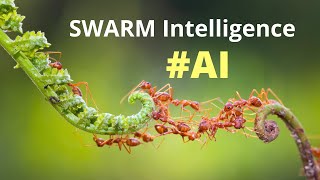
AI Swarm Intelligence: Multi-Agent Ecosystem for Decentralized Autonomous Systems
Explore swarm intelligence and multi-agent reinforcement learning systems, focusing on decentralized control, asynchronous decision-making, and real-world applications in urban environments and drone networks.
SciAgents and AI Research Idea Generation - Comparing Stanford and MIT Approaches
Explore groundbreaking research from Stanford and MIT on AI agents' capabilities in scientific discovery, idea generation, and knowledge graph reasoning, with practical Python implementations.
Collaborative Multi-Agent LLMs for Mixed-Autonomy Traffic - CoMAL Framework
Explore how CoMAL framework enables autonomous vehicles to collaborate through LLM-powered reasoning, role assignment, and real-time coordination for safer and more efficient mixed-autonomy traffic systems.
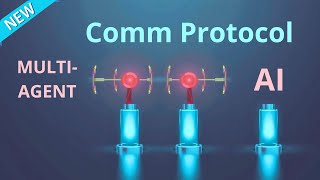
Task-Optimized Multi-Agent Communication Protocols with G-Designer
Explore the G-Designer framework for optimizing multi-agent AI communication through Graph Neural Networks, focusing on efficiency, scalability, and robust topology design.
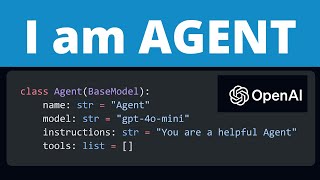
Multi-Agent Orchestration System Design and Implementation
Dive into OpenAI's multi-agent orchestration system, exploring how routines, tools, and handoffs enable dynamic AI interactions for customer service and sales automation through practical code implementation.
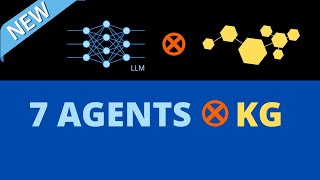
AGENTiGraph: Integrating LLM-based Multi-Agent Systems with Knowledge Graphs
Explore how AGENTiGraph combines seven specialized AI agents with knowledge graphs to enhance LLM capabilities, focusing on entity mapping, reasoning, and complex query handling.
Multi-Agent Dynamics with Self-Play Reinforcement Learning
Explore how self-play techniques in multi-agent reinforcement learning revolutionize game theory, enabling AI agents to develop advanced strategies through autonomous learning and competition.
Strategic Deviations in Multi-Agent Imitation Learning: From Value Optimization to Regret Analysis
Delve into the complex dynamics of multi-agent AI systems, exploring strategic deviations, regret gaps, and equilibrium concepts in imitation learning through practical applications and mathematical frameworks.
Multi-Agent AI Coordination and Pathfinding Using Cooperative Reward Shaping
Discover how multiple AI agents coordinate actions through Reinforcement Learning, from pathfinding algorithms to practical applications in transport, underwater networks, and space exploration.