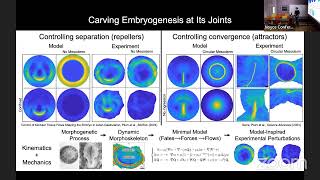
Carving Embryogenesis at Its Joints - Dynamic Morphoskeleton and Modular Development
Explore embryogenesis through quantitative analysis of morphogenetic flows, uncovering fundamental kinematic units and their mechanistic origins in avian gastrulation, with implications for evolution and synthetic morphogenesis.
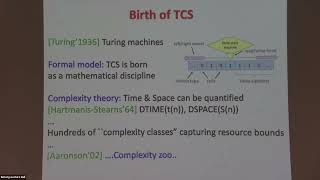
Reading Alan Turing - Exploring Turing's Influential Ideas in Theoretical Computer Science
Explore Turing's influential papers and their impact on theoretical computer science with Avi Wigderson. Gain insights into Turing's visionary ideas and their modern relevance.
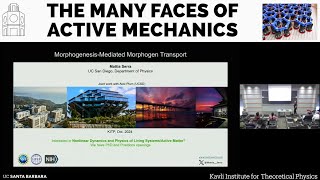
Morphogenesis-Mediated Morphogen Transport
Dive into morphogenesis-mediated morphogen transport with Mattia Serra's conference talk, exploring active mechanics in biological systems and their implications for developmental processes.
The Physics of Form in Living Matter - Noah Mitchell
Exploring the physics behind morphogenesis and how living matter shapes itself, focusing on recent developments in understanding complex biological transformations and organ development.
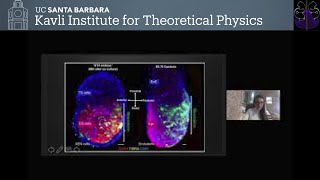
Modelling Mammalian Early Embryonic Development and Patterning In Vitro With Stem Cells - Berna Sozen
Explore mammalian early embryonic development using stem cell models. Learn about symmetry breaking, patterning, and key events in embryogenesis through cutting-edge research and experimental approaches.
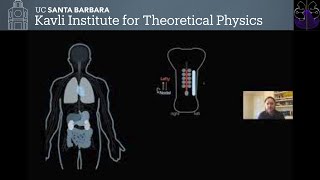
Cell Communication Mediated by Fluid Flows in Development and Disease - Daniel T. Grimes
Explores fluid flow-mediated cell communication in embryonic development, focusing on symmetry breaking, cilia function, and genetic regulators of asymmetry in organ formation.

Active Processes in Cells and Tissues - Symmetry Breaking of Biological Cells - Lecture 1
Explore cellular dynamics, symmetry breaking, and active processes in living systems. Discover how energy-driven mechanisms shape biological patterns and morphologies at cellular and tissue levels.
Turing's Reaction-Diffusion System and Agent-Based Models in Biology - Lecture 2
Explore Turing's reaction-diffusion system and its applications in biology, from animal patterns to agent-based models. Gain insights into theoretical frameworks for understanding complex biological phenomena.
Leaf Growth and Allometry - Lecture 1
Explore leaf growth patterns, allometry in plants, and molecular mechanisms behind leaf morphogenesis. Discover how physical constraints and evolutionary adaptations shape leaf development.

Pattern Formation in Biology - Lecture 1
Explore biological pattern formation through nonequilibrium physics, from snake pigmentation to tissue development. Discover emergence, hydrodynamics, and reaction-diffusion models in this comprehensive lecture on complex biological systems.
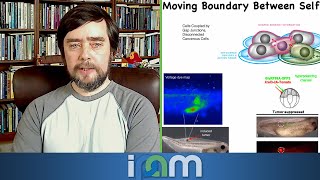
Plasticity Without Genetic Change - Bioelectric Embryos & Synthetic Proto-Organisms
Explore bioelectric embryos and synthetic organisms, delving into morphogenetic control, AI-driven tissue reconfiguration, and collective behaviors challenging traditional biological distinctions.
Active Forces and Flows that Pattern Organisms by Stephan Grill
Explore how active forces and flows in biological systems drive morphogenesis, from molecular interactions to organism-wide patterning, with a focus on actomyosin dynamics and symmetry breaking.
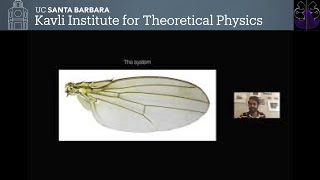
Hidden Symmetries in Final Form - Madhav Mani
Explores symmetry-breaking events in embryonic development, discussing mechanisms and theories that contribute to a unified understanding of morphogenesis and body plan formation.
Morphogenesis in Cancer
Explore morphogenesis in cancer with Ramray Bhat, examining fundamental principles and theoretical approaches to understanding cancer progression and potential treatment strategies.
Deciphering Bio-Mechanical Drivers of Morphological Diversity in Early Animal Development
Explore morphological diversity in early animal development through cnidarian models. Compare shape transitions, cell mechanics, and gene expression in sea anemone larvae elongation.
Instabilities and Geometry of Growing Epithelial Tissues
Explore instabilities and geometry in growing epithelial tissues, focusing on key concepts and recent research findings in this fascinating field of biophysics.
On the Stability of Oscillations in Rheological Models with Delay and Viscous Friction During Morphogenesis
Explore rheological models with delay and viscous friction in morphogenesis, analyzing stability and oscillations in embryonic tissues, particularly in Drosophila CNS development.

The Gap Between Theory and Experience: Evolution of a Problem from Catastrophe Theory to Semiophysics
Explore catastrophe theory's evolution from Thom's morphogenesis models to semiophysics, examining the role of Waddington's epigenetic landscape and challenging views on scientific analogies.
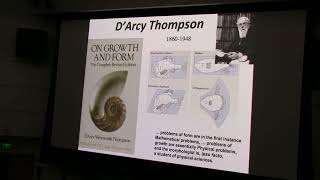
Physics of Morphogenesis
Explore the interplay of physical forces and genetic regulation in morphogenesis, focusing on how mechanical self-organization transforms gene expression into tissue shape.
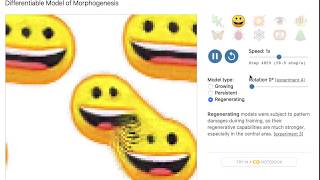
Growing Neural Cellular Automata
Explore neural cellular automata that learn to grow complex patterns through local interactions, mimicking biological morphogenesis and self-organization in a fascinating, interactive model.

Tetrapod Limb Development: Molecules and Signaling Pathways in Embryology
Explore tetrapod limb development, focusing on molecular signaling pathways in embryology. Gain insights into key regulatory mechanisms shaping vertebrate limb formation.