Quantum Policy Gradient Algorithms for Reinforcement Learning
Delve into quantum policy gradient algorithms and their application in reinforcement learning, exploring quantum-classical speed-ups and parameterized quantum circuits for AI advancement.
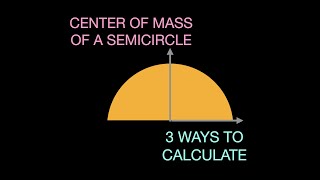
3 Ways to Find the Centroid of a Semicircle
Explore three methods to locate a semicircle's centroid: rectangle, polar coordinates, and Monte Carlo simulation using Python.
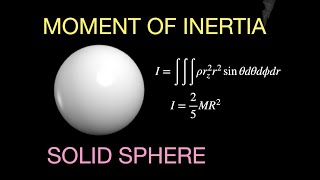
Moment of Inertia for a Sphere About a Fixed Axis
Derive the moment of inertia for a sphere and explore a Monte Carlo simulation using Python, enhancing understanding of rotational dynamics.
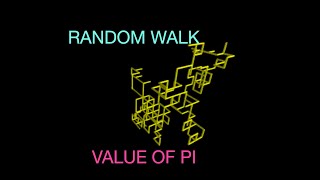
Finding the Value of Pi from a Random Walk Using Python
Explore Python coding to calculate pi using random walks, from 1D to 3D simulations. Enhance mathematical understanding through practical programming.
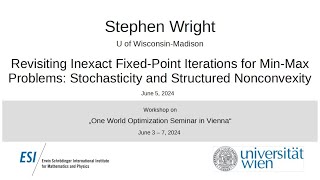
Revisiting Inexact Fixed-Point Iterations for Min-Max Problems - Stochasticity and Cohypomonotonicity
Explore advanced optimization techniques for constrained min-max problems, focusing on inexact fixed-point iterations and stochastic algorithms for nonconvex-nonconcave scenarios.
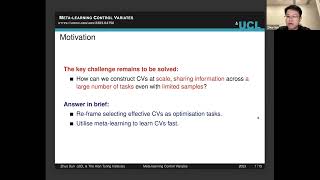
Meta Learning Control Variates for Variance Reduction with Limited Data
Explore meta-learning control variates for variance reduction in Monte Carlo estimators with limited data, leveraging similarities across multiple integration tasks for improved performance.

Combined Stochastic Models for Cancer Patient Trajectories
Integrating diverse clinical data into a unified stochastic model for cancer patient trajectories, combining tumor growth, metastasis, and survival data using Julia for simulation and Bayesian inference.

Monte Carlo Pi Methods: Technical Editing - Lecture ME3256
Enhance technical writing skills for Monte Carlo pi methods. Learn effective editing techniques to improve clarity and precision in scientific reports.
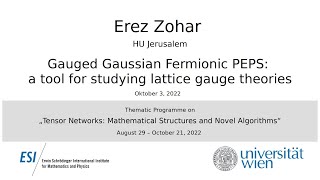
Gauged Gaussian Fermionic PEPS: A Tool for Studying Lattice Gauge Theories
Explore lattice gauge theories using Gauged Gaussian Fermionic PEPS, a tensor network method for efficient numerical computations without sign problems in multiple space dimensions.
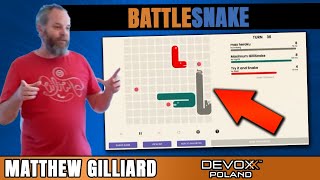
How I Built the World's Okay-est Battlesnake - Devoxx Poland 2022
Odkryj tajniki tworzenia Battlesnake'a, poznaj strategie i algorytmy, które pomogą Ci stworzyć własnego węża do gry w programistyczne wyzwanie.
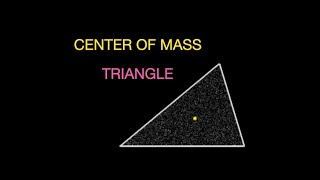
Finding the Center of Mass of a Triangle
Explore methods to determine a triangle's center of mass, including a Monte Carlo calculation using Python for added precision.
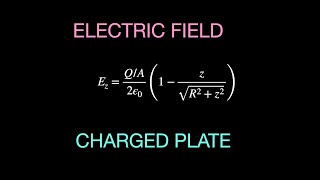
Electric Field due to a Charged Disk and Parallel Plate Capacitors
Derive the electric field of a uniformly charged plate using charged ring principles. Explore parallel plate capacitors and Monte Carlo calculations.
Ocean Modeling: Stochastic Approaches to Numerical Simulations
Explore stochastic approaches in ocean modeling, including Monte-Carlo methods, perturbed initial conditions, and stochastic boundary conditions and dissipation operators for improved numerical simulations.
From Thermal to Athermal Systems: Self-Assembly and Absorbing Phase Transitions
Explore self-assembly and absorbing phase transitions in thermal and athermal systems, bridging physics and biology in non-equilibrium processes.
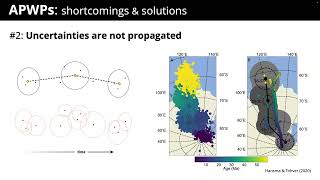
Constructing APWPs from VGPs - Going Virtual
Explore innovative methods for constructing Apparent Polar Wander Paths (APWPs) using Virtual Geomagnetic Poles (VGPs) to enhance understanding of Earth's paleogeography and polar wandering.
Introduction to Artificial Intelligence: Monte Carlo Reinforcement Learning Methods - Lecture 16
Explore Monte Carlo reinforcement learning methods, including prediction and policy iteration, with applications to Blackjack and matchbox machine learning.
Intro to Artificial Intelligence - RL Monte Carlo Methods - Lecture 17
Explore Monte Carlo methods in reinforcement learning, applying algorithmic techniques to solve AI problems in gaming environments.
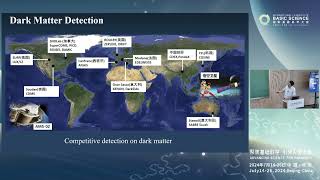
Comparative Lattice Analysis of SU(2) Dark Glueball
Explore SU(2) glueballs as dark matter using lattice simulations. Compare traditional and machine learning methods for mass calculation and scattering cross-section analysis.
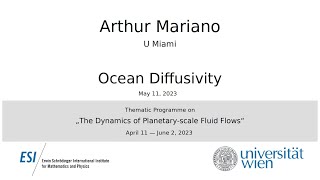
Ocean Diffusivity: Stochastic Approaches in Numerical Modeling
Explore stochastic approaches in ocean modeling, including Monte-Carlo methods, perturbed conditions, and stochastic dissipation operators for improved numerical simulations.
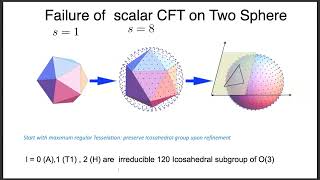
Phi^4 Theory and the Ising Model on a Sphere
Explore phi^4 theory and Ising model on spherical geometry, gaining insights into advanced physics concepts and their applications.
Introduction to Artificial Intelligence: Temporal Difference Learning - Lecture 17
Explore temporal difference learning, on/off-policy methods, and Q-learning. Gain hands-on experience with reinforcement learning algorithms through practical assignments and code examples.