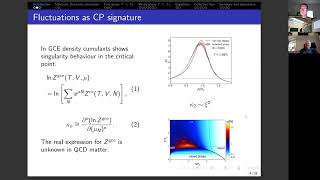
Симуляція флуктуацій чисельної густини біля критичної точки у системі скінченного розміру із фазовим переходом І роду
Дослідіть симуляцію флуктуацій густини та критичні явища у фізичних системах скінченного розміру з фазовим переходом першого роду.

Chain-of-Thought Limitations and Google's SCoRe Method for Language Models
Discover how Google's SCoRe method revolutionizes language models' self-correction abilities through reinforcement learning, surpassing traditional chain-of-thought approaches in mathematical reasoning and code generation.

Monte Carlo and Bayesian Networks for AI Agent Decision Making
Explore advanced probabilistic frameworks combining Dynamic Bayesian Networks and Monte Carlo methods to enhance AI agent decision-making in complex, high-dimensional environments through practical implementations.
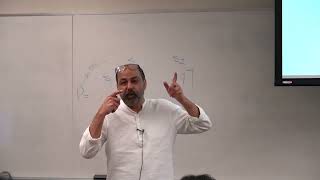
Deep Learning: Introduction to Reinforcement Learning and Policy Iteration - Lecture 12
Dive into reinforcement learning fundamentals, exploring policy iteration, value iteration, Markov decision processes, and Monte Carlo estimation techniques for advanced AI applications.
Probabilistic Programming with Programmable Variational Inference
Explore a modular approach to variational inference in probabilistic programming, enhancing expressiveness and enabling user-defined objectives with systematic gradient estimation transformations.
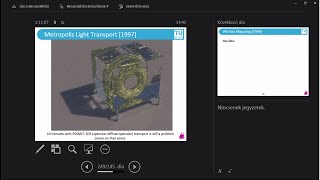
TU Wien Rendering - Metropolis Light Transport
Explore Metropolis Light Transport, an advanced rendering technique that outperforms Bidirectional Path Tracing in difficult scenes, offering optimal importance sampling and improved convergence for caustics.
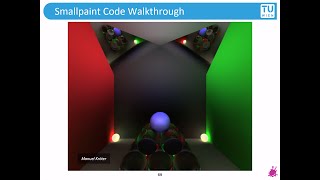
Rendering - Path Tracing Implementation & Code Walkthrough
Comprehensive walkthrough of implementing a path tracer in C++, covering key concepts like vector class, object representation, camera setup, sampling, and rendering techniques.
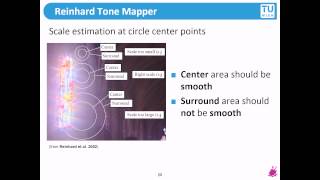
TU Wien Rendering - Reinhard's Tone Mapper
Explore Reinhard's tone mapping algorithm for converting radiance to RGB in rendering, covering both local and global versions used in major renderers.

Rendering - Tone Mapping Basics
Explore tone mapping techniques for converting radiance to RGB in rendering, covering dynamic range, naive and effective mappers, and common misuses.

Unbiased and Consistent Algorithm Classes in Photorealistic Rendering - Lecture 31
Explore photorealistic rendering algorithms, their classifications, and expected behaviors. Learn about biased/unbiased and consistent/inconsistent methods in global illumination.
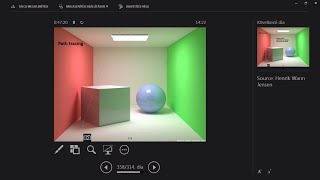
Path Tracing and Next Event Estimation - TU Wien Rendering Lecture 25
Explore path tracing and next event estimation techniques for solving the rendering equation, enhancing light source handling in computer graphics and 3D visualization.
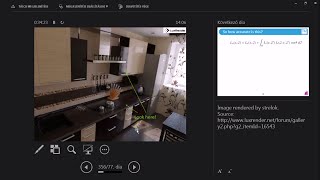
Rendering Equation Properties - TU Wien Rendering Lecture 15
Exploring the Holy Rendering Equation's properties, including its infinite dimensions and singularities, and discussing approaches to solve this complex problem in computer graphics.
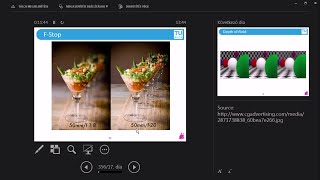
TU Wien Rendering - BRDF Models and Depth of Field - Lecture 13
Explore depth of field effects in rendering, f-stop mechanics, and advanced BRDF models for global illumination. Learn key techniques to enhance realism in computer graphics.
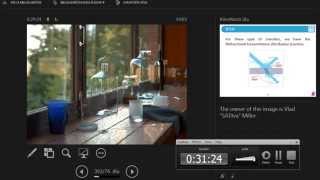
BRDF Models and The Rendering Equation - Lecture 3
Explore BRDF models and the rendering equation, fundamental concepts in computer graphics for characterizing material properties and simulating light transport in virtual environments.
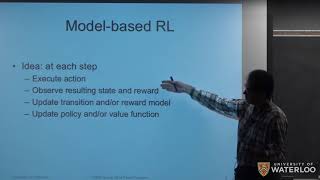
Model-Based RL
Explore model-based reinforcement learning, including complex models, Dyna algorithm, search trees, and Monte Carlo methods for effective planning and decision-making.
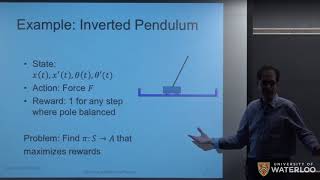
Introduction to RL
Learn key concepts of reinforcement learning including Markov decision processes, policy optimization, and model-free evaluation through lectures and examples like the inverted pendulum and toy maze.
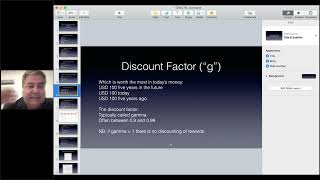
An Intuition-Based Approach to Reinforcement Learning
Explore an intuition-based approach to reinforcement learning, covering key concepts like exploit vs. explore, Q-tables, and stochastic actions, with practical examples and applications.
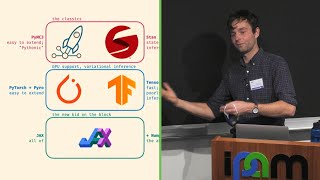
Methods for Scalable Probabilistic Inference - IPAM at UCLA
Explore scalable probabilistic inference methods for astrophysics, focusing on Gaussian Processes for time series analysis and open-source tools to accelerate Bayesian inference with large datasets.

Advances in Applied Probability II
Explore cutting-edge research in applied probability, covering statistical learning, high-dimensional computation, Monte Carlo methods, discrete probability, percolation, and empirical methods. Gain insights from leading experts.
Tensor Networks and Neural Network States - From Chiral Topological Order to Image Classification
Explore neural networks in quantum physics and image recognition, bridging manybody physics with machine learning for innovative applications in various fields.
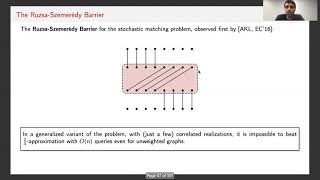
Stochastic Weighted Matching - 1-Epsilon Approximation
Explore stochastic weighted matching algorithms, including Monte Carlo analysis, vertex-independent matching, and greedy approaches for efficient approximation solutions.