Leveraging Molecular ML and Property Prediction in Drug Design
Explore cutting-edge molecular machine learning techniques for drug design, focusing on property prediction to enhance pharmaceutical development.

Crippen's logP as a Quantitative Molecular Benchmark for Explainable AI Heatmaps
Explore Crippen's logP as a quantitative benchmark for explainable AI heatmaps in molecular modeling. Learn about atomic attribution methods and their applications in chemical property prediction.

Introducing Bioptic - Machine Learning for Drug Discovery
Explore Bioptic's architecture, training, and scaling for machine learning in drug discovery with Vlad Vinograv.
Smooth, Exact Rotational Symmetrization for Deep Learning on Point Clouds
Explore rotational symmetrization for deep learning on point clouds, enhancing AI models for chemical and materials modeling with exact compliance to physical constraints.
Calibration and Generalizability of Probabilistic Models on Low-Data Chemical Datasets
Explore calibration and generalizability of probabilistic models on small chemical datasets. Gain insights into model selection and feature choice for molecular property prediction and design.
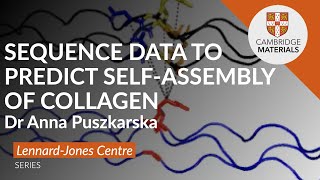
Using Sequence Data to Predict the Self-Assembly of Supramolecular Collagen Structures
Explore collagen self-assembly prediction using amino acid sequences. Learn to design custom periodic collagen structures for novel biomimetic materials.

Fully Quantum (Bio)Molecular Simulations - Dream or Reality?
Explore quantum-mechanical and machine learning advances in molecular simulations, their potential impact, and challenges in achieving fully quantum dynamics of complex biomolecular systems.
New Correlation-Consistent Effective Core Potentials
Explore new correlation-consistent effective core potentials for quantum chemistry calculations, enhancing accuracy and efficiency in molecular simulations.
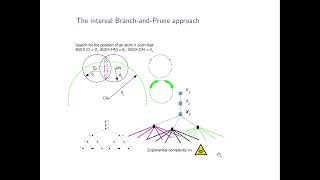
Exploration of Conformations for an Intrinsically Disordered Protein
Explore conformations of intrinsically disordered proteins, delving into their unique structural characteristics and functional implications in biological systems.
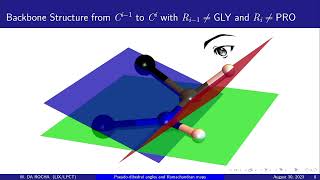
Pseudo Dihedral Angles in Proteins - A New Description of the Ramachandran Map
Explore a novel approach to protein structure analysis using pseudo dihedral angles, offering fresh insights into the Ramachandran map and its implications for protein folding.
Structure-Aware Protein Self-Supervised Learning
Explore structure-aware protein self-supervised learning, combining GNN models with protein language models to enhance structural information capture for improved downstream task performance.

SchNet - A Deep Learning Architecture for Molecules and Materials
Explore SchNet, a deep learning architecture for modeling atomistic systems, and its applications in predicting molecular and material properties across chemical space.
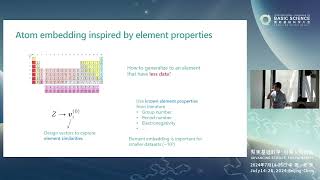
Accelerating Materials Design with Crystal Graph Neural Networks
Explore Crystal Graph Convolutional Neural Networks for predicting material properties and their impact on graph neural networks and transformers in materials design.
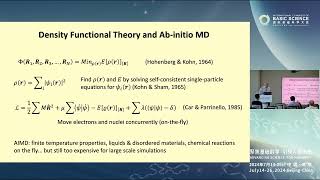
DP-GEN: An Optimal Active Learning Protocol for Constructing Interatomic Potentials - Materials Simulation
Explore DP-GEN, an innovative active learning protocol revolutionizing molecular modeling by constructing accurate interatomic potentials. Learn its three-step iterative process and applications in materials simulation.
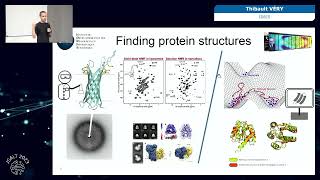
Deep Learning for Protein Structure Discovery
Explore deep learning techniques for uncovering protein structures, revolutionizing molecular biology and drug discovery.
Surrogate Hessian Method for Geometry Optimization - QMCPACK Workshop 2023
Explore the surrogate Hessian method for efficient geometry optimization in quantum systems, presented by Jaron Krogel at the QMCPACK Workshop 2023.
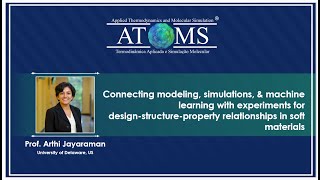
Connecting Modeling, Simulations, and Machine Learning with Experiments for Soft Materials Design - Structure-Property Relationships
Explore molecular modeling, simulations, and machine learning for soft materials design. Connect computational methods with experiments to uncover structure-property relationships in polymers and colloids.
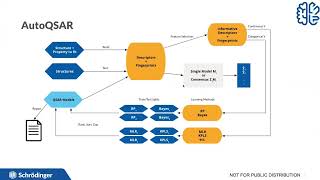
Machine Learning Models for Ionic Conductivity with Schrödinger's AutoQSAR - Hands-On Workshop
Explore machine learning for ionic conductivity prediction using Schrödinger's AutoQSAR tool. Gain hands-on experience with MS Maestro interface to create and implement models for materials science applications.
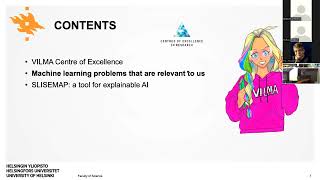
Explainable and Robust AI for VILMA Virtual Laboratory
Explore explainable AI and uncertainty quantification in atmospheric research. Learn about SLISEMAP, a supervised manifold visualization method for local explanations and dimensionality reduction.
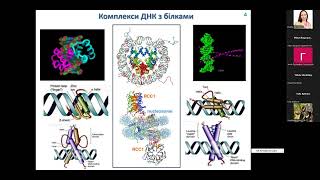
Computational Methods of Structural Bioinformatics in Studies of Protein-Nucleic Recognition
Explore computational methods in structural bioinformatics, focusing on protein-nucleic recognition mechanisms and their applications in DNA physics through advanced analytical approaches.
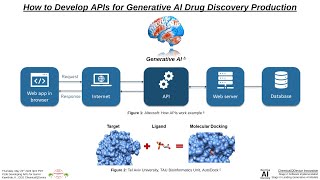
How to Develop APIs for Generative AI Drug Discovery Production
Explore platforms for creating APIs from Large Language Models to enhance drug discovery workflows. Learn to increase efficiency, reduce errors, and lower costs through synchronization and automation.