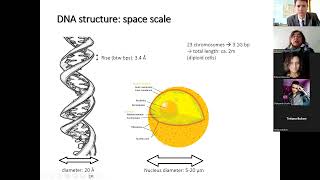
Coarse Graining and Multiscale Modeling of DNA - Part 1
Explore advanced computational techniques for DNA modeling, focusing on coarse-graining methods and multiscale approaches to understand DNA structure and dynamics at different resolutions.
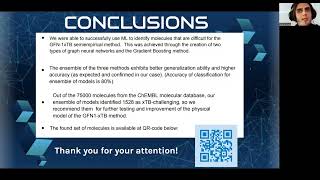
Revealing Inaccuracies of the GFN1-xTB Semi-Empirical Method with Machine-Learning Toolset
Explore machine learning applications in identifying limitations of GFN1-xTB semi-empirical calculations for computational chemistry and molecular modeling.
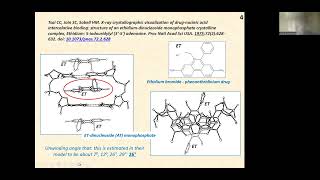
Computer Simulations of DNA-Ligand Intercalation Complexes - Special Features
Dive into advanced computational methods for studying DNA-ligand intercalation complexes, exploring simulation techniques and key molecular interactions in biophysical research.

The Effect of Osmotic Pressure on Collagen Mimetic Sequences
Groundbreaking analysis of collagen molecule behavior upon dehydration using collagen mimetic peptides. Reveals sequence-dependent elongation or contraction, crucial for understanding biological materials.
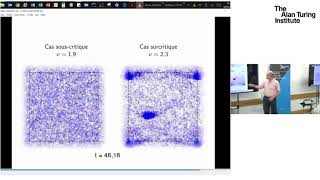
From Micro to Macro in Collective Dynamics
Explore methods for modeling collective dynamics, from microscopic to macroscopic scales. Learn techniques for analyzing complex systems in various scientific fields.
Toy Chemistry - Three Bonds
Explore a computational model of chemical bonding, examining bond formation probabilities and their impact on molecular structures.
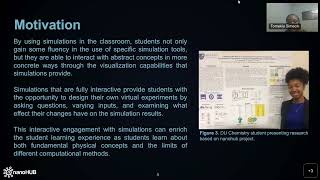
Introduction to Computational Chemistry Using the NUITNS Simulation Toolkit in nanoHUB
Explore computational chemistry using NUITNS toolkit on nanoHUB. Learn to integrate simulations in undergraduate chemistry courses and analyze nanodiamonds through hands-on demonstrations and practical applications.
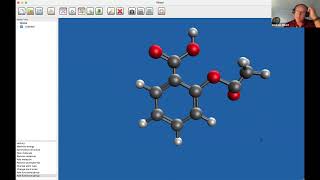
Introduction to IQmol - 2024 Virtual Winter School in Computational Chemistry - Session 1
Crash course on IQmol: build molecules, submit calculations, analyze results. Includes overview and hands-on lab exercise for Q-Chem's graphical interface.
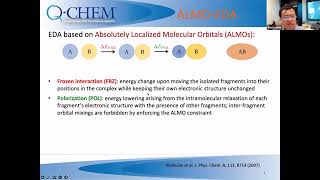
Energy Decomposition Analysis Techniques and Applications - Session 5
Explore energy decomposition analysis techniques, covering theory and applications in Q-Chem software, with Prof. Yuezhi Mao from the University of San Diego.
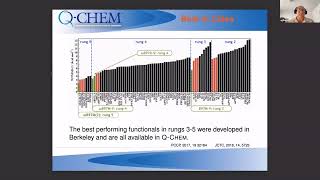
New Features in Q-Chem 6 - 2023 Virtual Winter School in Computational Chemistry
Explore the latest advancements in computational chemistry software with insights on Q-Chem 6.0 and upcoming features in version 6.1, enhancing your research capabilities.
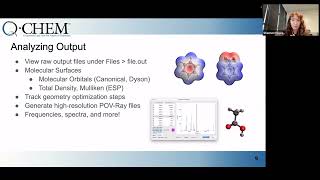
Introduction to IQmol: Building Molecules and Analyzing Results - Session 2
Crash course on IQmol: build molecules, submit calculations, analyze results. Hands-on tutorial for Q-Chem's graphical interface, with practical exercises and installation guidance.
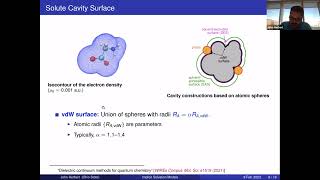
Solvent Models in Molecular Quantum Chemistry Calculations - Session 8
Explore solvent models in quantum chemistry with Prof. Herbert, covering continuum electrostatics, solvation energies, and applications to ionization and excitation processes.
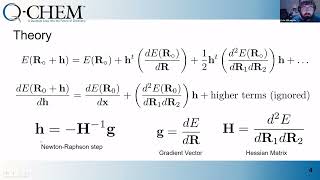
Geometry Optimization in Q-Chem - 2023 Virtual Winter School in Computational Chemistry
Overview of geometry optimization in Q-Chem, focusing on practical aspects of running calculations and paired with a hands-on lab exercise.
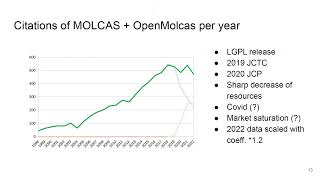
Paragatic Observations Over the Development of Software in Quantum Chemistry
Explore pragmatic insights into quantum chemistry software development, focusing on key trends and practical considerations in this evolving field.
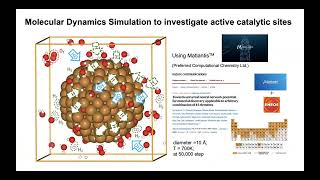
Electronic-Structure Informatics: Concept, Method, Applications, and Plausible Extension
Explore electronic-structure informatics, covering concepts, methods, applications, and potential extensions in computational chemistry and materials science.
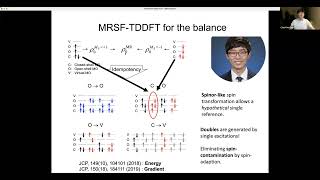
MRSF-TDDFT - A Simple Yet Powerful Quantum Theory
Explore a powerful quantum theory, MRSF-TDDFT, and its applications in computational chemistry and materials science.
Rigid Body Flows for Sampling Molecular Crystal Structures
Explore normalizing flows for modeling 3D molecular crystal structures. Learn about flows on rigid bodies, sign-equivariant flows, and implementations like Moebius flows and convex gradient maps.
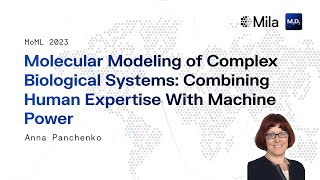
Molecular Modeling of Complex Biological Systems
Explore molecular modeling techniques for complex biological systems, focusing on chromatin dynamics, DNA methylation effects, and histone tail modeling. Learn to predict system responses to modifications and mutations.
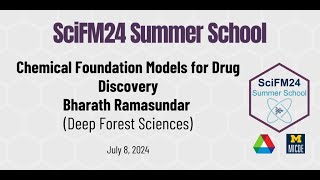
Chemical Foundation Models for Drug Discovery
Explore chemical foundation models for drug discovery, focusing on innovative approaches and potential breakthroughs in pharmaceutical research.

Idea of Z-Matrix
Explore the concept of Z-matrix in molecular geometry, understanding its structure and applications in computational chemistry.
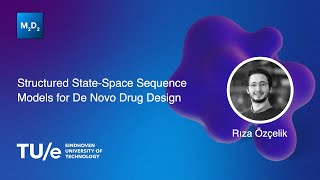
Structured State-Space Sequence Models for De Novo Drug Design
Explore the potential of Structured State-Space Sequence (S4) models in advancing chemical language modeling for de novo drug design, including bioactive compound identification and natural product design.