
Polymer Material Design for Gas Separations - Lecture 2
Explore polymer material design for gas separations, focusing on advanced techniques and applications in membrane technology for efficient molecular separation processes.
Computational Problems for Intro Physics: Spring Molecule Energies - Matter and Interactions Supplement
Explore energies in spring-bonded atoms through computational problems, supplementing Matter and Interactions physics courses with hands-on coding exercises.
Generalizable Sampling of Conformational Ensembles with Latent Space Dynamics
Explore innovative techniques for sampling conformational ensembles using latent space dynamics, enhancing our understanding of complex molecular systems and their behavior.
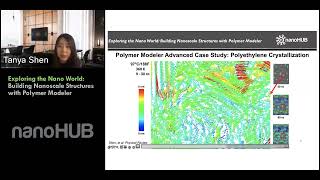
Exploring the Nano World: Building Nanoscale Structures with Polymer Modeler
Explore nanoscale polymer structures using atomic-level simulations. Learn about crystal structures, polymer science paradigms, and use an interactive Polymer Modeler to understand polyacrylonitrile processing and crystallization.
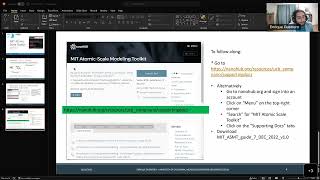
Teaching and Learning with the MIT Atomic Scale Modeling Toolkit - Classical and Quantum Atomic Modeling
Explore classical and quantum atomic modeling using MIT's toolkit. Perform molecular dynamics, Monte Carlo simulations, and quantum chemistry computations. Learn practical applications for various physics and chemistry courses.
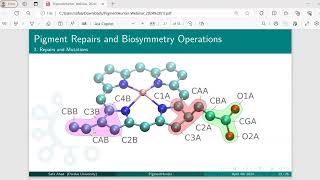
Building a Graphical Interface for Exploring Protein Dynamics and Spectroscopy - PigmentHunter
Explore protein dynamics and spectroscopy with PigmentHunter, a user-friendly nanoHUB tool for simulating excitonic spectra of chlorophyll proteins. Learn its interface, workflow, and applications in molecular dynamics and spectral analysis.
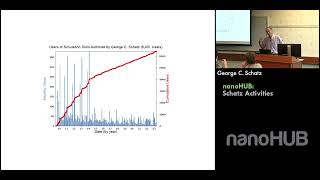
Teaching Chemistry Tools on nanoHUB - Overview by George Schatz
Explore nanoHUB tools for teaching chemistry, including DDSCAT, QC-Lab, and Nanosphere Optics Lab. Learn about applications in optics, spectroscopy, and molecular modeling from Prof. George Schatz.
Introduction to the Dynamics of Disordered Systems - Equilibrium and Gradient Descent - Part 3
Explore equilibrium dynamics and gradient descent in disordered systems, focusing on theoretical concepts and practical applications in statistical physics and optimization.
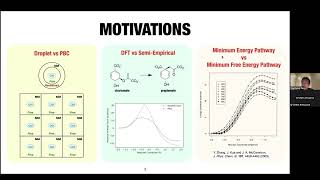
Multiscale Free Energy Simulations of Biochemical Reactions Using QMHub - Webinar 72
Explore QMHub for efficient QM/MM simulations in biochemical reactions, combining enhanced sampling and machine learning for accurate modeling of biomolecular systems.
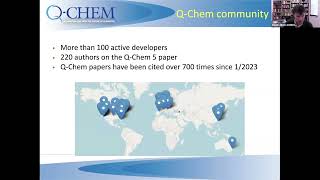
Q-Chem: An Engine for Innovation - 2024 Virtual Winter School in Computational Chemistry
Explore recent developments and new features in Q-Chem code with Martin Head-Gordon from UC Berkeley, highlighting advancements in computational chemistry software.
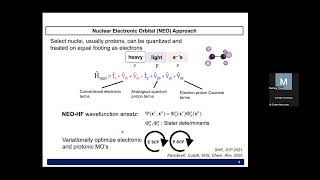
Development of Nuclear-Electronic Orbital Methods in Q-Chem 6
Explore advanced nuclear-electronic orbital methods in Q-Chem 6, including NEO-PCM and NEO-QM/MM approaches, for capturing nuclear quantum effects in chemical and biological applications.
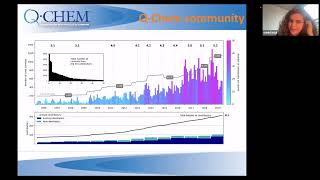
Introduction to Q-Chem Software Package - Session 1
Explore Q-Chem software: features, community, and applications in computational chemistry. Learn about ground state methods, excited states, and molecular dynamics simulations.
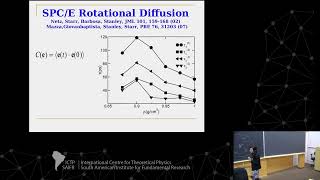
Nanoconfined Water - Class 2
Explore nanoconfined water's properties and applications in biology and technology through expert insights and cutting-edge research.
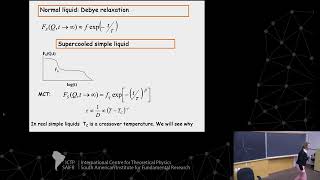
Dynamics and Supercooled Water - Class 3
Explore dynamics and supercooled water, focusing on anomalies and applications in biology and technology. Gain insights from expert Paola Gallo's in-depth lecture.
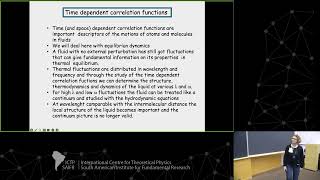
Dynamics and Supercooled Water - Class 1
Explore the dynamics and properties of supercooled water in this comprehensive lecture, part of a specialized school on water anomalies and applications.
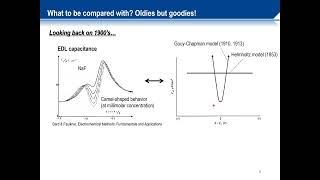
QM-Rooted Multiscale Simulation - Eyes to See the Unseen, Buried Electric Double Layer
Explore advanced QM-rooted multiscale simulation techniques to visualize and analyze hidden electric double layers in complex systems.
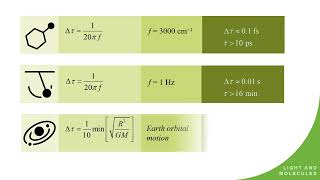
Nonadiabatic Dynamics in the Long Timescale - The Next Challenge in Computational Photochemistry
Explore nonadiabatic dynamics in long timescales and its impact on computational photochemistry. Gain insights into cutting-edge research challenges and potential solutions.
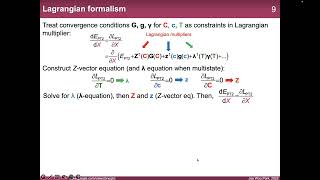
Multireference Quantum Chemistry for Exploring Potential Energy Surfaces
Explore potential energy surfaces using advanced multireference quantum chemistry techniques. Gain insights into complex molecular systems and their behavior.
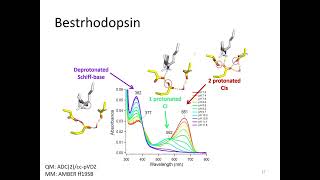
Probing Photochemistry in Protein Environment: QM/MM Study on Rhodopsins
Explore photochemistry in proteins through QM/MM studies on Rhodopsins, uncovering molecular mechanisms and protein-chromophore interactions.
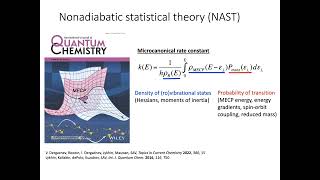
NAST: Nonadiabatic Statistical Theory Package for Predicting Kinetics of Spin-Dependent Processes
Explore nonadiabatic statistical theory for predicting spin-dependent process kinetics, comparing methods and examining real-world applications like ISC and surface reactions.
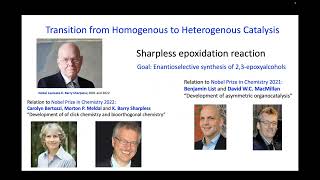
Exploring Potential Energy Surfaces with the Unified Reaction Valley Approach (URVA)
Explore potential energy surfaces using the unified reaction valley approach (URVA) for advanced chemical reaction analysis and understanding.