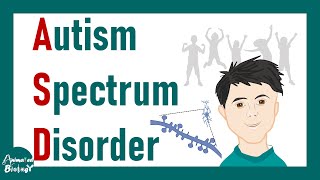
Cellular and Molecular Basis of Autism Spectrum Disorder (ASD)
Explore the cellular and molecular foundations of Autism Spectrum Disorder (ASD) in this concise overview, gaining insights into the biological aspects of this complex condition.
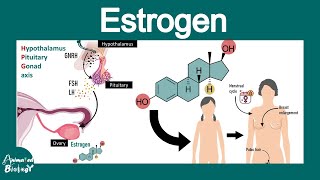
Estrogen: Effects on Female Reproductive System and Molecular Mechanism of Action
Explore estrogen's role in the female reproductive system, including its molecular mechanisms and effects. Gain insights into this crucial hormone's functions and impacts.
Hematopoiesis: The Good, the Bad, and the Indeterminant - Karl Blume Memorial Lecture
Explore hematopoiesis with expert Beverly Mitchell, covering its positive, negative, and uncertain aspects in this comprehensive medical lecture.
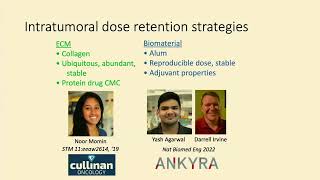
Occam's Pharmacokinetics - Anchored Cytokine Immunotherapy for Cancer
Explore innovative cancer immunotherapy techniques using anchored cytokines, as presented by MIT's K. Dane Wittrup in this bioengineering seminar.
Understanding Parkinson's Disease Through Data Science
Explore data science applications in understanding Parkinson's disease, including building a global data ecosystem and driving scientific discovery for neurodegenerative diseases.

Molecular Docking with AutoDock VINA - Script-Based Method for Multiple Ligands
Learn script-based molecular docking with AutoDock Vina for virtual screening of multiple ligands. Explore conformational space, calculate binding energies, and identify potential lead compounds efficiently.

PCR Primer Designing Using NCBI Primer BLAST - In Silico Design and Validation
Learn to design PCR primers using NCBI Primer BLAST, covering key requirements, tools, and step-by-step process for effective primer selection and validation in molecular biology applications.

Molecular Docking and Virtual Screening with AutoDock VINA - Bioinformatics Tutorial
Learn molecular docking with AutoDock VINA for virtual screening in drug discovery. Explore ligand-protein interactions, scoring functions, and post-processing techniques to identify potential lead compounds.
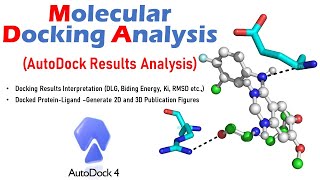
Molecular Docking Analysis - Autodock Results and Visualization
Learn to analyze molecular docking results using Autodock, extract key scores, and generate 2D/3D visualizations with tools like Pymol and LigPlot for effective protein-ligand interaction studies.

Molecular Docking for Beginners - Autodock Full Tutorial
Guía paso a paso sobre acoplamiento molecular proteína-ligando utilizando AutoDock. Aprenda a investigar interacciones a nivel atómico para comprender mecanismos bioquímicos.
De Novo Protein Design Using Deep Learning and Musical Representations
Explore innovative protein design using deep learning and musical representations, bridging materials science and artificial intelligence for groundbreaking bioengineering applications.
Advances in Predictive Models for Single-cell and Regulatory Genomics
Explore cutting-edge predictive models for single-cell and regulatory genomics, enhancing understanding of cancer progression and potential treatment approaches.
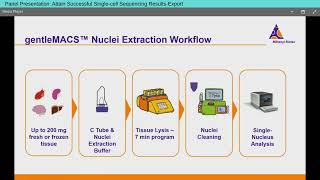
Attain Successful Single-Cell Sequencing Results with Latest Cell and Nuclei Isolation Workflows
Explore cutting-edge single-cell sequencing techniques and workflows for successful whole transcriptome profiling. Learn from experts about revolutionary technologies enabling parallel analysis of thousands of cells.
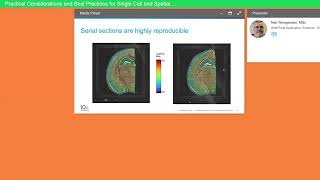
Practical Considerations and Best Practices for Single Cell and Spatial Transcriptomics
Explore best practices for single cell and spatial transcriptomics, uncovering complex biological systems with high-resolution approaches. Gain insights from an expert in genomics and earn PACE credits.
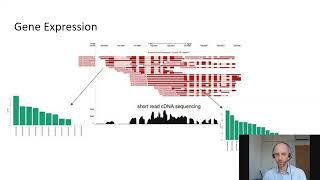
Studying Promoter and Isoform Diversity with Long-Read Transcriptome Sequencing
Explore promoter and isoform diversity in cancer transcriptomes using long-read RNA sequencing. Gain insights into alternative promoters' role in gene regulation and their impact on cancer research.
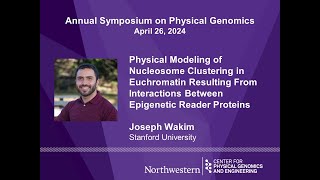
Modeling of Nucleosome Clustering in Euchromatin Resulting from Reader Protein Interactions
Explore nucleosome clustering in euchromatin through modeling interactions between reader proteins. Gain insights into chromosomal organization and dynamics from the Spakowitz lab's research.
Hierarchical Models for Deep Mutational Scans - CGSI 2024
Explore hierarchical models for deep mutational scans, focusing on robust analysis frameworks, drug transporter biophysics, and variant effect prediction in genomics research.
Coarse-grained Simulations of Nucleosomes
Explore coarse-grained simulations of nucleosomes to understand chromatin organization and gene regulation through interdisciplinary computational modeling techniques.
Getting to the Heart of the Matter: Novel Analytical Technologies Provide a New Perspective on a Complex Organ
Explore novel analytical technologies providing new insights into the molecular landscape of the human heart, focusing on cell surface proteins and their role in cardiac physiology.
From Causal Inference to Autoencoders, Memorization & Gene Regulation - Caroline Uhler, MIT
Exploring causal inference, autoencoders, and gene regulation through genomics and 3D genome organization. Integrates data modalities, analyzes overparameterized autoencoders, and links memorization to real-valued data retrieval.

An Introduction to Homology - Algebraic Topology
Explore higher-dimensional topology through homology groups, cycles, and spanning trees. Learn to compute and characterize independent cycles in graphs using algebraic techniques.