Practicing Data Science in the Cloud
Explore end-to-end Machine Learning pipelines in the cloud, from data processing to model deployment, with practical insights on choosing environments and optimizing workflows.
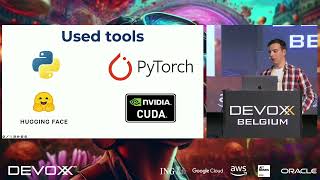
BERT for Legal Texts - Training and Fine Tuning in a New Language
Explore BERT model adaptation for legal texts in new languages, focusing on training and fine-tuning techniques for improved natural language processing in specialized domains.
Demystifying Deep Learning for Data Scientists
Uncover the inner workings of deep learning frameworks and gain foundational knowledge to confidently implement models in any framework of your choice.
Charlas - Laura Gutiérrez Funderburk: Reduciendo prejuicio en la inteligencia artificial
Aprende a identificar y reducir sesgos en modelos de IA para salud usando Python. Explora técnicas de evaluación de datos, entrenamiento de modelos y optimización con Fairlearn para mejorar la equidad en las predicciones.
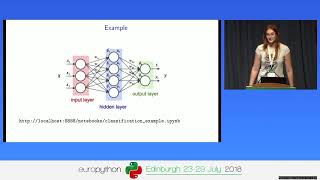
Data Is Not Flat
Explore feature engineering techniques for low-dimensional data to enhance model performance, with a focus on neural network classification and practical examples.
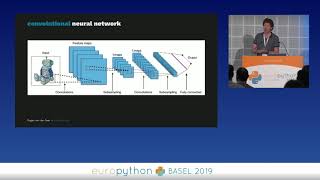
How to Train an Image Classifier Using PyTorch
Learn to build an image classifier using PyTorch in this hands-on tutorial. Covers data preparation, model selection, training techniques, and evaluation, with practical tips and code examples for immediate implementation.
Microsoft SQL Server Machine Learning Workloads on Red Hat Enterprise Linux and Red Hat OpenShift
Accelerate machine learning pipelines using SQL Server on Red Hat Enterprise Linux and OpenShift. Learn in-database ML techniques and containerization for efficient model production and deployment.

TensorFlow Training on the JVM
Explore TensorFlow training on the JVM, combining ML models with Java for commercial projects. Learn architecture, operations, and practical implementation techniques.
Elephant on Wheels - Petabyte-scale AI @ LinkedIn
Explore LinkedIn's journey in integrating Kubernetes for AI workloads, focusing on secure HDFS access and innovative scheduling solutions for petabyte-scale operations.
Deep Learning with CNTK and F#
Explore deep learning using Microsoft's CNTK and F#. Learn neural network concepts, train models, and integrate them into .NET applications for tasks like computer vision and speech recognition.
Building and Training Your Own Custom Image Recognition AI
Learn to build and train custom image recognition models using Cognitive Services, enabling identification of specific objects in photographs without extensive coding.
ML.NET for Developers Without Any AI Experience
Explore AI in .NET applications using ML.NET. Learn to build and train ML models for various tasks like detecting laughter, analyzing mood, and predicting code bugs, all with your existing .NET skills.
DevOps for Machine Learning
Explore DevOps principles for effective collaboration between data scientists and software engineers in machine learning projects, focusing on automated pipelines and best practices.
DevOps for Machine Learning
Explore how DevOps principles can streamline collaboration between data scientists and software engineers, creating robust pipelines for machine learning model development and deployment.
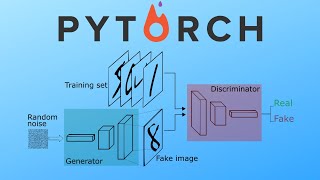
Building Our First Simple GAN
Learn to build a simple Generative Adversarial Network (GAN) using fully connected layers and train it on the MNIST dataset. Explore the architecture, setup, and training process for this fundamental deep learning model.
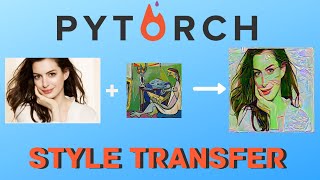
Pytorch Neural Style Transfer Tutorial
Learn to implement Neural Style Transfer from scratch in PyTorch, covering theory and practical coding to blend content and style images for artistic results.

AI for Everyone - Face Recognition with OpenCV
Learn to implement face recognition using OpenCV and Python. Covers model training, face detection in images, and practical demonstrations with a webcam.
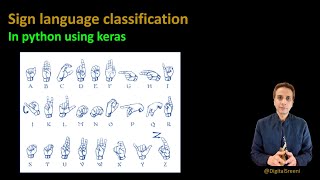
Classification of MNIST Sign Language Alphabets Using Deep Learning
Learn to classify hand sign language alphabets using deep learning, covering data preparation, model creation, and result analysis for 25 classes.
How to Deliver Enterprise Value with Foundation Models
Explore practical strategies for leveraging foundation models to deliver enterprise value, focusing on domain-specific workflows and improved accuracy for business applications.
No GPU Before Product-Market Fit - Optimizing AI Startups
Explore Gen AI startup strategies without training models. Learn ecosystem optimization and future trends from Stanislas Polu, co-founder of dust.tt and OpenAI alumnus.
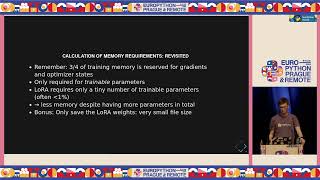
Fine-tuning Large Models on Local Hardware Using PEFT and Quantization
Explore Parameter-Efficient Fine-Tuning (PEFT) and quantization techniques to train large neural networks on modest hardware using the PEFT library and Hugging Face ecosystem.