
Creating and Using Timers in Raspberry Pi Pico W Projects - Lesson 80
Learn to create and use non-blocking timers in MicroPython for improved program timing and simultaneous LED blinking on Raspberry Pi Pico W, enhancing project efficiency and functionality.

Create an LED Binary Counter Using Only Timers - Raspberry Pi Pico W Lesson 82
Create a 4-bit LED binary counter using timers on Raspberry Pi Pico W. Step-by-step guide to implement the solution, extending concepts from previous lessons.

MicroPython and the Internet of Things
Explore MicroPython for IoT: efficient Python 3 implementation for microcontrollers. Learn memory optimization, hardware integration, and live demos showcasing its capabilities in embedded systems.
ChatGPT with Arduino and ESP32 - C++ and MicroPython Coding
Explore AI-assisted coding for Arduino and ESP32 using ChatGPT. Learn to create projects like temperature meters, WiFi scanners, and web servers in C++ and MicroPython.
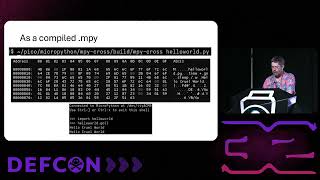
Reverse Engineering MicroPython Frozen Modules
Dive into advanced techniques for identifying and reverse engineering frozen MicroPython modules in firmware using Ghidra, focusing on bytecode analysis and module reconstruction methods.

Mastering PIO State Machine Tx and Rx FIFO Operations on Raspberry Pi Pico W - Lesson 89
Master PIO state machine Tx and Rx FIFO operations on Raspberry Pi Pico W. Learn to use push(), pull(), get(), and put() commands for efficient data exchange between PIO and main processor.

Arduino C++ vs MicroPython Comparison - Which Language is Best?
Compare Arduino C++ and MicroPython for microcontroller programming. Explore strengths, weaknesses, and use cases of each language to determine the best fit for your projects.

Raspberry Pi Pico 2 and New Pimoroni Products - Overview and Features
Explore the new Raspberry Pi Pico 2 with RP2350 dual Arm & Risc V architecture. Learn about its features, comparisons, and exciting new Pimoroni products in this comprehensive overview.
Two-way Bluetooth with Raspberry Pi Pico W and MicroPython
Learn to set up two-way Bluetooth communication using Raspberry Pi Pico W and MicroPython, enabling wireless connectivity for your projects.

How to Talk Between Raspberry Pis and Picos with Bluetooth Using MicroPython
Explore Bluetooth communication between Raspberry Pis and Picos using MicroPython in this hands-on tutorial, enhancing your IoT project capabilities.
Arduino Alvik Robot - Maker's Guide
Explore Arduino Alvik: a tiny, dual-processor robot with advanced sensors. Learn MicroPython and C++ programming, add servos and I2C devices. Ideal for makers and educators.

Raspberry Pi Pico W - Using Interrupts in MicroPython - Lesson 83
Learn to implement hardware interrupts on Raspberry Pi Pico W using MicroPython, enabling efficient background handling of GPIO inputs like buttons and switches.

Debounce Pushbutton Switches Using Interrupts - Raspberry Pi Pico W Lesson 84
Learn to implement hardware interrupts on Raspberry Pi Pico W for debouncing pushbutton switches, enhancing responsiveness and reliability in micropython projects.

Raspberry Pi Pico W - Button Controlled Binary Counter Using Interrupts
Learn to create a hardware interrupt on Raspberry Pi Pico W using MicroPython. Implement a 4-bit LED binary counter controlled by a debounced pushbutton, ensuring accurate counting.

Raspberry Pi Pico W - Up Down Binary Counter Using Interrupts and Pushbuttons - Lesson 86
Learn to create a binary counter with pushbuttons on Raspberry Pi Pico W using MicroPython. Implement hardware interrupts, debouncing, and LED control for an interactive up/down counting system.
Python Introduction - Applications, Frameworks, and Fundamentals
Comprehensive introduction to Python, covering applications, versions, frameworks, and key concepts. Ideal for beginners seeking an overview of Python's capabilities and practical uses.
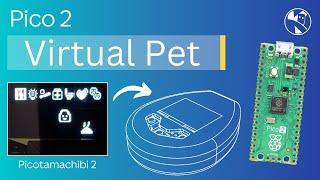
Make a Pico 2 Powered Virtual Pet - Picotamachibi 2 Using MicroPython
Create a Pico 2-powered virtual pet using MicroPython, buttons, and an OLED display. Learn PCB design, UI graphics, animation, and game state management in this hands-on tutorial.
18 Raspberry Pi Pico Projects for Beginners
Explore 18 diverse Raspberry Pi Pico projects, from web servers to robots. Learn MicroPython, build smart devices, and create fun gadgets while developing practical skills in electronics and programming.

Raspberry Pi Pico W - Introduction to PIO and State Machines - Lesson 87
Learn to program and interact with PIO blocks and state machines on Raspberry Pi Pico W. Covers instantiation, assembly code writing, and Python integration for advanced microcontroller projects.

Binary Counter with Reset Using PIO State Machine on Raspberry Pi Pico W - Lesson 95
Master PIO state machines on Raspberry Pi Pico W by building a binary counter with reset functionality using LED displays and button inputs, all implemented through hardware-level programming.

Monitoring Two Buttons on the Raspberry Pi Pico W PIO State Machine - Lesson 94
Learn to monitor multiple GPIO pins and buttons using Raspberry Pi Pico's PIO State Machines, implementing efficient input reading and conditional branching in MicroPython.