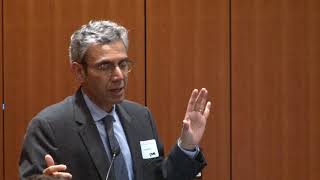
HIV Cure Research Overview - Current Strategies and Future Directions
Explore the latest HIV cure research strategies, recent breakthroughs, and future directions with Dr. Raj Gandhi in this comprehensive overview of cutting-edge scientific developments.
A Healthy Sexual Life - What Everyone Needs to Know
Stanford doctors discuss latest screening tests, diagnostics, treatments, and prevention therapies for sexually transmitted infections, including HIV. Interactive session covers syphilis, chlamydia, gonorrhea, and new protective measures.
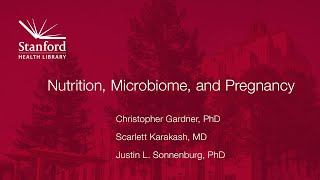
Nutrition, Microbiome, and Pregnancy - Maternal and Offspring Microbiome Study
Explore the crucial link between nutrition, gut health, and pregnancy. Learn how mothers transfer microbes to infants and discover insights from the Maternal & Offspring Microbiome Study (MOMS).

Heart Transplant 2023 Virtual Symposium - Stanford Health Care
Annual symposium providing updates on heart transplantation, featuring expert talks on medical advancements, patient experiences, and the gut microbiome's role in health. Offers valuable insights for recipients and caregivers.
Heart Transplant 2023 Virtual Symposium - Stanford Health Care
Annual symposium providing updates on heart transplantation, featuring expert talks on medical advancements, patient experiences, diet-gut microbiome connection, and physical therapy for transplant recipients.
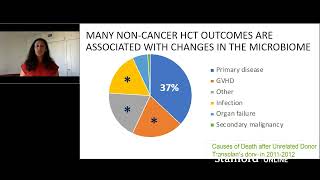
Listening to Our Guts - How Microbiomics Is Transforming Medicine
Explore groundbreaking research on gut microbiome's impact on cancer patients and potential microbiome-inspired therapies, led by Dr. Ami S. Bhatt from Stanford University.
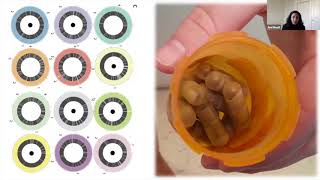
Identifying Microbiome Markers of Progression of Alzheimer's Disease - Fall 2020
Explore microbiome markers in Alzheimer's progression, focusing on genome analysis, sequencing techniques, and the microbiome's role in neuroinflammatory events and disease onset.
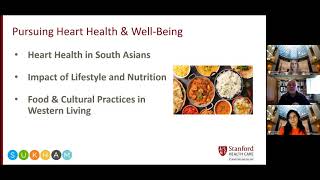
South Asian Food and Cultural Practices in Western Living - Pursuing Heart Health and Well-Being
Integrating South Asian foods and practices for heart health in Western lifestyles. Learn about indigenous grains, fasting, and cultural approaches to well-being from a nutrition expert.
Immunology - Session 2
Explore key concepts in immunology, including immune system components, mechanisms, and responses to pathogens. Gain insights into the body's defense strategies.

Smallpox - The Speckled Monster and Its Impact on Western Society - Lecture 6
Explore the history, transmission, symptoms, and treatments of smallpox in 18th century Western society, from its rise as a feared disease to early attempts at prevention and cure.

AIDS: A Clinician's Perspective on the Modern Epidemic - Lecture 23
Dr. Margaret Craven explores AIDS as a modern epidemic, discussing its rapid global spread, medical and social factors, challenges in public health response, and future directions in treatment and prevention.

AIDS: Global Impact and Public Health Strategies - Lecture 1
Explore the global AIDS pandemic, its transmission, epidemiology, societal impacts, and public health strategies, with a focus on regional differences and local factors affecting the epidemic.

The Germ Theory of Disease - Epidemics in Western Society Since 1600
Explore the revolutionary germ theory of disease, its preconditions, key figures like Pasteur and Koch, and its profound impact on medical science and public health.
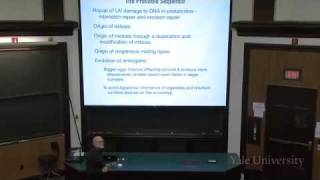
The Evolution of Sex - Principles of Evolution, Ecology and Behavior
Explore the evolutionary benefits and costs of sexual reproduction, including genetic diversity, pathogen resistance, and the prevalence of sex in nature's recent evolutionary branches.

The HIV and COVID-19 Global Pandemics - Lessons for Responding to Both Viruses
Explore global pandemics, HIV treatment advancements, and COVID-19 response strategies. Learn about emerging infectious diseases, gene therapy, and innovative therapeutic approaches from a leading expert.
Computational Genomics
Explore computational genomics, covering DNA sequencing technologies, genome assembly, BLAST algorithms, antibiotic resistance, and advanced k-mer analysis techniques.
Rigorous Uncertainty: Science During COVID-19 with David Krakauer
Exploring COVID-19's impact through complexity science, discussing citizen-based medicine, data challenges, group size recommendations, and out-of-equilibrium thinking to reveal hidden interconnections in modern life.
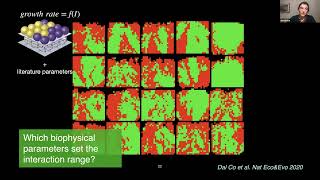
Spatial Interaction Networks in Microbial Communities - Alma Dal Co
Explore spatial interactions in microbial communities using microfluidic devices, revealing local dynamics, interaction ranges, and their impact on community behavior and metabolite exchange.
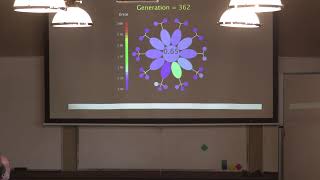
Modelling the Role of the Microbiome in Evolution
Explore how microorganisms influence multicellular evolution, adaptability, and biological functions. Learn about holobiont fitness, specialized diversity, and the emergence of complex organisms through coevolution.
Meet Your Inner Microbial Zoo - Understanding the Human Microbiome
Explore the human microbiome's impact on health, development, and immunity. Learn about metagenomics, predictive modeling, and future clinical applications in this fascinating lecture on our inner microbial ecosystem.
The Post-Darwinian World - Expanding Darwin's Theories in Modern Science
Explore post-Darwinian complexities in biology, economics, and politics, examining ecosystems, food webs, origin of life, HIV/AIDS, and sociobiology to expand on Darwin's evolutionary theories.