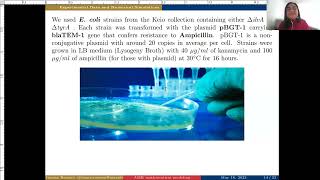
Mathematical Modeling of AMR in Complex Microbial Communities
Explore mathematical approaches to model antimicrobial resistance in complex microbial ecosystems, focusing on advanced techniques and their applications in public health.
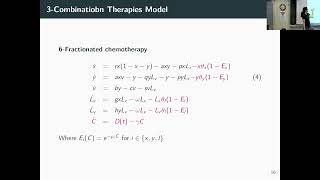
Comparing Combination Therapies with Oncolytic Viruses in a Simple Mathematical Framework
Explore mathematical models for comparing combination cancer therapies using oncolytic viruses, examining their effectiveness and potential outcomes in treatment strategies.
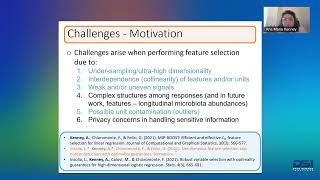
Simultaneous Feature Selection and Outlier Detection Using Mixed-Integer Programming
Explore mixed-integer programming for simultaneous feature selection and outlier detection in high-dimensional regressions, with applications to biomedical research and microbiome studies.
Group Dynamics in Phototaxis
Explore mathematical approaches to modeling group dynamics in phototaxis, including discrete, kinetic, and PDE-based methods for studying bacterial movement towards light.
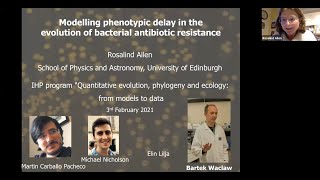
Modelling Phenotypic Delay in the Evolution of Bacterial Antibiotic Resistance
Explore bacterial antibiotic resistance evolution through phenotypic delay modeling, uncovering insights into this critical health challenge.

A Scientist's Guide to Composting
Discover the science behind composting and learn practical tips to turn kitchen scraps into nutrient-rich soil. Explore microbial processes, optimal conditions, and benefits for sustainable gardening and waste reduction.
What Is Life? - With Paul Nurse
Nobel laureate Paul Nurse explores the fundamental question of defining life, examining key biological principles and their broader implications for understanding living organisms and their evolution.
The Microbes Within Us - With Ed Yong
Explore the fascinating world of microbes within us, their impact on health, evolution, and life itself. Discover how these tiny organisms shape our bodies and influence our behavior.

What Role Does Our Microbiome Play in a Healthy Diet? - With Tim Spector
Tim Spector explores the crucial role of the microbiome in our diet and overall health, challenging conventional nutrition wisdom and offering insights on improving gut diversity for better well-being.
The World Under a Microscope - With Marty Jopson
Explore the microscopic world with Marty Jopson as he reveals hidden wonders, from everyday objects to advanced scientific techniques, in this captivating and visually stunning presentation.
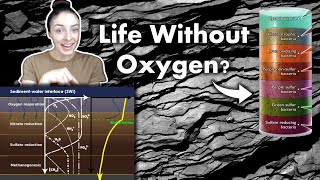
Life in Oxic, Suboxic, and Anoxic Sediments - Yes, Some Life Doesn't Require Oxygen!
Explore microbial life in sediment layers, from oxygen-rich to oxygen-free zones. Learn about diverse metabolic processes and their impact on organic matter decomposition in marine and freshwater environments.
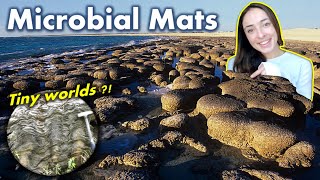
Where and How Microbial Mats Form, Types of Mats, and Biosedimentary Structures - GEO GIRL
Explore microbial mats: formation, types, and biosedimentary structures. Learn about their unique layering, environments, and preservation in geological records.
Biomineralization - Fe Hydroxide, Magnetite, Mn Oxides, Clays, Amorphous Silica
Explore microorganism-induced mineral formation, including iron hydroxides, magnetite, manganese oxides, clays, and amorphous silica. Learn about their formation processes, environments, and significance in geomicrobiology.
Evolution of Photosynthesis - Were Anoxygenic or Oxygenic Phototrophs First?
Explore the evolution of photosynthesis, from early anoxygenic phototrophs to oxygen-producing cyanobacteria, and how this process transformed Earth's atmosphere and life forms over billions of years.
Testing for SARS-CoV-2 RNA - Presented by Dr. Malur Sudhanva
Learn about SARS-CoV-2 RNA testing, including PCR techniques, lab processes, and challenges. Dr. Sudhanva covers extraction, national guidelines, asymptomatic testing, and emerging variants.
Wetlands - The Magic of Mud
Discover the crucial role of wetlands and their soil microorganisms in ecosystem resilience. Dr. Lisa Chambers explores the magic of mud and its impact on natural chemical cycles.
Genetics With Dr. Brooks
Explore genetics fundamentals, incomplete dominance, viral mechanisms, and real-world applications with Dr. Brooks in this engaging 35-minute session.
HDLA - Leopold N. Green - Engineering Bacteria
Explore bacterial engineering for microbiome control, antibiotic resistance, and nanorobotics with insights from a Caltech researcher on cutting-edge synthetic biology applications.

Introduction to Microbiology
Comprehensive overview of microbiology fundamentals, covering protein turnover, infectious agents, bacteria, plasmids, bacteriophages, and transposons. Ideal for medical students seeking in-depth understanding.
Picmonic Microbiology - Campylobacter Jejuni, Vibrio Cholera, E.Coli Klebsiella
Animated mnemonics for key bacterial pathogens: Campylobacter jejuni, Vibrio cholera, E. coli, and Klebsiella pneumoniae. Learn their characteristics, virulence factors, and clinical presentations through engaging visual aids.

The Gram-Positive Bacteria - Microbiology and Infectious Diseases
Explore Gram-positive bacteria, focusing on Staphylococci and Streptococci. Learn key characteristics, clinical relevance, and diagnostic features of these important pathogens in microbiology and infectious diseases.