
Craig's Angular - Rust Spectacular
Explore Rust programming from an Angular developer's perspective, comparing it to TypeScript and discussing its potential impact on front-end development.

TAILCHECK - A Lightweight Heap Overflow Detection Mechanism with Page Protection and Tagged Pointers
Innovative heap overflow detection technique using page protection and pointer tagging, offering low-cost security for C/C++ programs with minimal performance impact.
A Friendly Introduction to Rust for C++ Developers
Friendly introduction to Rust for C++ developers, highlighting key features, similarities, and differences. Includes code comparisons and insights on memory safety, performance, and low-level control.
Competitive Advantage with D
Explore D programming language's competitive advantages, focusing on compile-time features, safety, and productivity. Learn how D simplifies systems programming and enhances software engineering.

Rust - Hack Without Fear
Explore Rust's ownership concept, memory safety, and parallelism advantages. Learn how Rust combines low-level control with high-level programming, ensuring thread safety and efficient abstractions.

Safety and Security - The Future of C++
Explore C++'s future through safety and security lens, examining its role as critical infrastructure and the ethical responsibilities of developers to address its challenges.
Carbon Language Successor Strategy - From C++ Interop to Memory Safety
Explore Carbon Language's successor strategy, C++ interoperability, and memory safety features. Learn about its unique approach, implementation challenges, and potential impact on large-scale C++ codebases.
Cuándo Usar Extensiones Nativas en Rust - Rendimiento Accesible y Seguro
Explora el uso de extensiones nativas en Rust para mejorar el rendimiento de Python, ofreciendo seguridad y accesibilidad. Aprende cuándo implementarlas basado en la experiencia del proyecto Pants.
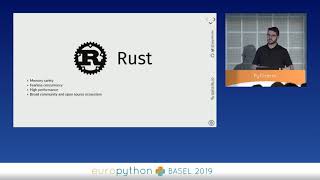
Build Your Python Extensions with Rust
Explore writing Python extension modules in Rust using pyo3 and milksnake libraries. Learn about performance, safety, and maintainability compared to C and Cython extensions.

Rust - Confident, Productive Systems Programming
Explore Rust's ownership concept for safe, efficient systems programming. Learn about memory management, concurrency, abstraction, and Rust's community-driven evolution.

Common Patterns for Bounds Check Elimination
Discover common patterns for bounds check elimination in Go, balancing memory safety and performance optimization.
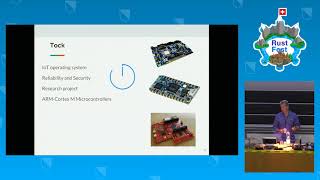
A Rust-based Runtime for the Internet of Things
Evaluating Rust for IoT: Experience porting Tock OS to Bluetooth Low Energy SoC, exploring memory safety, low runtime overhead, and power consumption compared to C implementations.
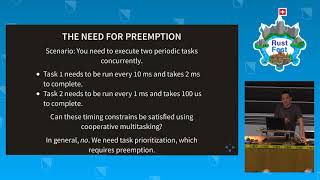
Fearless Concurrency in Your Microcontroller
Explore efficient multitasking on microcontrollers using Rust's zero-cost, memory-safe abstractions for embedded systems. Learn about concurrent programming techniques for resource-constrained environments.
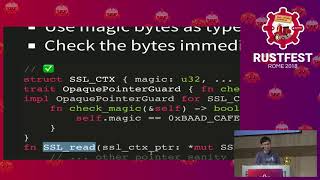
One Thousand Ways to Die in Rust FFI
Explore common pitfalls in Rust FFI, learn principles for writing safe and correct code, and discover effective strategies to avoid potential issues when working with foreign function interfaces.

Rust as Foundation in a Polyglot Development Environment
Explore how TerminusDB leveraged Rust to enhance speed, reduce bugs, and improve overall development in a polyglot environment.

Taking Elixir to the Metal with Rust
Explore writing safer Native Implemented Functions in Rust for Elixir, enhancing performance while maintaining memory safety. Learn about pitfalls and benefits of this approach for distributed systems.

Enough String View to Hang Ourselves
Explore string handling challenges in C++ projects, focusing on std::string_view in C++17. Learn strategies for managing multiple string types and optimizing performance in large-scale applications.

Rust in Edge Computing: Enhancing Performance and Security
Explore Rust's role in edge computing, focusing on performance and security enhancements. Learn core principles, real-world applications, and implementation strategies for optimized edge solutions.

Give Rust a Chance for High-Performance Data Processing in Python
Explore high-performance data processing in Python using Rust modules. Create Rust modules with Python bindings and discover why Rust is replacing C in data libraries.
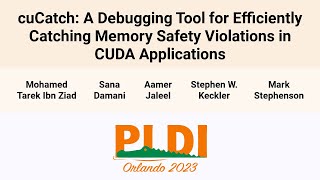
cuCatch: A Debugging Tool for Efficiently Catching Memory Safety Violations in CUDA Applications
Explore cuCatch, an innovative debugging tool for CUDA applications that efficiently detects memory safety violations with low performance overhead and high error detection coverage.
Rust on Morello - POCL'24
Explore Rust programming on the Morello architecture, focusing on memory safety and capability-based security features.