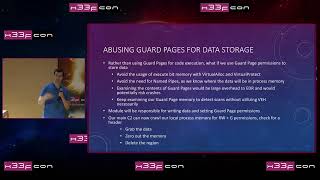
Hiding C2 Communications in Plain Sight Using Windows Memory Page Permissions
Discover advanced techniques for hiding C2 communications by exploiting Windows memory page permissions, with practical approaches to building modular and stealthy command-and-control systems.
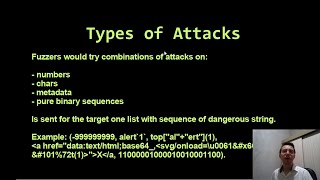
Fuzzing - Finding Your Own Bugs and Zero-Days
Master the art of fuzzer creation and vulnerability discovery, exploring buffer overflow exploitation techniques with hands-on demonstrations and practical exploit development strategies.

Advanced ROP Framework - Pushing Return-Oriented Programming to Its Limits
Discover advanced return-oriented programming techniques with ROP ROCKET framework, featuring syscall bypassing, cross-architecture exploitation, and innovative bad byte handling for enhanced security testing.
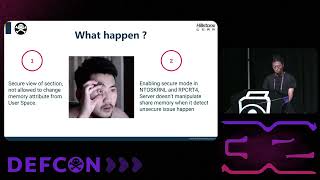
Using ALPC Security Features to Compromise RPC Services
Dive into Windows kernel security through ALPC and RPC services, exploring vulnerability exploitation techniques, security bypass methods, and system privilege escalation strategies.

Creating Trampolines and Re-Obfuscating Function Pointers in Runtime Linking - Part 7
Delve into advanced runtime linking techniques, focusing on trampoline creation, function pointer resolution, and memory debugging in reverse engineering and malware analysis.
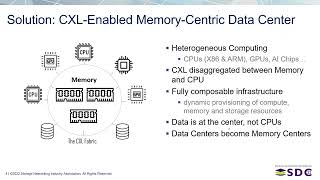
Memory Disaggregation and Pooling with CXL - Architecture and Services
Explore memory disaggregation and pooling through CXL technology, covering transparent tiering, fabric management, and advanced data services for modern computing architectures.
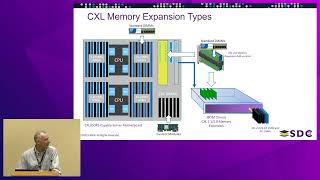
CXL Memory Disaggregation and Tiering - Lessons Learned from Storage
Explore memory disaggregation and tiering in CXL technology, comparing it with storage evolution patterns while examining OS support, drivers, and real-time implementation challenges.
Introduce LUF (Lazy Unmap Flush) Mechanism
Explore the Lazy Unmap Flush (LUF) mechanism, its implementation, and potential impact on Linux system performance and memory management.
TAO: THP Allocator Optimizations
Explore THP Allocator Optimizations with ZHAO Yu, delving into advanced Linux memory management techniques and performance enhancements.
Automatically Reasoning About the Cache Usage of Network Stacks
Explore automated techniques for analyzing cache utilization in network stacks, enhancing performance and efficiency in network systems.
Experiments with Non-Temporal Writes and Application Architectures
Explore non-temporal writes and their impact on application architectures through experimental insights and practical demonstrations.
Post-Copy Live Migration with Guest_memfd
Explore post-copy live migration techniques using guest_memfd, enhancing virtual machine performance and efficiency in Linux systems.
Efficient Memory Allocation Between Different Subsystems
Optimize memory allocation across subsystems for enhanced system performance and resource utilization.
Hazard Pointers in Linux Kernel
Explore hazard pointers implementation in the Linux kernel, their benefits, and challenges in concurrent programming and memory management.
Dynamic Capacity Devices - Status, Discussion, and Future
Explore dynamic capacity devices in Linux: current status, ongoing discussions, and future prospects with industry experts.
Pagetable-based Virtual Machine (PVM) as a PV Flavor for KVM
Explore Pagetable-based Virtual Machine (PVM) as a PV flavor for KVM, understanding its implementation and benefits for virtualization technology.
Improving eBPF Complexity with a Hardware-backed Isolation Environment
Explore hardware-backed isolation for eBPF, enhancing complexity management and security in Linux kernel development.

FP² - Fully in-Place Functional Programming
Explore a novel approach to functional programming that enables efficient in-place updates without sacrificing purity. Learn about the FIP calculus and its implementation in the Koka language.
Layout Polymorphism: Using Static Computation for Efficient Polymorphism Over Variable Representations
Explore layout polymorphism in OCaml, enabling efficient unboxed types while preserving parametric polymorphism. Learn about type-system design and implementation challenges in managing specializations.
Resource Polymorphism: Integrating First-Class Resources into ML
Explore resource polymorphism in ML, integrating destructors and resource types for enhanced memory management and functional programming in systems and parallel contexts.
Immutable Arrays Help Mutating Arrays More Efficiently - ML'23 Lecture
Explore how immutable arrays enable compiler optimizations for efficient implementations, challenging intuitions about low-level control in array computations.