
Optimizing Mobile Applications
Optimize mobile apps: analyze performance, reduce memory, minimize frame time. Learn from Unity experts on profiling, asset management, and memory conservation techniques.
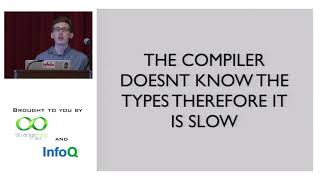
Why Ruby Isn't Slow
Explore Ruby's performance challenges and solutions through Topaz VM, addressing method dispatch, constant lookups, and allocation issues for improved speed and efficiency.

GC Tuning Confessions of a Performance Engineer
Explore Java garbage collection optimization with insights on performance metrics, tuning tradeoffs, and comparisons of Parallel Old, CMS, and G1 collectors in OpenJDK's HotSpot JVM.
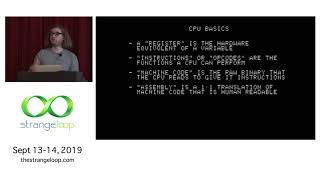
Ruby on the Apple II - Adventures in Retro Programming
Explore Ruby on the Apple II, blending modern language with retro hardware. Learn about 8-bit computing, assembly programming, and the challenges of implementing Ruby on limited resources.

Compacting the Uncompactable
Innovative memory allocation technique eliminating fragmentation in C/C++ programs, reducing memory consumption and improving performance without modifying existing code.
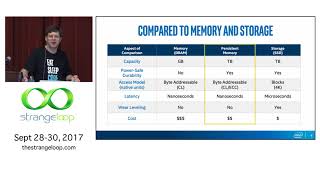
Promise and Pitfalls of Persistent Memory
Explore persistent memory's impact on cloud software, its unique characteristics, and key strategies for effective implementation in modern computing environments.
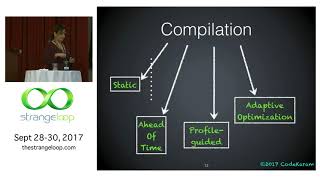
The Performance Engineer's Guide to Java HotSpot
Explore Java HotSpot VM optimizations, JIT compilation, and garbage collection techniques to enhance application performance and efficiency in server systems.
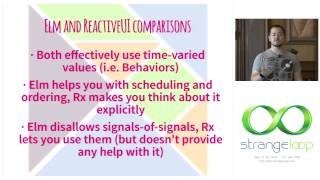
FRP in Practice - Taking a Look at Reactive UI - Cocoa
Explore Functional Reactive Programming principles applied to UI toolkits, using GitHub's desktop apps as a case study. Learn FRP implementation, challenges, and benefits in non-FRP frameworks.
Just Enough Assembly for Compiler Explorer
Learn X86 Assembly basics to understand Compiler Explorer output, including memory, registers, conditionals, loops, and optimizations. Gain skills to analyze your own code's assembly.

Megahertz, Gigahertz, Registers and Instructions - How Does a CPU Actually Work?
Explore CPU fundamentals, from instruction sets to optimization, covering ARM vs Intel, memory management, and future trends. Gain insights into how processors execute code across various devices.
Writing Allocation Free Code in C#
Explore techniques for writing allocation-free C# code, focusing on structs, Span, and memory optimization to enhance performance without sacrificing readability or maintainability.
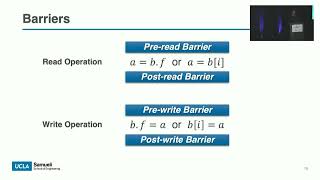
MemLiner - Lining up Tracing and Application for a Far-Memory-Friendly Runtime
MemLiner: Runtime technique improving far-memory systems by aligning application and garbage collection memory accesses, reducing local-memory working set and enhancing remote-memory prefetching for better performance.
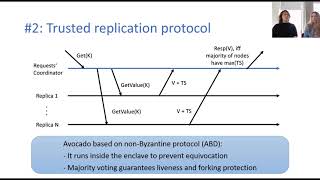
Avocado - A Secure In-Memory Distributed Storage System
Explore Avocado, a secure in-memory distributed storage system for untrusted cloud environments, offering strong security, fault-tolerance, consistency, and performance through innovative design and implementation.
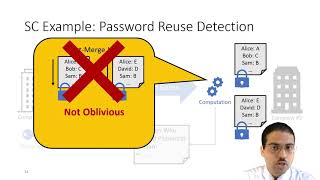
MAGE - Nearly Zero-Cost Virtual Memory for Secure Computation
MAGE: An execution engine for secure computation, enabling efficient processing of large-scale encrypted data by leveraging oblivious memory access patterns to optimize virtual memory management.
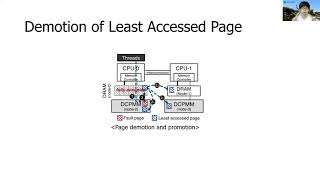
Exploring the Design Space of Page Management for Multi-Tiered Memory Systems
Explores page management strategies for multi-tiered memory systems, analyzing access locality and tier importance to optimize performance in DRAM and SCM configurations.
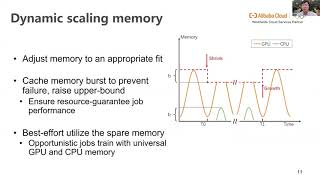
AntMan - Dynamic Scaling on GPU Cluster for Deep Learning
Dynamic scaling system for efficient GPU utilization in deep learning, improving memory and computation usage without compromising fairness or performance in large-scale clusters.
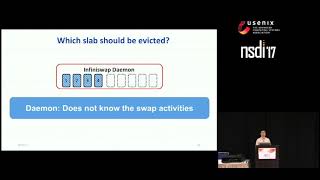
Efficient Memory Disaggregation with Infiniswap
Explore INFINISWAP: an RDMA-based remote memory paging system that improves application performance by leveraging unused cluster memory, without modifying existing applications or OS.
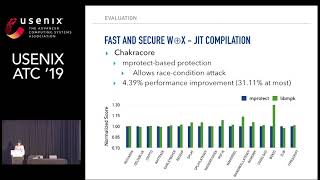
Libmpk - Software Abstraction for Intel Memory Protection Keys
Explore libmpk, a software abstraction enhancing Intel MPK's security and scalability. Learn about its implementation, benefits, and applications in OpenSSL, JavaScript JIT, and Memcached.
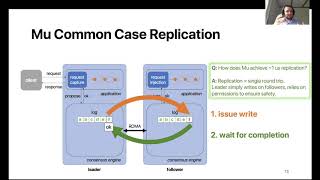
Microsecond Consensus for Microsecond Applications
Innovative consensus protocol leveraging RDMA for microsecond-scale replication and rapid fail-over in latency-sensitive applications, significantly outperforming existing systems.

Adaptive Android Kernel Live Patching
Adaptive Android kernel live patching framework for securing devices against vulnerabilities, enabling hotpatching without source code access and automatic adjustment to different models and versions.

Binder - The Bridge To Root - Hongli Han and Mingjian Zhou
Exploración detallada de la vulnerabilidad "Waterdrop" en el controlador Binder de Android, que permite escalar privilegios y obtener acceso root en dispositivos populares, incluyendo los Pixel más recientes.