Taking Memory Forensics to the Next Level
Explore advanced memory forensics techniques, including profile libraries, hook comparisons, and IOC generation. Learn to leverage Volatility Framework plugins for enhanced digital investigations.

Introduction to Memory Forensics with Volatility 3
Learn to extract crucial information from memory dumps using Volatility 3. Master essential tasks like process listing, network analysis, file extraction, and Windows Registry examination for effective digital forensics.

Memory Forensics with Volatility - HackerSploit Blue Team Series
Explore memory forensics with Volatility in this hands-on tutorial. Learn to analyze system crashes, identify hidden processes, extract crucial information, and enhance your incident response skills.
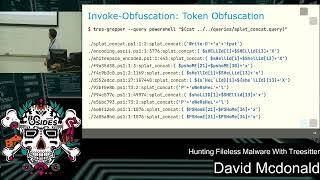
Hunting Fileless Malware with Treesitter
Explore advanced techniques for detecting obfuscated, fileless malware using Treesitter parser generator library. Learn to create scalable and accurate detections for malicious PowerShell and Bash payloads.

Cyber Threat Hunting and DFIR - Understanding Malware Attack Steps
Explore cyber threat hunting and DFIR techniques, including malware attack paths, detection methods, and essential skills for strengthening organizational cybersecurity defenses.
CSI Forensics - Unraveling Kubernetes Crime Scenes
Explore advanced DFIR techniques for container environments, focusing on Kubernetes. Learn to checkpoint compromised apps, conduct memory forensics, and understand the latest DFIR capabilities for effective incident response.
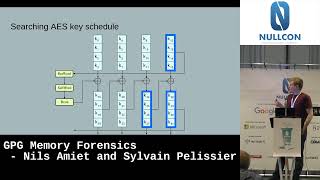
GPG Memory Forensics
Techniques for retrieving passphrases and encryption keys from memory dumps of GPG processes, including Volatility3 plugins for key material extraction and potential defensive applications against ransomware.
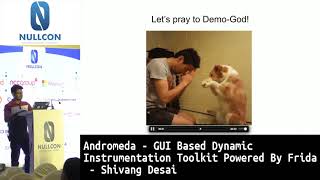
Andromeda - GUI Based Dynamic Instrumentation Toolkit Powered by Frida
Explore Andromeda, a GUI-based toolkit for dynamic app analysis. Learn about class enumeration, method hooking, and runtime memory analysis features that enhance mobile security research and penetration testing.
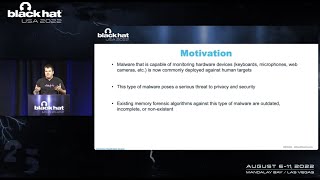
New Memory Forensics Techniques to Defeat Device Monitoring Malware
Discover new Volatility plugins for detecting device monitoring malware across major OS. Learn about advanced memory forensics techniques to combat sophisticated threats.
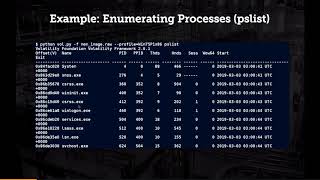
Investigating Malware Using Memory Forensics - A Practical Approach
Practical approach to memory forensics for malware detection and investigation, covering techniques, demonstrations, and analysis of various malware types and rootkits.

Hiding Process Memory via Anti-Forensic Techniques
Explore novel anti-forensic techniques for hiding malicious process memory, evading detection by memory analysis tools while maintaining accessibility for malware functionality.
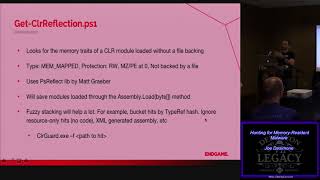
Hunting for Memory Resident Malware
Explore techniques for detecting memory-resident malware, including API analysis, post-breach detection, and CLR hooking. Learn why memory hunting is crucial in cybersecurity.
Fixing a Memory Forensics Blind Spot - Linux Kernel Tracing
Explore Linux kernel tracing infrastructure and its impact on memory forensics. Learn about blind spots in defensive research and strategies to enhance detection of sophisticated attackers.
Memory Forensics & Security Analytics - Detecting Unknown Malware
Explore advanced techniques in memory forensics and security analytics for detecting unknown malware, enhancing your cybersecurity skills and threat detection capabilities.

Memory Forensics Using Virtual Machine Introspection for Cloud Computing
Explore memory forensics in cloud environments using virtual machine introspection. Learn techniques for trustworthy data collection without system interference, ideal for digital forensics in virtualized settings.
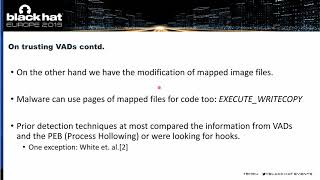
Detecting -Un-Intentionally Hidden Injected Code by Examining Page Table Entries
Explore techniques for detecting hidden injected code through page table entry analysis, covering both intentional malware concealment and unintentional OS paging mechanisms.
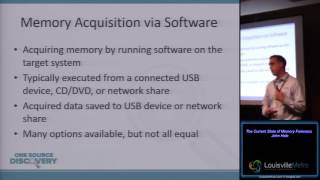
Technical A02 - The Current State of Memory Forensics
Explore memory forensics techniques, acquisition methods, and analysis goals. Learn about Windows 10 memory compression and Virtual Secure Mode impacts on forensic investigations.

Volatility 3 Public Beta - The Insider’s Preview
Insider preview of Volatility 3, highlighting new features, architecture, and community contributions for advanced memory forensics. Addresses evolving OS challenges and analyst workflows.
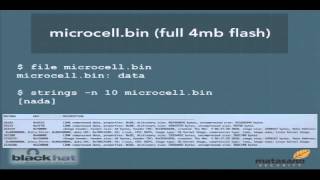
How Many Bricks Does It Take to Crack a Microcell
Journey through reverse engineering a 3G microcell, covering hardware hacking, kernel reversing, firmware manipulation, software reversing, networking, memory forensics, and social engineering. Insights into successes, failures, and lessons learned.
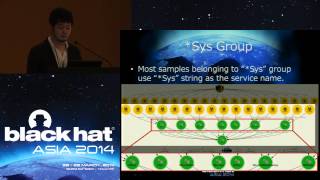
I Know You Want Me - Unplugging PlugX
Comprehensive analysis of PlugX malware, exploring its evolution, detection techniques, and countermeasures. Gain insights into advanced threat intelligence and cybersecurity strategies.
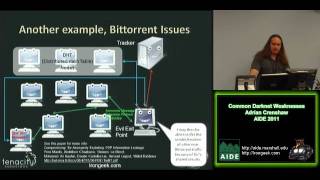
Common Darknet Weaknesses
Explore common vulnerabilities in darknet networks, focusing on attack strategies and mitigation techniques for encrypted anonymizing systems like Tor and I2P.