Advanced Gas Dynamics
The course concentrates primarily on the understanding of the physical concepts of compressible flow and keeps a reference to various numerical methods for solving the governing equations to a minimum.
Engineering Mechanics
In this course, we would be studying mechanical interaction between different bodies when they interact through the forces applied on each other. This would consist of 2 parts: statics and dynamics.
Engineering Mechanics
In this course, we would be studying mechanical interaction between different bodies when they interact through the forces applied on each other. This would consist of 2 parts: statics and dynamics.
Flight Dynamics II - Stability
Explore aircraft stability, dynamics, and control systems. Learn about equilibrium, static and dynamic stability, and various aircraft components' contributions to flight characteristics.
Gas Dynamics
This course discusses topics in gas dynamics. Review of fundamentals: concepts from fluid mechanics, basic thermodynamic relations. Compressible flow: the concept of waves in a fluid, mach waves, compression waves, expansion waves.
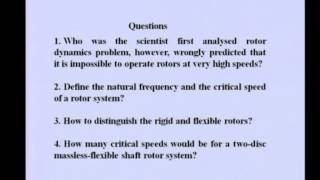
Theory & Practice of Rotor Dynamics
Comprehensive exploration of rotor dynamics theory and practice, covering models, effects, vibrations, and analysis methods for rotating machinery systems.
Principles of Vibration Control
Learn strategies for vibration control, including damping models, material selection, viscoelastic materials, dynamic absorbers, and active control systems. Gain practical insights through laboratory demonstrations.

Combustion
Comprehensive exploration of combustion principles, from chemical reactions and kinetics to flame dynamics, diffusion processes, and advanced topics like turbulent combustion and detonations.
Theory of Rectangular Plates - Part 1
Explore solid mechanics, energy principles, and plate theories. Learn governing equations, solution methods, and practical applications using MATLAB and ABAQUS.
Introduction to Machining and Machining Fluids
This course gives a basic understanding of the various machining processes and their physics. This process comes under the subtractive manufacturing processes wherein the material is removed.
Thermodynamics
Explore fundamental concepts, laws, and applications of thermodynamics, including system properties, energy conservation, and practical devices like heat exchangers and turbines.

Satellite Attitude Dynamics and Control
This course is designed to introduce the participants the rotational kinematics first. Then it introduces the subject matter of satellite/rigid body rotational dynamics comprehensibly.
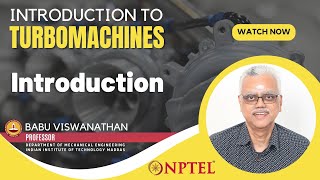
Introduction to Turbomachines
This course contains topics like Introduction to turbomachines, types, classification, practical examples, Basic Theroy of Turbomachines, Hydro Turbomachines - Centrifugal pumps, Positive Displacement Pumps - Gear pump, Thermal Turbomachines.
Introduction to Crystal Elasticity and Crystal Plasticity
Explore crystal elasticity and plasticity, covering fundamental concepts, theories, and applications in materials science and engineering over 21 hours of comprehensive lectures.
Strength of Materials II
Advanced study of material mechanics, covering stress analysis, beam deflection, strain energy, and column design for engineering applications.
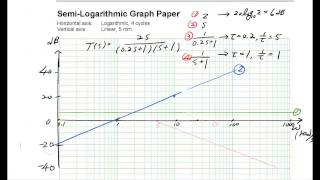
Modeling and Simulation of Dynamic Systems
Learn to model dynamic systems, analyze transfer functions, create Bode plots, and understand OP-Amp circuits. Practical examples include mechanical systems and signal filtering techniques.
Vector Statics
Comprehensive exploration of vector statics, covering forces, equilibrium, moments, trusses, friction, and more. Ideal for engineering students seeking in-depth understanding of static force systems.
Intermediate Dynamics
Comprehensive exploration of advanced dynamics concepts, covering vector algebra, kinematics, particle dynamics, orbital mechanics, rigid body analysis, and more for in-depth understanding.
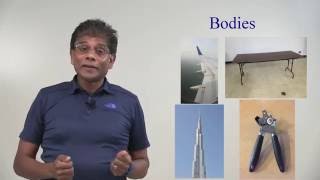
Engineering Mechanics - Statics, Dynamics, Materials
Comprehensive exploration of engineering mechanics, covering statics, dynamics, and materials. Delves into vector analysis, equilibrium, forces, motion, stress, and fundamental principles for solving complex engineering problems.
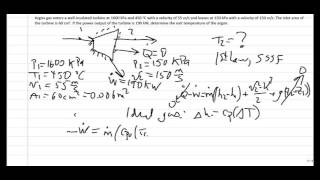
Thermodynamics
Explore practical applications of thermodynamic principles through worked examples, including turbines, nozzles, heat exchangers, and compressors.
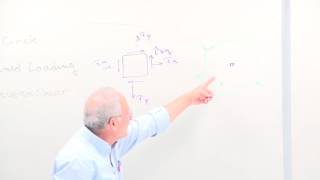
Stress Analysis
Comprehensive exploration of stress analysis, covering mechanics, failure theories, pressure vessels, fatigue, fasteners, shafts, and springs. Practical applications and in-depth examples provided.