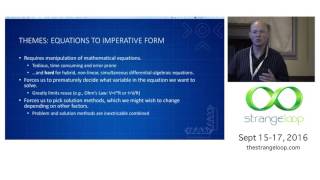
Modelica - Component Oriented Modeling of Physical Systems
Explore component-oriented modeling of physical systems using Modelica, a language for simulating complex devices in various industries. Learn about compilation processes and algorithms.

Is It A Bug Or Is It A Story
Investigative data journalist shares insights on analyzing big data, focusing on outliers to uncover bugs or unique user behaviors, using examples from Iraq War Logs and FIFA Files.
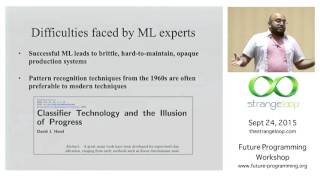
An Overview of Probabilistic Programming
Explore probabilistic programming through BayesDB, Picture, and Venture platforms. Learn about Bayesian databases, 3D scene perception, and general-purpose probabilistic computing for data analysis and AI applications.
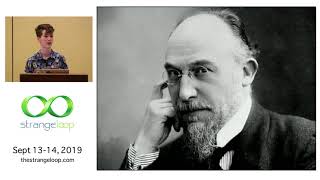
Minimalist Piano Forever
Explore generative music using Erik Satie's minimalist piano works. Learn about Markov chains, MIDI, and browser-based audio to create endless, evolving compositions and dynamic sheet music.

Stop Rate Limiting - Capacity Management Done Right
Explore capacity management alternatives to rate limiting, using Little's Law and concurrency control for better API performance and resource isolation in microservices architectures.

How to Have Your Causality and Wall Clocks, Too
Explore distributed monotonic clocks for causality and wall clock time synchronization in microservices. Learn about implementation, protocols, and applications in distributed systems.
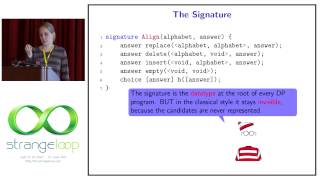
Dynamic Programming at Ease - With Grammars, Algebras, Products
Explore dynamic programming for combinatorial optimization problems using grammars, algebras, and products. Learn to efficiently solve complex problems by reusing intermediate results and reducing complexity.
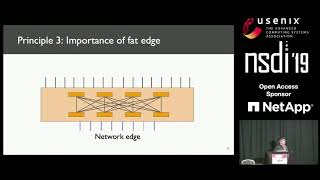
Understanding Lifecycle Management Complexity of Datacenter Topologies
Explores lifecycle management complexity of datacenter topologies, comparing Clos and expander graphs. Introduces FatClique, a new topology combining wiring simplicity and expandability, with insights on deployment and expansion costs.

Social Network Analysis - A Scary Primer
Explore unconventional data fusion techniques to analyze social networks, revealing insights from digital footprints and real-world sensors. Learn about graph theory and its applications in personal data analysis.
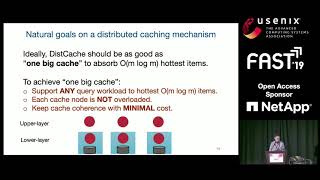
DistCache - Provable Load Balancing for Large-Scale Storage Systems with Distributed Caching
Innovative distributed caching mechanism providing provable load balancing for large-scale storage systems. Partitions hot objects and adaptively routes queries, enabling linear cache throughput increase with node count.

IPv666 - Address of the Beast
Explore IPv6 security implications, including enumeration techniques, statistical models for host discovery, and honeypotting methods. Learn about IPv6 exposure compared to IPv4 and access open-source scanning software.
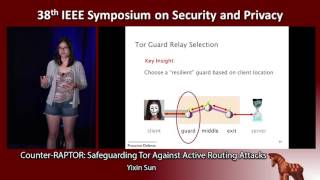
Counter-RAPTOR - Safeguarding Tor Against Active Routing Attacks
Explore techniques to protect Tor against active routing attacks, including a new guard relay selection algorithm and a real-time BGP monitoring system for detecting routing anomalies.

Wolverine - Fast, Scalable, and Communication-Efficient Zero-Knowledge Proofs for Boolean and Arithmetic Circuits
Explore fast, scalable zero-knowledge proofs for Boolean and arithmetic circuits, covering applications, existing systems, tradeoffs, and innovative protocols like SVLE and Cotton Bucketing.

Riddles of Reality - From Quarks to the Cosmos
Nobel Laureate Frank Wilczek and Brian Greene explore quantum mysteries, from quarks to the cosmos, discussing current insights and their implications for our understanding of reality.

Our Mathematical Universe
Explore the controversial idea that mathematics and reality are one with Brian Greene and Max Tegmark in this thought-provoking discussion on the nature of our universe.

Steven Weinberg and the Quest to Explain the World
Explore Nobel laureate Steven Weinberg's groundbreaking contributions to physics, including electroweak theory, with Brian Greene and John Preskill in this tribute to a scientific visionary.

Universe or Multiverse
Explore the concept of the multiverse with renowned physicist Andrei Linde, delving into inflationary theory, string theory, and the future of cosmology in this thought-provoking lecture.

On The Shoulders of Giants
Innovative approach to teaching physics through mind-bending puzzles, exploring connections between math and physics, symmetry, and abstract concepts to inspire the next generation of scientists.

Principled Performance Analytics
Explore innovative analytical methods for high-fidelity insights in distributed systems, focusing on performance analytics, statistical approaches, and practical applications in complex services at scale.

Refining Systems Data without Losing Fidelity
Explore strategies for efficient systems data management, including sampling and aggregation techniques, to maintain crucial information while reducing data volume and costs.
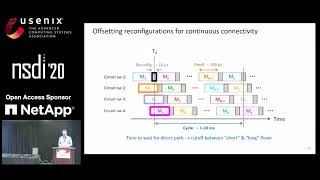
Expanding Across Time to Deliver Bandwidth Efficiency and Low Latency
Innovative network design for datacenters combining low-latency delivery and high-bandwidth efficiency through dynamic reconfiguration, outperforming static topologies for various workloads.