
Online Locality Meets Distributed Quantum Computing
Explore the intersection of locally checkable labeling problems across quantum computing models, examining theoretical advantages and limitations in distributed systems and tree structures.

One Clean Qubit Suffices for Quantum Communication Advantage
Delve into groundbreaking research demonstrating how a single clean qubit enables quantum communication advantage, challenging previous assumptions about quantum versus classical communication complexity.

Eigenpath Traversal by Poisson-Distributed Phase Randomisation
Explore quantum computation through Poisson-distributed phase randomization, examining how dephasing operations enable eigenspace tracking and optimize quantum algorithms like Grover search.

Hamiltonian Property Testing - Testing Locality and Structural Properties
Explore groundbreaking research in Hamiltonian property testing, examining efficient algorithms for quantum systems and the fundamental differences between testing and learning approaches.

State Purification with Symmetry Subgroup Projectors
Explore quantum state purification techniques using symmetry subgroup projectors to enhance purity of quantum states with reduced overhead and improved scalability for near-term quantum systems.

An SU(2)-symmetric Semidefinite Programming Hierarchy for Quantum Max Cut
Explore advanced quantum physics through SU(2)-symmetric semidefinite programming hierarchies, focusing on Quantum Max Cut problem and its applications in approximating extremal energy states of local Hamiltonians.

Permutation Tests for Quantum State Identity
Delve into quantum state identity testing through permutation tests, exploring optimal measurements, SDP solutions, and innovative G-test approaches for comparing multiple quantum states.

A Shortcut to a Near-Optimal Quantum Linear System Solver
Discover a simplified approach to quantum linear system solving that achieves near-optimal performance through kernel reflection, offering improved efficiency for practical applications in quantum computing.

Gapped Clique Homology is QMA1-Hard and Contained in QMA
Explore the complexity of homology problems in computational topology, focusing on clique complexes and their quantum complexity classification through innovative eigenvalue analysis techniques.

Efficient Quantum Circuits for Port-Based Teleportation
Explore efficient quantum circuit implementations for port-based teleportation, featuring novel methods from representation theory and innovative solutions for both probabilistic and deterministic protocols.
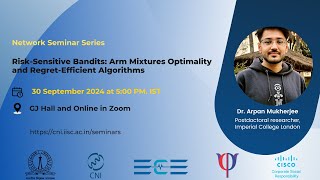
Risk-Sensitive Bandits - Arm Mixtures Optimality and Regret-Efficient Algorithms
Delve into risk-aware sequential decision-making through distortion riskmetrics, exploring optimal arm mixture strategies and new algorithms for tracking these mixtures in multi-armed bandit problems.

Quantum Generic Hardness for Discrete Logarithms and Integer Factorization
Explore quantum computational complexity of discrete logarithm problems and integer factorization, examining generic algorithms' limitations and establishing new theoretical bounds for quantum operations.

Quantum Complexity of Testing Signed Graph Clusterability
Explore quantum algorithms for testing signed graph clusterability, featuring a novel approach with O(N^1/3) query complexity and proven advantages over classical methods.

An Improved Quantum Max Cut Approximation via Maximum Matching
Discover groundbreaking improvements in Quantum Max Cut approximation through maximum matching techniques, achieving a 0.595 approximation ratio using simplified 2-qubit state outputs.
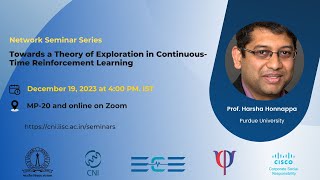
Towards a Theory of Exploration in Continuous-Time Reinforcement Learning
Delve into advanced theoretical frameworks for continuous-time reinforcement learning, exploring relaxed controls and rough path theory for modeling exploration processes in stochastic environments.
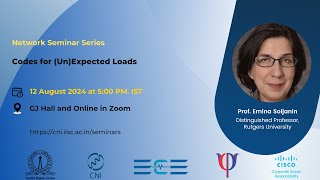
Codes for Unexpected and Expected Loads in Distributed Computing Systems
Explore coding theory applications in distributed computing systems, focusing on erasure coding's role in handling unpredictable data access patterns and optimizing storage efficiency.
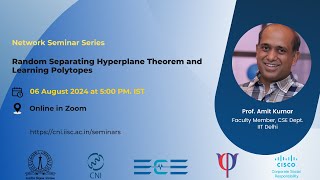
Random Separating Hyperplane Theorem and Learning Polytopes
Delve into advanced mathematical concepts of hyperplane theorem, polytope learning, and optimization oracles with applications in machine learning's hidden variable problems.
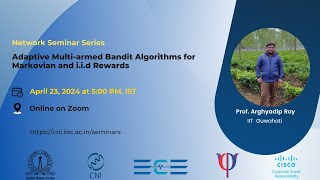
Adaptive Multi-armed Bandit Algorithms for Markovian and IID Rewards
Explore adaptive multi-armed bandit algorithms and their applications in both Markovian and i.i.d reward scenarios, focusing on regret guarantees and novel algorithmic approaches.

PAC Mode Estimation Using PPR Martingale Confidence Sequences
Delve into advanced statistical methods for mode estimation using PPR martingale confidence sequences, with applications in election forecasting and blockchain smart contract verification.
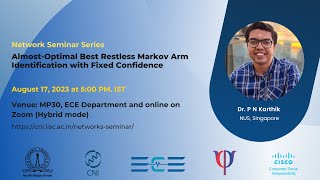
Almost-Optimal Best Restless Markov Arm Identification with Fixed Confidence
Delve into advanced multi-armed bandit theory, focusing on identifying optimal arms in restless Markov chains through asymptotic analysis and policy optimization for distributed learning systems.
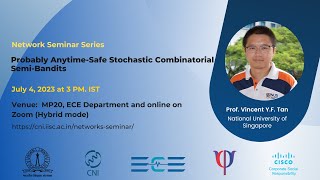
Probably Anytime-Safe Stochastic Combinatorial Semi-Bandits
Delve into stochastic combinatorial semi-bandits with a focus on risk-controlled online decision making, exploring algorithms for optimal subset selection while maintaining variance constraints.