Bridging Gaps: Classic Approaches Beyond Deep Learning Constraints
Explore how classic techniques complement deep learning in real-world AI applications, from computer vision to complex optimization challenges, enhancing production system performance.
Local Hamiltonians and Quantum Cuts: Exploring the Quantum Heisenberg Model
Delve into quantum Heisenberg models and their connection to Max-Cut problems, exploring theoretical frameworks and approximation algorithms for Quantum Max-d-Cut Hamiltonians in computational physics.
Simulating Quantum Computation - Classical Data Requirements and Efficiency
Explore the classical simulation methods for quantum computation through probability functions, examining data requirements and computational efficiency in magic state implementations.
Model Validation Using Deep Generation of Stress Data
Discover advanced techniques for model robustness validation through deep generative models, focusing on stress testing, performance assessment, and handling unlikely events in data science applications.
Introduction to Lasso and Ridge Regression Models in R
Master linear regression regularization techniques through Lasso and Ridge methods in R, focusing on preventing overfitting and improving model reliability for more accurate predictions and estimations.
Introducing Two Criteria for Future Data Prediction with ML Models
Explore transparent evaluation methods for ML models through new criteria linking database characteristics to machine learning metrics, focusing on future data prediction and unbiased assessment.
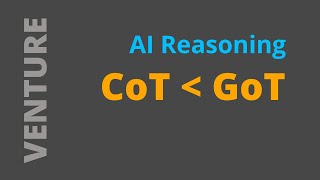
Graph-of-Thoughts: From Chain-of-Thoughts to Advanced AI Reasoning Algorithms
Explore the evolution of AI reasoning from Chain-of-Thoughts to Graph-of-Thoughts, discovering advanced algorithms that enhance autonomous agent capabilities and decision-making.

Kolmogorov-Arnold Networks: Understanding KAN Architecture and Comparison with MLPs
Dive into Kolmogorov-Arnold Networks (KAN), a groundbreaking alternative to Multi-Layer Perceptrons, exploring its architecture, implementation, and potential advantages in neural network development.

Matrix Long Short-Term Memory (mLSTM) - A New Alternative to Transformer LLMs
Explore the innovative xLSTM architecture and its matrix-based approach to neural networks, comparing its potential advantages over traditional transformer models in language processing.

Ring Attention and Blockwise Transformers for Extended Context Length in Language Models
Dive into the technical mechanics of Ring Attention, exploring how it achieves million-token context lengths in large language models through blockwise parallel transformers and efficient implementation.
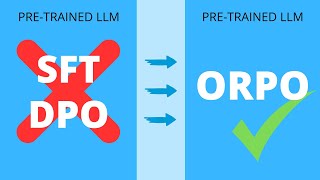
ORPO: A New Preference-Aligned Training Method for Large Language Models
Explore a groundbreaking reference model-free optimization algorithm for LLM training, comparing ORPO's performance with Llama 2 and Mistral 7B through theoretical physics perspectives.

Symmetry Breaking in AI Diffusion Models - Dynamical Regimes and Optimization
Explore groundbreaking research on symmetry breaking patterns in AI diffusion models and their impact on optimization and transformation processes.
DSPy Combined with Graph Optimizer in PyG - Multi-Hop RAG Implementation
Explore DSPyG's innovative approach to multi-hop RAG implementation, combining DSPy with graph optimization for enhanced AI research capabilities using minimal computational resources.

DSPy: Building Self-Improving Language Model Pipelines - Beyond LangChain Templates
Explore DSPy's innovative approach to building self-improving LLM pipelines, featuring automatic prompt engineering and graph-based optimization - moving beyond traditional prompt templates.

Diffusion Transformer and Rectified Flow in Stable Diffusion 3
Dive into the mechanics of Diffusion Transformers, exploring noise distribution, latent space dimensionality, and the innovative Rectified Flow technology powering next-gen AI image generation.
What is OpenTelemetry - Understanding Core Concepts and Implementation
Discover OpenTelemetry's core components, implementation strategies, and practical applications for logs, metrics, and tracing in modern cloud-native environments through hands-on examples and real-world scenarios.
Clustering Players' Strategies for Generation of Non-Player Characters in Mythic Legends
Discover how machine learning and clustering techniques streamline NPC development in gaming, focusing on army formations in Mythic Legends and practical solutions to complex distance function challenges.
Gradualizing Languages with Set-Theoretic Types in Elixir
Explore practical implementations of gradual set-theoretic types in Elixir, focusing on disjoint unions, singleton types, and elegant solutions for type representation and checking.
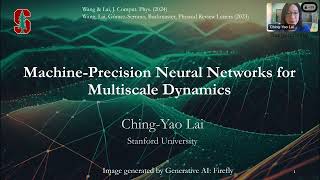
Machine-Precision Neural Networks for Multiscale Dynamics
Discover how multi-stage neural networks can achieve machine-precision accuracy in scientific predictions, addressing spectral bias and improving deep learning applications in multiscale physics problems.

Parameter Efficient Fine-Tuning with Multiple LoRA Adapters for Large Language Models
Dive into parameter efficient fine-tuning with LoRA adapters, exploring matrix factorization, SVD, and advanced configurations for optimizing large language models.

Mamba AI: Understanding Selective State Space Models as Transformer Alternatives
Explore the groundbreaking MAMBA architecture and its potential to revolutionize AI through selective state space models, offering a compelling alternative to traditional transformers.