
Independent Finite Approximations for Bayesian Nonparametric Inference
Explore independent finite approximations for Bayesian nonparametric inference, comparing them to truncated finite approximations and analyzing their performance in real-world applications.
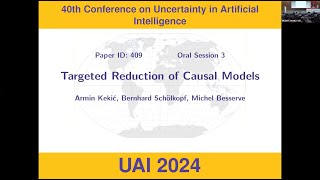
Causality in Artificial Intelligence - Oral Session 3
Explore cutting-edge research in causal inference, including bounding effects, model reduction, interventions in games, and causally abstracted bandits.
All Causal DAGs Are Wrong but Some Are Useful
Explore the concept of causal DAGs, their usefulness, and challenges in causal discovery. Gain insights into evaluating causal models without ground truth and understanding causality's meaning across various tasks.
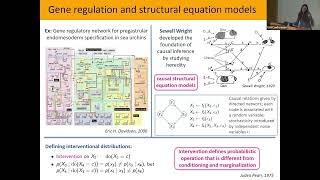
Causal Representation Learning and Optimal Intervention Design
Explore causal representation learning and optimal intervention design with Caroline Uhler's insightful keynote talk at UAI 2023.
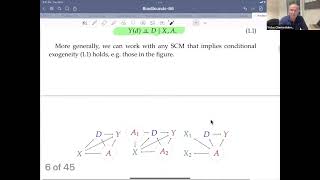
Omitted Variable Bias in Causal Machine Learning
Explore omitted variable bias in causal machine learning with Victor Chernozhukov's keynote address at UAI 2023, offering insights into this critical aspect of AI research.
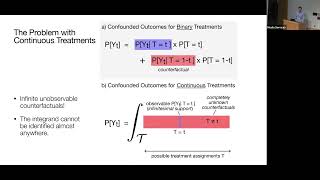
Partial Identification of Dose Responses with Hidden Confounders - UAI 2023 Oral Session 3
Explore novel methods for bounding continuous-valued treatment effects with hidden confounders in causal inference, enhancing decision-making in observational studies.
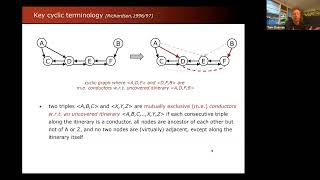
Establishing Markov Equivalence in Cyclic Directed Graphs - UAI 2023 Oral Session 3
Explore an efficient procedure for establishing Markov equivalence in cyclic directed graphs, based on the Cyclic Equivalence Theorem and ancestral perspective.

Causal Representation Learning - Tutorial
Explore causal representation learning, combining machine learning with causal assumptions to identify causal variables from low-level data. Gain insights into core problems and future directions in scientific discovery.
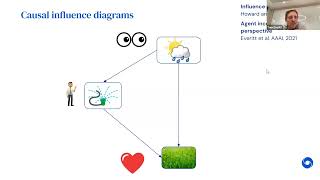
Towards Causal Foundations of Safe AI - Tutorial
Explore causal foundations for safe AI, covering models, fairness, risks, and mitigation strategies to ensure ethical and beneficial AI decision-making.
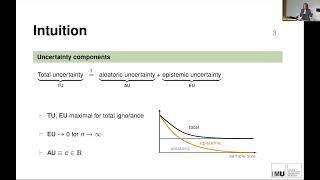
Quantifying Aleatoric and Epistemic Uncertainty in Machine Learning - Session 2
Explore critical analysis of uncertainty quantification in machine learning, examining conditional entropy and mutual information as measures for aleatoric and epistemic uncertainty.
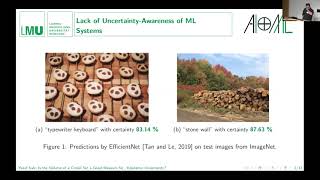
Is the Volume of a Credal Set a Good Measure for Epistemic Uncertainty - UAI 2023 Oral Session 2
Explore the effectiveness of credal set volume as a measure of epistemic uncertainty in binary and multi-class classification, highlighting implications for machine learning.
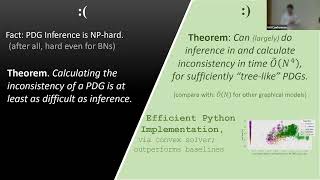
UAI 2023 Poster Spotlights - Advanced Topics in Uncertainty and AI
Explore cutting-edge research in uncertainty and AI, covering topics from point processes and GNN spatial convolutions to variational inference and Bayesian approaches in reinforcement learning.

Comparing Probability Distributions with Conditional Transport
Explore conditional transport as a new divergence for comparing probability distributions, with applications in generative modeling and resistance to mode collapse.
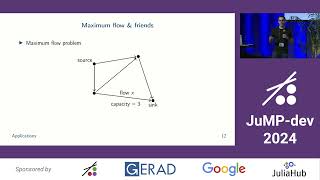
Convex Network Flows - Optimization Framework and Applications
Introducing a general framework for modeling flow problems over hyper graphs, with applications in network optimization, power flow, and wireless networks. Includes fast, parallelizable algorithm implementation in Julia.
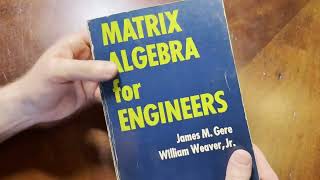
Matrix Algebra for Engineers - Don't Be an Engineering Poser, Study Real Math
Discover a powerful book for engineers to master matrix algebra, enhancing mathematical skills crucial for real-world engineering applications and problem-solving.
Hard Unsolved Math Problems - The Collatz Conjecture
Explore famous unsolved math problems like the Collatz Conjecture and delve into Richard Guy's book on unsolved number theory challenges, expanding mathematical horizons.
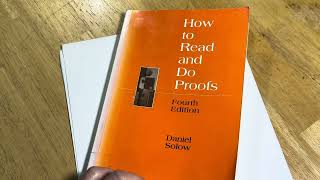
Epic Math Proof Writing Book - How to Read and Do Proofs
Learn to write clear and effective mathematical proofs with Daniel Solow's comprehensive guide "How to Read and Do Proofs", covering essential techniques for logical reasoning and argumentation.
What Does Machine Learning Have to Offer Mathematics? - Theoretically Speaking
Explore the intersection of machine learning and mathematics, focusing on novel techniques in combinatorics and potential impacts on mathematical practice.
Towards Foundation Models for Graphs
Explore cutting-edge research on foundation models for graph data structures, examining their potential applications and implications for AI and machine learning.
Passive Learning of Causal Strategies in Language Models
Exploring passive learning of causal strategies in AI, including generalization from interventional data and the role of natural language explanations in enhancing causal understanding.
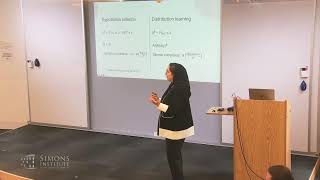
Hypothesis Selection with Computational Constraints
Explore optimal tradeoffs between memory, sample complexity, and time in hypothesis selection algorithms for distribution matching, with focus on achieving near-optimal accuracy efficiently.