Geometry and Topology in Quantum Mechanics - Mathematical Properties
Explore geometric phases in quantum mechanics, from foundational concepts to advanced topics like Berry phases and null phase curves, with applications in optics and condensed matter physics.
Introductory Lectures on First-Order Convex Optimization - Lecture 1
Explore first-order convex optimization, covering gradient descent, complexity, smoothness, and Nesterov's accelerated algorithm. Gain insights into theoretical foundations and practical applications in machine learning.
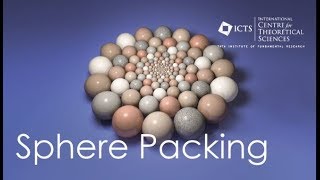
Modular Forms by Mahesh Kakde
Comprehensive exploration of modular forms, covering definitions, properties, and applications. Delves into Eisenstein series, theta functions, and related mathematical concepts for advanced learners in number theory.
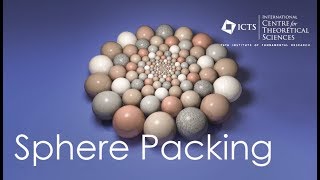
Quadratic Forms and Hermite Constant, Reduction Theory by Radhika Ganapathy
Explores techniques for computing densest lattice packings, including quadratic forms, Hermite constants, and reduction theory. Covers perfect forms, eutactic lattices, and Voronoi's algorithm for listing perfect forms.
GAP Installation and Practical Introduction - Lecture 2
Practical introduction to GAP software for group theory computations, covering installation, basic commands, and exercises on symmetric groups, conjugacy classes, and finite group enumeration.
Structure of Group Rings and the Group of Units of Integral Group Rings - Lecture 1
Explores group rings, their structure, and units of integral group rings. Covers idempotents, invertible elements, augmentation mapping, and constructions of units including Bass and cyclotomic units.
Gamma Convergence - Lecture 2
Explore gamma convergence, minimization problems, and homogenization in this advanced mathematics lecture. Learn about coercivity, lower semicontinuity, and integral functions in the context of multi-scale analysis.
From Local to Global Holomorphic Peak Functions - Lecture 1
Explore holomorphic peak functions in complex analysis, from local to global perspectives. Gain insights into Cauchy-Riemann equations, L2-theory, and applications in higher-dimensional complex manifolds.
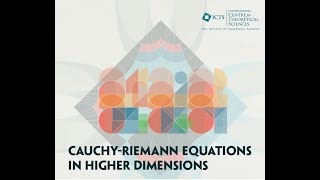
The Monge-Ampère Equations and the Bergman Kernel - Lecture 1
Explore complex analysis in higher dimensions, focusing on Cauchy-Riemann equations, L2 theory, and applications to geometry. Learn about Bergman kernels and extension theorems in this advanced mathematics lecture.
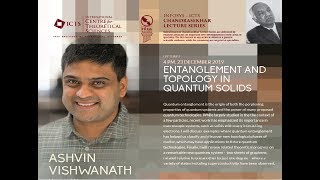
Topology, Correlations and Superconductivity in Magic Angle Graphene - Lecture 2
Explore topology, correlations, and superconductivity in magic angle graphene. Dive into band structures, symmetries, and experimental findings. Gain insights on flat bands, Landau levels, and correlated electron paradigms.
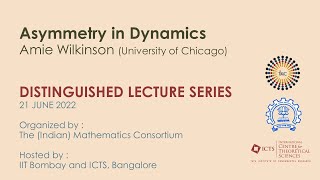
Asymmetry in Dynamics
Explore symmetries in dynamical systems and progress on Smale's conjecture about generic smooth systems having only trivial symmetries. Delve into complex analytic, Hamiltonian, and smooth dynamics.
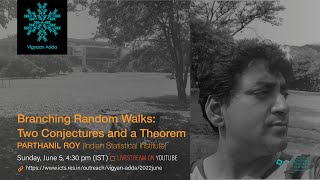
Branching Random Walks - Two Conjectures and a Theorem by Parthanil Roy
Explore branching random walks, their applications, and long-term behavior. Delve into conjectures and theorems with mathematician Parthanil Roy in this engaging lecture on probability theory.
On Brumer-Stark Units and Hilbert’s 12th Problem by Mahesh Kakde and Samit Dasgupta
Explore Brumer-Stark units and Hilbert's 12th Problem in this advanced number theory lecture, covering Stickelberger's theorem, class field theory, and recent developments in algebraic number theory.
To Paint the Lily, Mathematically by L Mahadevan
Explore the mathematical beauty of nature with L Mahadevan as he uncovers the hidden patterns in everyday phenomena, blending biology, physics, and mathematics to reveal the sublime in the mundane.
Calderon Problem - Introduction and Historical Context - Lecture 1
Explore the Calderon problem in inverse theory, covering its history, dimensions, approaches, and solutions. Gain insights into this fundamental concept in partial differential equations.

The Finite Part of Infinity by Joseph Samuel
Explore the paradoxical equation 1+2+3...=-1/12, its mathematical interpretation, and its impact on physics, including the Casimir effect, with insights from differential geometry and topology.
Deep Learning and Computations of PDEs by Siddhartha Mishra
Explore deep learning applications in PDEs, uncertainty quantification, and optimization. Learn about operator learning, DeepOnet decomposition, and high-dimensional PDEs in this advanced lecture.
Applying Physics to Mathematics by Tadashi Tokieda
Explore how physical intuition can uncover mathematical truths. Discover diverse examples that challenge both beginners and experts, bridging the gap between physics and mathematics.
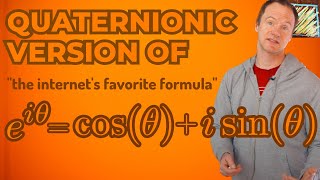
A Quaternion Version of Euler's Formula
Explore a quaternion extension of Euler's formula, connecting complex numbers to 3D rotations and expanding mathematical understanding beyond traditional complex analysis.

Proof - Invertibility Implies a Unique Solution to F(x)=Y - Linear Algebra - Khan Academy
Explore the proof of how invertibility guarantees a unique solution to f(x)=y for all y in the co-domain of f, enhancing your understanding of linear algebra concepts.

Visualizing a Column Space as a Plane in R3 - Vectors and Spaces - Linear Algebra
Explore how to visualize column space as a plane in R3, determining planar equations and understanding multi-dimensional concepts in linear algebra.