
Freezing and Freeing Degrees of Freedom in Joint Action Learning
Explore coordination in joint actions like piano-carrying, examining Bernstein's freezing and freeing degrees of freedom theory across collaborative tasks and its implications for motor learning.
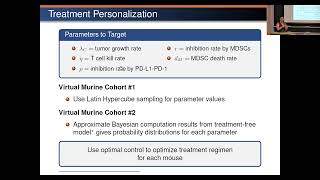
Optimal Control of Combination Immunotherapy for a Virtual Murine Cohort in a Glioblastoma-Immune Dynamics Model
Explore optimal control strategies for combination immunotherapy in glioblastoma treatment using mathematical modeling and virtual murine cohorts.
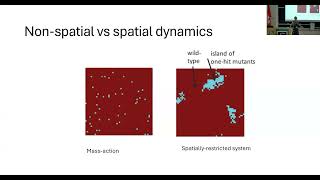
From Cell Evolution to Cancer Epidemiology: The Role of Aspirin in Colorectal Cancer Prevention - Lecture 2
Explore the role of aspirin in colorectal cancer prevention through mathematical modeling of cell evolution and cancer epidemiology.
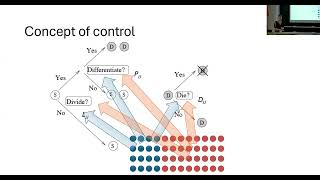
Stem Cells, Tissue Architecture, and Cancer Evolution - Lecture 1
Explore stem cells, tissue architecture, and cancer evolution in the hematopoietic system through mathematical modeling and applications.
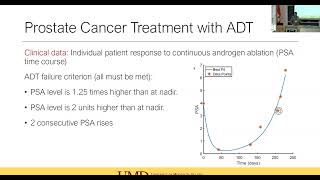
Leveraging Macroscopic Preclinical Data to Simulate Trials on Truly Heterogeneous Populations
Explore macroscopic preclinical data simulation for heterogeneous population trials in cancer treatment research and optimization.
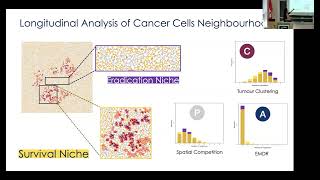
A Modelling-Informed Picture of Residual Disease in Environmentally Mediated Drug Resistance
Explore environmentally mediated drug resistance in cancer through mathematical modeling, focusing on residual disease and its implications for treatment strategies.
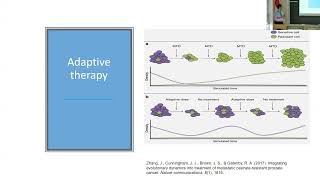
Incorporating Drug Toxicity into Models of Adaptive Therapy
Explore adaptive therapy models integrating drug toxicity, enhancing cancer treatment strategies and optimizing patient outcomes.

Determining Causation in Immunotherapy
Explore methods for determining causation in immunotherapy, focusing on analytical techniques and challenges in evaluating treatment effectiveness.
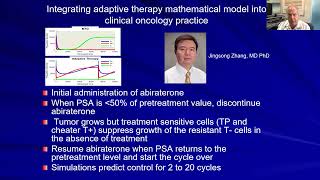
Mathematically Guided Clinical Trials for Metastatic Cancer Treatment - Integrating Evolutionary Dynamics
Explore evolutionary dynamics in cancer treatments through mathematical modeling for optimized clinical trials and metastatic cancer control.
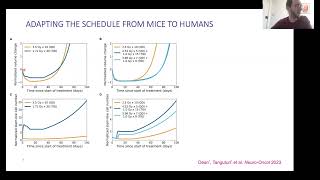
Phase I Study of a Novel Glioblastoma Radiation Therapy Schedule Exploiting Cell-State Plasticity
Explore a novel radiation therapy approach for glioblastoma, leveraging cell-state plasticity to enhance treatment efficacy and patient outcomes.
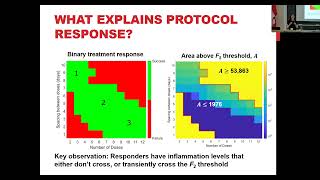
Phase I Study of a Novel Glioblastoma Radiation Therapy Schedule Exploiting Cell-State Plasticity
Explore innovative glioblastoma radiation therapy schedules leveraging cell-state plasticity in this cutting-edge Phase I study presentation.

A Mathematical Model of TCR-T Cell Therapy for Cervical Cancer
Explore a mathematical model for TCR-T cell therapy in cervical cancer treatment, focusing on its applications and implications in oncology research.
Covariance and Subspace Inference: Handling Robustness, Variability and Heterogeneity
Explore covariance matrix inference and PCA for non-regular data, covering mixed effects models, Gaussian assumptions, outlier handling, and applications in radio-interferometry calibration and imaging.

Stable Adaptation and Learning in Nonlinear Systems and Neural Networks
Explore nonlinear systems tools for insights on collective computation and learning in large dynamical networks, focusing on stable adaptation and implicit sparse regularization.
Dynamical Sampling and Frames
Explore dynamical sampling in signal recovery, covering space-time sampling, system identification, and source term problems. Gain insights into emerging challenges in this field.
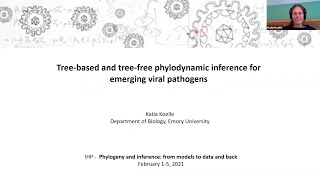
Tree-Free Phylodynamic Inference for Emerging Viral Pathogens and Lineages
Explore tree-free phylodynamic methods for analyzing emerging viral pathogens and lineages, focusing on innovative approaches to study viral evolution and spread.

Looking Back and Ahead in a Spiral
Explore the cyclical nature of scientific progress with Stéphane Mallat's insightful analysis of past discoveries and future directions in mathematics and physics.
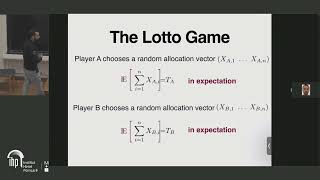
An Algorithmic Solution to the Blotto Game Using Multi-marginal Couplings
Explore algorithmic solutions to the Blotto Game through multi-marginal couplings, presented by Thibaut Le Gouic at Institut Henri Poincaré.
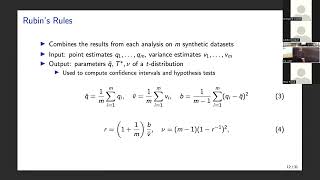
Noise-Aware Statistical Inference with Differentially Private Synthetic Data
Explore noise-aware statistical inference techniques for differentially private synthetic data, combining multiple imputation and Bayesian modeling to produce accurate uncertainty estimates for population-level quantities.

Building Blocks of Generalizable Autonomy
Explore key aspects of generalizable autonomy in robotics, including representational biases, causal inference, and interactive policy learning under uncertainty for efficient and adaptable AI systems.

Chance Constrained Simultaneous Task Allocation and Path Planning for Multi-Robot Systems
Explore multi-robot task allocation and path planning with probabilistic performance guarantees. Learn algorithmic approaches for optimizing team performance in open environments.