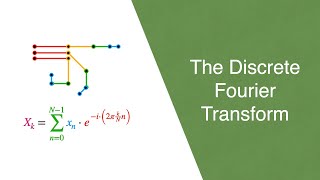
The Discrete Fourier Transform - Fundamentals and Applications
Explore the Discrete Fourier Transform, its inverse, formula, and matrix form in this concise tutorial, gaining insights into signal processing and frequency analysis.
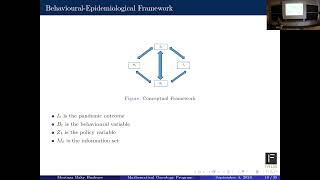
Understanding Pandemic Dynamics Through the Lens of Human Behavior
Explore how human behavior influences pandemic dynamics, integrating mathematical modeling with behavioral insights for more effective public health strategies and disease control.
MRI-Based Mathematical Modeling to Predict Breast Cancer Patient Response to Neoadjuvant Therapy
Explore mathematical modeling using MRI data to predict breast cancer treatment responses, enhancing personalized therapy approaches and improving patient outcomes.
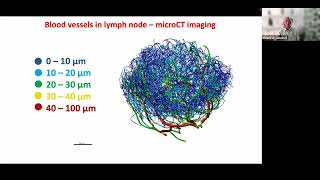
Lymphatic System Transport and Vaccine Design
Exploring lymphatic transport's role in vaccine efficacy, combining mathematical models and experiments to understand fluid dynamics in immune response and optimize vaccine delivery.
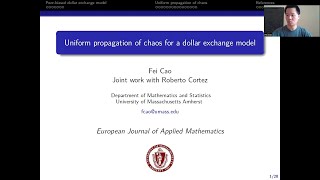
Uniform Propagation of Chaos for a Dollar Exchange Model
Explore a mathematical model for money exchange, focusing on agent-based dynamics and the convergence to a Poisson distribution as time and agent numbers increase.

How to Build a Wall Drawing Robot - Part 1: Building Scrawly Wally
Step-by-step guide to building a wall-drawing robot, covering hardware assembly, electronics, Raspberry Pi setup, and drawing mechanics. Includes live demo and code walkthrough.
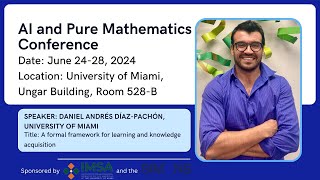
Formal Framework for Learning and Knowledge Acquisition
Explore a formal framework for learning and knowledge acquisition, examining theoretical foundations and practical applications in AI and mathematics.
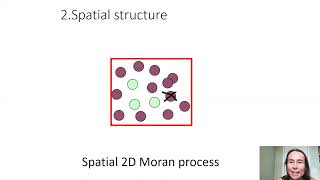
Evolutionary Modeling of Cancer
Explore mathematical methods for studying cancer evolution, including selection, mutation, and drift. Gain insights into loss-of-function and gain-of-function mutations in carcinogenesis.
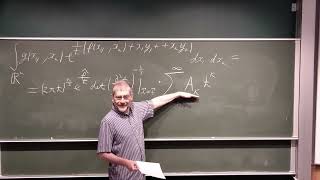
When the Fourier Transform is One Loop Exact?
Explore the conditions for one-loop exactness of Fourier transforms in mathematical physics, examining implications for quantum field theory and statistical mechanics.

Timely Computation - A Formal Approach to Digital Circuit Design
Explore a formal definition of digital circuits, emphasizing compositional correctness and timing analysis through simple denotations and homomorphisms in Agda.
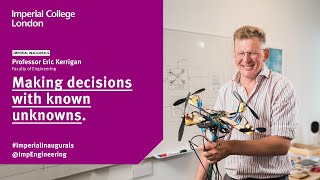
Making Decisions with Known Unknowns - Professor Eric Kerrigan's Inaugural Lecture
Explore decision-making under uncertainty, covering aerodynamics, electrical engineering, and energy systems. Learn optimization techniques for real-world problem-solving.
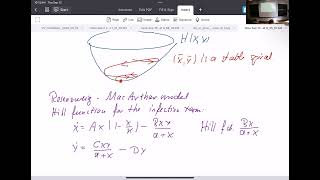
Michaelis-Menten Kinetics and Singular Perturbation Methods in Mathematical Oncology
Explore Michaelis-Menten kinetics and singular perturbation methods in mathematical oncology, enhancing understanding of enzyme-substrate interactions and complex systems.
How Games Secretly Shape Our World
Explore how games shape society, from military strategy to AI and human behavior. Uncover their impact on learning, decision-making, and predicting the future across various fields.
Physics-Assisted Multi-Robot Exploration
Explore cutting-edge techniques for multi-robot systems using physics-assisted approaches to enhance exploration and coordination in complex environments.

Diesel Cycle Numericals - Basic Mechanical Engineering
Learn to solve diesel cycle numerical problems for basic mechanical engineering, essential for first-year BTech/BE students.
What Mathematical Models Can and Cannot Tell Us About the Spread of Infectious Diseases
Explore mathematical modeling's capabilities and limitations in understanding disease spread, focusing on key insights and practical applications in epidemiology.
What Mathematical Models Can and Cannot Tell Us About the Spread of Infectious Diseases - Lecture 2
Explore mathematical modeling in disease spread: capabilities, limitations, and insights for understanding epidemic dynamics and informing public health strategies.
Models to Understand Drivers of Pathogen Prevalence
Explore mathematical models to analyze factors influencing pathogen prevalence in populations, enhancing understanding of disease dynamics and ecological impacts.
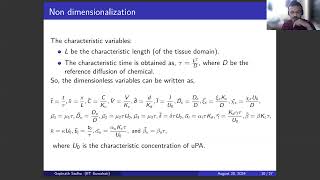
Exploring the Effects of Heat Therapy-Driven Inosine Generation on Tumor Recurrence
Investigates heat therapy's impact on inosine production and its potential influence on tumor recurrence, offering insights into innovative cancer treatment approaches.
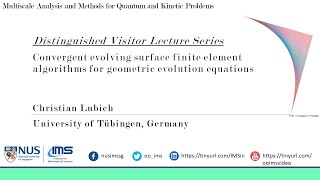
Convergent Evolving Surface Finite Element Algorithms for Geometric Evolution Equations
Explore convergent evolving surface finite element algorithms for geometric evolution equations, presented by Prof. Christian Lubich from University of Tübingen.
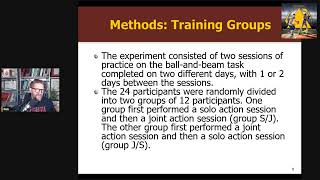
Freezing and Freeing of Degrees of Freedom in Joint Action Learning
Explore coordination in joint actions like piano-carrying, examining freezing and freeing of degrees of freedom across the joint action system and its implications for interpersonal coordination.