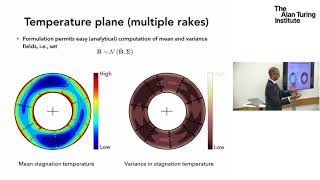
Data-Centric Engineering in Aero-Engines - Pranay Seshadri, Cambridge
Explore data-centric engineering in aero-engines, covering blade design, uncertainty estimation, and computational fluid dynamics for improved performance and reduced costs in aerospace.
Defining the Fourier Transform with Complex Numbers
Explore complex numbers in Fourier transform, including coefficients, visual interpretation, and inverse transform. Gain insights into elegant mathematical representations for audio signal processing.

Creating In-Context Designs
Learn to create multi-part designs in context using Autodesk software. Master techniques like extrusion, lofting, and isometric sketching to build complex assemblies efficiently.
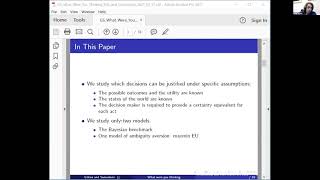
What Were You Thinking? Decision Theory as Coherence Test - Prof. Itzhak Gilboa
Explore decision theory as a coherence test, examining assumptions, Bayesian justification, and geometric interpretation. Gain insights into max mean expected utility and practical applications.

Causality in Machine Learning - Panel Discussion
Experts discuss interpretable machine learning in natural and social sciences, exploring causal inference and its applications across various fields.
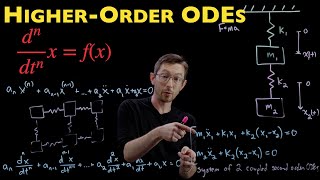
High-Order Ordinary Differential Equations with More Derivatives - From Physics
Explore derivation of higher-order differential equations from F=ma, focusing on spring-mass systems. Learn to chain simple systems for complex equations in physics.
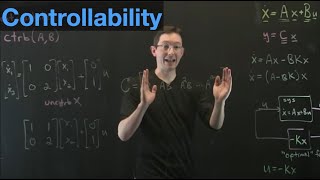
Controllability - Control Bootcamp
Explore linear system controllability through intuitive examples and the controllability matrix rank test. Learn key concepts for understanding and analyzing system control.
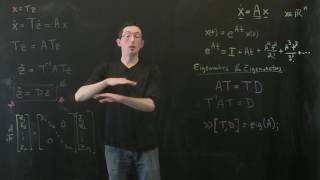
Linear Systems - Control Bootcamp
Analyze ordinary differential equations using eigenvalues and eigenvectors, laying the foundation for linear control theory in this comprehensive mathematical exploration.

Discrete Fourier Transforms
Explore discrete Fourier transforms, their applications in engineering, and mathematical foundations. Learn key concepts and techniques for analyzing digital signals and data processing.

The Math of Being a Greedy Pig - Numberphile
Explore the mathematics behind the dice game "Pig" with Ben Sparks. Learn optimal strategies, analyze probabilities, and discover the balance between risk and reward in this engaging mathematical exploration.
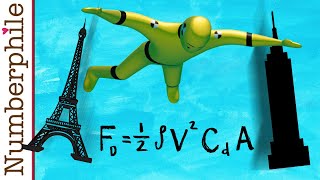
The Drag Equation - Empire State Building vs Eiffel Tower
Explore the fascinating physics of drag as Tom Crawford compares the Empire State Building and Eiffel Tower falling through water, revealing surprising insights about fluid dynamics and shape effects.

The Coronavirus Curve
Explore the SIR Model used to predict COVID-19 spread with Ben Sparks. Learn about epidemic modeling through clear explanations and live coding, gaining insights into the mathematics behind pandemic forecasting.

Power Factor - Basic Introduction - Reactive and Apparent Power
Explore power factor basics, including true, apparent, and reactive power calculations. Learn formulas, examples, and practical applications in electrical circuits.
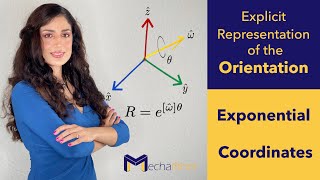
Exponential Coordinates in Robotics - Fundamentals of Robotics
Explore exponential coordinates in robotics, covering interpretations, linear differential equations, cross products, matrix logarithms, and practical demonstrations with a two-degree-of-freedom robot wrist.
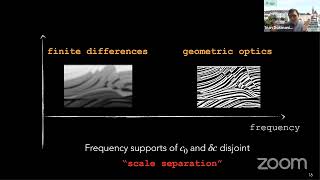
Advances in Wave Imaging and Microlocal Analysis - SPACE Webinar Series
Explore wave imaging techniques, from traditional approaches to new methods, with a focus on microlocal analysis, Fourier integral operators, and neural network architectures for improved imaging.
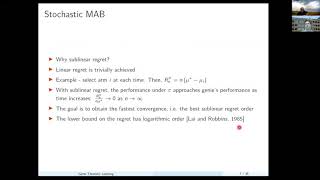
Game Theoretic Learning and Spectrum Management - Part 2
Explore game theory in signal processing, covering multi-arm bandits, adaptive algorithms, and reinforcement learning for spectrum management and network optimization.
HARK No More - Preregistration of CHI Experiments
Explores preregistration of experiments in HCI research to prevent post-hoc hypothesizing, discussing its adaptation and benefits for improving the discipline's scientific rigor.
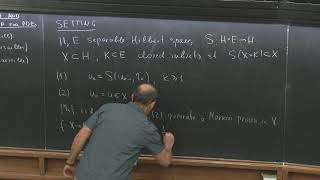
Control Theory and Large Deviation Principles for PDEs
Explore control theory and large deviation principles for PDEs, covering IID cases, contraction principles, rate functions, and applications to random forces and controllability.
Mathematics of Signal Design for Communication Systems and Szemerédi’s and Green-Tao’s Theorems
Explore signal design for communication systems, focusing on orthogonal transmission schemes and their dynamics. Delve into mathematical connections with functional analysis and additive combinatorics.
Gabor Analysis and Its Mysteries
Einführung in die Gabor-Analyse: Grundlagen, Anwendungen und mathematische Konzepte für Signalverarbeitung, Quantenmechanik und Kommunikationstechnik.
Endpoint Fourier Restriction and Unrectifiability
Explore endpoint Fourier restriction and its connection to measure unrectifiability in R^d, featuring a dichotomy between absolute continuity and 1-pure unrectifiability.