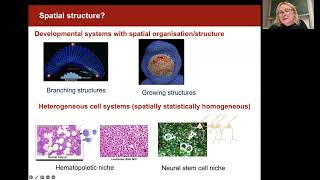
Introduction to Mathematical Modeling of Leukemia - Part 1
Explore the mathematical foundations of leukemia research through expert analysis of oncological models and their applications in understanding disease progression and treatment strategies.
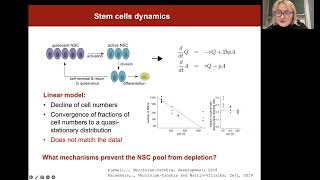
Mathematical Models of Leukemia - Part 2
Delve into advanced mathematical modeling of leukemia dynamics, exploring theoretical frameworks and analytical approaches for understanding cancer progression and treatment strategies.
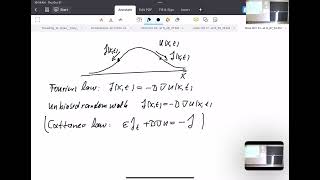
Stochastic Processes and Tumor Control Probability
Explore mathematical modeling of cancer treatment through stochastic processes and probability theory, focusing on tumor control analysis and therapeutic outcomes.
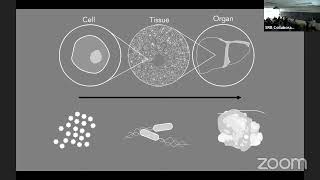
Bi-directional Lessons Between Traditional Evolutionary Biology and Cancer
Explore evolutionary biology's impact on cancer research and vice versa, uncovering insights that bridge these interconnected fields.

Computational Modeling of Chemotaxis - The Best Way to Understand Cell Migration
Explore computational modeling techniques for understanding cell migration and chemotaxis, enhancing knowledge of cellular movement mechanisms.
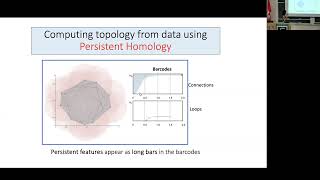
Applications of Topological Data Analysis in Cancer - Lecture 2
Explore applications of topological data analysis in cancer research, focusing on mathematical modeling of treatments, resistance, and optimization.
Tipping Points in Cancer - Mathematical Oncology and Computational Biology
Explore the mathematical dynamics of cancer progression through computational analysis of fluid mechanics, biology, and critical transition points in tumor development.
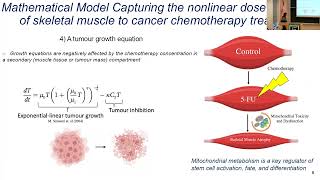
Chemotherapy-Induced Cachexia and Model-Informed Dosing to Preserve Lean Mass in Cancer Treatment
Explore mathematical modeling approaches for optimizing chemotherapy dosing to minimize muscle loss while maintaining effective cancer treatment strategies.
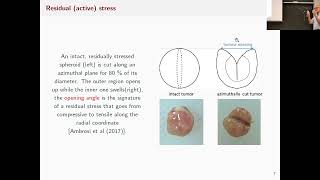
Stress and Growth in Tumor Spheroids
Explore the mathematical modeling of tumor growth dynamics, focusing on stress factors and spheroid development in oncological research and computational biology.
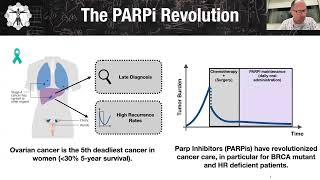
De-escalating PARP Inhibitor Maintenance Therapy in Ovarian Cancer Using Adaptive Therapy
Explore innovative approaches to PARP inhibitor maintenance therapy in ovarian cancer, focusing on adaptive treatment strategies and de-escalation methods for optimal patient outcomes.
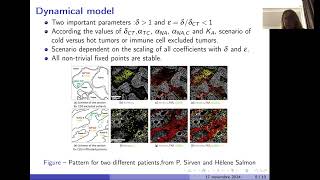
How Cancer-Associated Fibroblasts Promote T-Cell Exclusion in Human Lung Tumors: A Physical Perspective
Explore the physical mechanisms behind cancer-associated fibroblasts and their role in T-cell exclusion within lung tumors through mathematical and biological perspectives.
Balancing Interpretability and Predictive Accuracy in Mathematical Models of T Cell Activation
Explore mathematical modeling approaches for T cell activation, examining the trade-offs between model interpretability and accuracy in immunological systems.
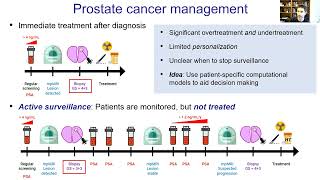
Prostate: Small Organ, Big Problems - Informing Clinical Decisions with Computational Models
Explore how computational models enhance clinical decision-making for prostate-related conditions through advanced mathematical and biological approaches.
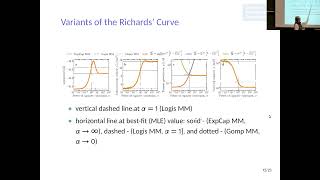
Practical Parameter Identifiability and Handling of Censored Data with Bayesian Inference in Models of Tumour Growth
Explore Bayesian inference techniques for tumor growth modeling, focusing on parameter identification and censored data analysis in mathematical oncology research.
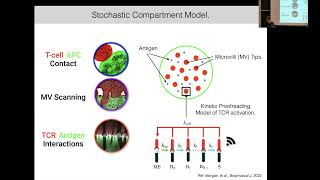
Applications of Extreme Statistics to Cellular Decision Making and Signaling
Explore how extreme statistics influence cellular behavior and decision-making processes, focusing on mathematical approaches in biological signaling systems.

Mathematical Modelling of Microtube Driven Invasion of Glioma
Explore mathematical modeling techniques for understanding glioma invasion through microtubes, featuring advanced research insights and theoretical frameworks for cancer progression analysis.
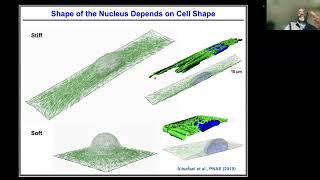
How Does the Tumor Microenvironment Regulate Genome Organization of Cancer Cells?
Explore the complex relationship between tumor microenvironments and cancer cell genome organization through mathematical modeling and cutting-edge research insights.
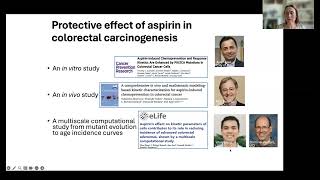
Protective Effect of Aspirin in Colorectal Carcinogenesis
Explore the mathematical modeling of aspirin's protective mechanisms in colorectal cancer development through advanced analytical approaches and research findings.
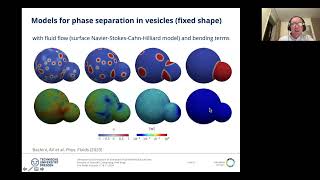
Two-Phase Flows on Deformable Surfaces in Mathematical Oncology
Explore mathematical modeling of two-phase flows on deformable surfaces, focusing on applications in glioma invasion and mathematical oncology principles.
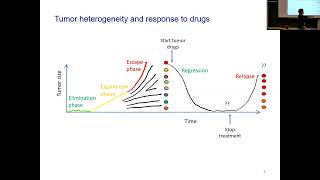
Statistical Dynamics of Tumor Initiation and Progression
Explore the mathematical modeling of tumor development through statistical dynamics, focusing on glioma invasion patterns and microtube-driven cancer progression mechanisms.
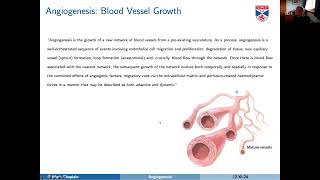
Angiogenesis - Mathematical Models in Cancer Development
Explore the mathematical modeling of blood vessel formation in cancer through advanced mathematical oncology concepts and their clinical applications.