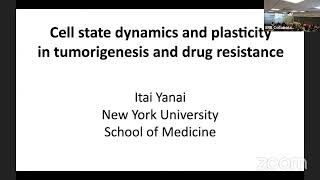
Cell State Dynamics and Plasticity in Tumorigenesis and Drug Resistance
Explore cell state dynamics and plasticity in cancer, focusing on tumorigenesis and drug resistance. Gain insights into heterogeneity, universal modules, and cancer cell manipulation of fibroblasts.
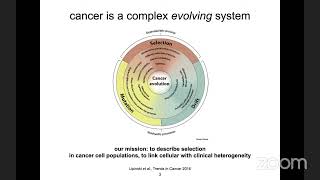
How Diversity Indices Help Understand Cancer Ecology and Evolution
Explore diversity indices and entropy to gain insights into cancer ecology and evolution, enhancing understanding of tumor dynamics and progression.
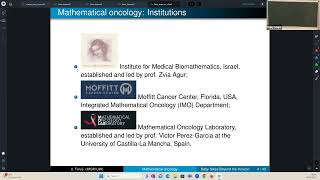
Mathematical Oncology: Insights into Cancer Treatment from a Mathematical Perspective
Explore mathematical models for cancer treatment, gaining insights into tumor growth, drug delivery, and therapeutic strategies from a quantitative perspective.
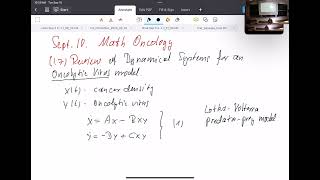
Nondimensionalization and Biochemical Reaction Networks in Mathematical Oncology
Explore nondimensionalization and biochemical reaction networks in mathematical oncology, enhancing your understanding of complex biological systems and their analysis.
The Hallmarks of Cancer - A Mathematical Perspective
Explore mathematical perspectives on cancer hallmarks, including proliferation, growth suppression, cell death, and metastasis, through differential equations and modeling techniques.
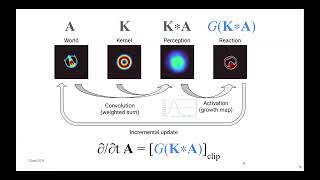
Lenia: A Continuous Model of Virtual Cell Growth Patterns
Explore virtual cell growth patterns through Lenia, a continuous model presented by Dr. Bert Chan in this Mathematical Oncology seminar.
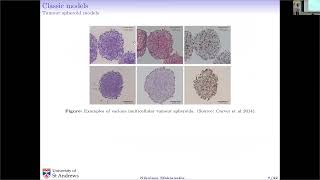
The Mathematical Hallmarks of Cancer - Yesterday, Today, and Tomorrow
Explore the mathematical modeling of cancer's key characteristics, examining past approaches, current methodologies, and future directions in oncology research.
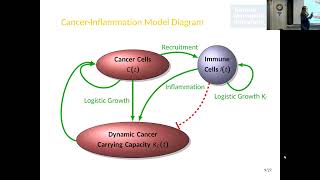
Modelling Inflammation in Cancer
Explore mathematical models of inflammation's role in cancer progression, examining key mechanisms and potential therapeutic targets.
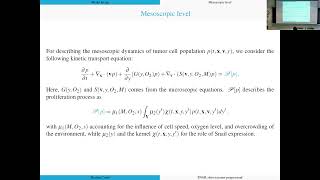
Multiscale Modeling of Tumor Invasion
Explore advanced mathematical techniques for modeling tumor invasion across multiple scales, enhancing understanding of cancer progression and potential treatment strategies.
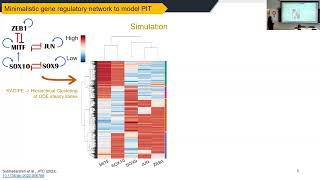
Dynamical Modeling of Proliferative-Invasive Plasticity and IFNγ Signaling in Melanoma - Mechanisms of PD-L1 Expression Heterogeneity
Explore melanoma dynamics through mathematical modeling, uncovering mechanisms behind PD-L1 expression heterogeneity and proliferative-invasive plasticity in cancer cells.
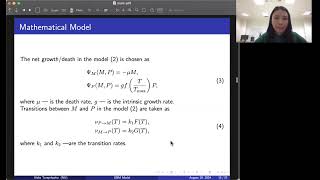
Traveling Wave Speed and Profile of a "Go or Grow" Glioblastoma Multiforme Model
Explore mathematical modeling of glioblastoma tumor growth, focusing on traveling wave speed and profile in a "go or grow" framework for advanced cancer research.
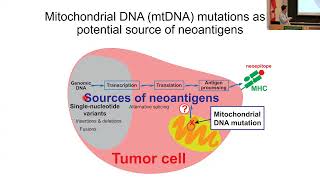
How to Generate New Hypotheses and Research Directions by Single-Cell Data Analysis
Discover advanced techniques for analyzing single-cell data to develop innovative research hypotheses and explore new directions in cancer research and mathematical oncology.
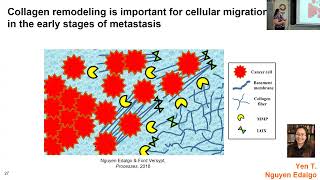
Agent-Based Modeling of Cancer Cell Migration in Response to Tumor Microenvironmental Signals
Explore computational modeling techniques for simulating cancer cell migration and interactions within tumor microenvironments, enhancing understanding of disease progression.
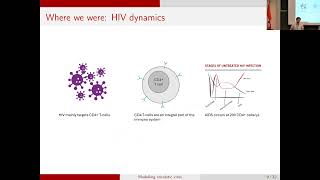
What Can Viral Dynamics Teach Us About Modeling Immunotherapies?
Explore mathematical modeling approaches from viral dynamics and their applications in understanding immunotherapy responses and tumor-immune system interactions.
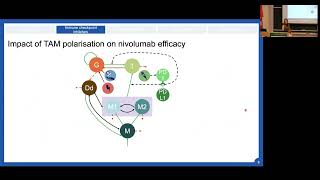
Overcoming Immune Evasion in Glioblastoma by Targeting Tumour-Associated Macrophages
Explore groundbreaking research on targeting macrophages to combat immune evasion mechanisms in glioblastoma treatment, featuring mathematical oncology approaches and therapeutic strategies.
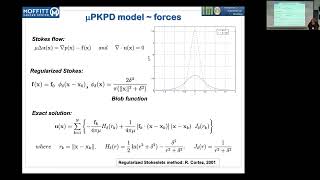
Computational Modeling of Tumor Microenvironment: A Cancer Hallmarks Perspective
Explore computational modeling of tumor microenvironments through cancer hallmarks, gaining insights into advanced oncology research techniques and their applications.
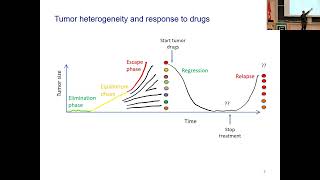
Statistical Dynamics of Tumor Initiation and Progression
Explore the mathematical modeling of cancer development through statistical dynamics, focusing on tumor initiation patterns and progression mechanisms in oncological research.
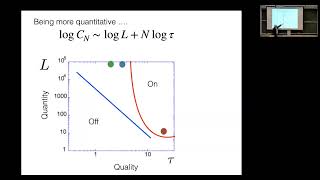
T Cell Recognition: From Theory to CAR-T Immunotherapy
Explore the mathematical foundations of T cell recognition and its crucial role in CAR-T immunotherapy, from theoretical principles to practical applications in cancer treatment.
Stochastic Models for Tumor Control Probability and Probability of Cure - Part 1
Explore stochastic modeling techniques for analyzing tumor control and cure probabilities, focusing on mathematical approaches in oncology research and treatment outcomes.
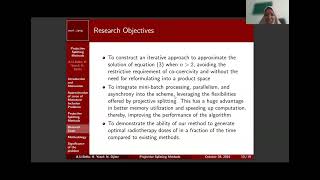
Critical Domain Size and Travelling Waves
Explore mathematical concepts of critical domain size and travelling waves in oncology, examining their applications through advanced theoretical frameworks and practical examples.
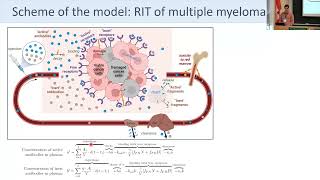
Optimization of Radioimmunotherapy of Blood Cancers - Insights from Mathematical Modeling
Explore mathematical modeling approaches to optimize radioimmunotherapy treatments for blood cancers, focusing on tumor immune dynamics and therapeutic effectiveness.