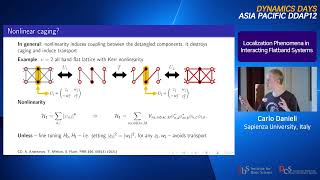
Localization Phenomena in Interacting Flatland Systems
Explore localization phenomena in flatband networks, examining compact localized eigenstates and the impact of perturbations. Discover finetuning protocols for diverse localization features in classical and quantum systems.

cadCAD.jl - A Modeling Library for Generalized Dynamical Systems
Explore generalized dynamical systems modeling with cadCAD.jl. Learn to simulate complex systems, evolve data structures, and gain iterative insights for enhanced system engineering and data science workflows.
Model Reparametrization with StructuralIdentifiability.jl - JuliaCon 2024
Explore StructuralIdentifiability.jl's new features for rapid identification of identifiable functions and model reparametrization, enhancing modeling and control practices.

Real Time ODEs for Sound Synthesis and Parameter Exploration - JuliaCon 2024
Explore real-time ODEs for sound synthesis and parameter analysis using Julia, combining visual and auditory representations to unveil dynamical system behaviors and control parameters.
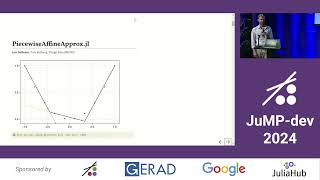
PiecewiseAffineApprox.jl - Automated Piecewise Affine Convex Approximations for Optimization Models
Explore piecewise affine convex approximations for optimization models using PiecewiseAffineApprox.jl, featuring flexible options and methods for best-fit calculations in Julia.
Differentiating Parametric JuMP Models in Julia
Explore differentiating parametric JuMP models, combining DiffOpt and ParametricOptInterface for efficient optimization and parameter sensitivity analysis in Julia.
Teaching Optimization: Comparing cvxpy, pyomo, and JuMP
Explore convex optimization modeling frameworks, comparing cvxpy, pyomo, and JuMP. Learn about common student challenges and how JuMP addresses them in undergraduate and graduate courses.
Applied Optimization with JuMP at SINTEF
Explore JuMP for flexible optimization modeling at SINTEF, focusing on hydrogen infrastructure and circular logistics. Learn about complementary packages enhancing JuMP's functionality.
Current Fluctuations in Noninteracting Run-and-Tumble Particles in One Dimension
Explore current fluctuations in noninteracting run-and-tumble particles, focusing on flux distribution through origin and anomalous large-deviation form in active particles.
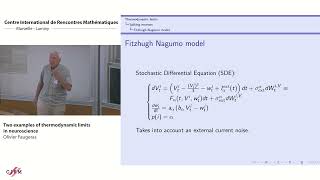
Two Examples of Thermodynamic Limits in Neuroscience
Explore thermodynamic limits in neuroscience through two examples, gaining insights into stochastic analysis and numerical probability in mathematical biology.
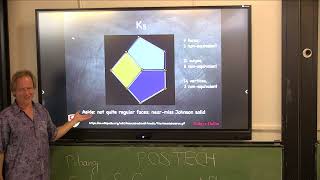
A Tale of Two Polytopes Related to Geodesic Flows on Spheres
Explore finite dimensional integrability in mathematical physics through geodesic flows on spheres, focusing on two related polytopes.
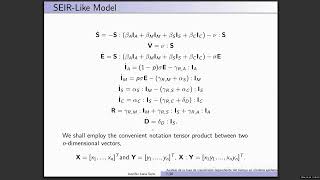
Análisis de la Tasa de Transmisión Dependiente del Tiempo en Modelos Epidemiológicos
Explore mathematical analysis of time-dependent transmission rates in SEIR-like epidemiological models, covering direct and inverse problems, Tikhonov regularization, and practical applications.
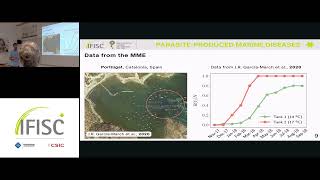
Theoretical and Data-Driven Models in Ecology
Explore mathematical modeling approaches in ecology, from theoretical frameworks to data-driven analysis, understanding complex ecological systems and their dynamics.

1D Statistical Mechanics and Resurgence
Explore advanced concepts in one-dimensional statistical mechanics and resurgence theory through mathematical physics principles and analytical techniques.
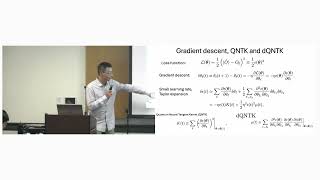
Dynamical Transition in Controllable Quantum Neural Networks with Large Depth
Delve into quantum neural networks' training dynamics, exploring transcritical bifurcation transitions, Lotka-Volterra equations, and experimental validations on IBM quantum devices.
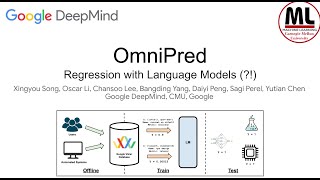
OmniPred - Towards Universal Regressors with Language Models
Explore groundbreaking research on OmniPred's innovative approach to using language models as universal regressors, demonstrating superior performance over traditional regression methods across diverse experiments.

Computational Phenomenology, Mathematical Phenomenology and Pre-Reflective Self-Awareness
Explore the intersection of computational and mathematical phenomenology, examining methodological foundations and their application to pre-reflective self-awareness in consciousness studies.

Data Science Applications in Gaming Analytics
Discover how data science revolutionizes gaming through player analytics, development strategies, and mathematical modeling to create optimal gaming experiences and drive industry innovation.
Identification of Building Thermal Model Using Data Science Tools
Discover how to create building thermal models using data science tools instead of complex mathematical approaches, streamlining the process for efficient control algorithm implementation.
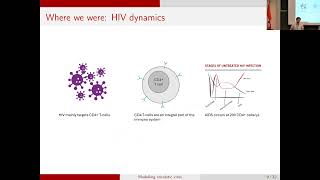
What Can Viral Dynamics Teach Us About Modeling Immunotherapies?
Explore mathematical modeling approaches from viral dynamics and their applications in understanding immunotherapy responses and tumor-immune system interactions.
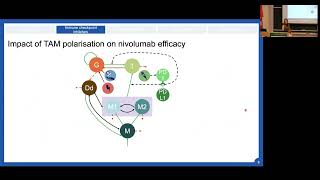
Overcoming Immune Evasion in Glioblastoma by Targeting Tumour-Associated Macrophages
Explore groundbreaking research on targeting macrophages to combat immune evasion mechanisms in glioblastoma treatment, featuring mathematical oncology approaches and therapeutic strategies.