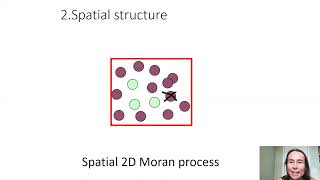
Evolutionary Modeling of Cancer
Explore mathematical methods for studying cancer evolution, including selection, mutation, and drift. Gain insights into loss-of-function and gain-of-function mutations in carcinogenesis.
What Mathematical Models Can and Cannot Tell Us About the Spread of Infectious Diseases
Explore mathematical modeling's capabilities and limitations in understanding disease spread, focusing on key insights and practical applications in epidemiology.
Models to Understand Drivers of Pathogen Prevalence
Explore mathematical models to analyze factors influencing pathogen prevalence in populations, enhancing understanding of disease dynamics and ecological impacts.
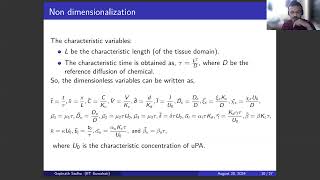
Exploring the Effects of Heat Therapy-Driven Inosine Generation on Tumor Recurrence
Investigates heat therapy's impact on inosine production and its potential influence on tumor recurrence, offering insights into innovative cancer treatment approaches.
Convergent Evolving Surface Finite Element Algorithms for Geometric Evolution Equations
Explore convergent evolving surface finite element algorithms for geometric evolution equations, presented by Prof. Christian Lubich from University of Tübingen.
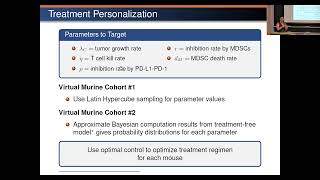
Optimal Control of Combination Immunotherapy for a Virtual Murine Cohort in a Glioblastoma-Immune Dynamics Model
Explore optimal control strategies for combination immunotherapy in glioblastoma treatment using mathematical modeling and virtual murine cohorts.
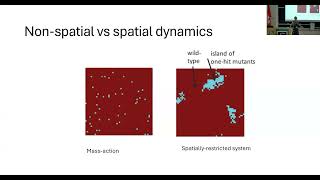
From Cell Evolution to Cancer Epidemiology: The Role of Aspirin in Colorectal Cancer Prevention - Lecture 2
Explore the role of aspirin in colorectal cancer prevention through mathematical modeling of cell evolution and cancer epidemiology.
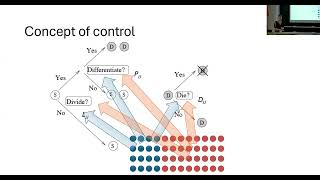
Stem Cells, Tissue Architecture, and Cancer Evolution - Lecture 1
Explore stem cells, tissue architecture, and cancer evolution in the hematopoietic system through mathematical modeling and applications.
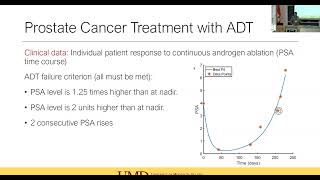
Leveraging Macroscopic Preclinical Data to Simulate Trials on Truly Heterogeneous Populations
Explore macroscopic preclinical data simulation for heterogeneous population trials in cancer treatment research and optimization.
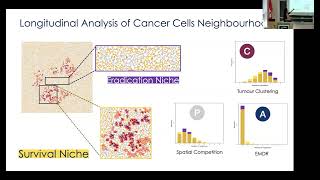
A Modelling-Informed Picture of Residual Disease in Environmentally Mediated Drug Resistance
Explore environmentally mediated drug resistance in cancer through mathematical modeling, focusing on residual disease and its implications for treatment strategies.
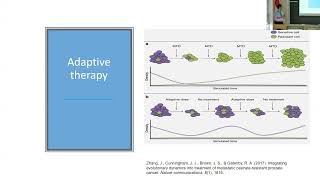
Incorporating Drug Toxicity into Models of Adaptive Therapy
Explore adaptive therapy models integrating drug toxicity, enhancing cancer treatment strategies and optimizing patient outcomes.

Determining Causation in Immunotherapy
Explore methods for determining causation in immunotherapy, focusing on analytical techniques and challenges in evaluating treatment effectiveness.
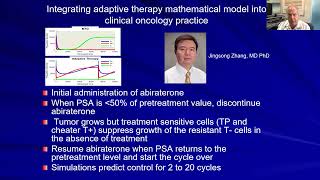
Mathematically Guided Clinical Trials for Metastatic Cancer Treatment - Integrating Evolutionary Dynamics
Explore evolutionary dynamics in cancer treatments through mathematical modeling for optimized clinical trials and metastatic cancer control.
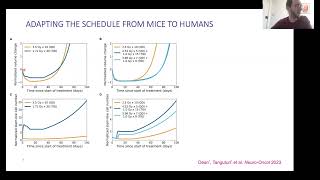
Phase I Study of a Novel Glioblastoma Radiation Therapy Schedule Exploiting Cell-State Plasticity
Explore a novel radiation therapy approach for glioblastoma, leveraging cell-state plasticity to enhance treatment efficacy and patient outcomes.
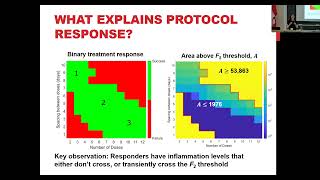
Phase I Study of a Novel Glioblastoma Radiation Therapy Schedule Exploiting Cell-State Plasticity
Explore innovative glioblastoma radiation therapy schedules leveraging cell-state plasticity in this cutting-edge Phase I study presentation.
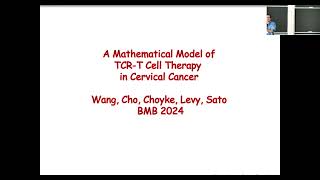
A Mathematical Model of TCR-T Cell Therapy for Cervical Cancer
Explore a mathematical model for TCR-T cell therapy in cervical cancer treatment, focusing on its applications and implications in oncology research.

Properties of Chaotic Systems for Audio
Explore chaotic systems for audio generation and transformation. Learn about fixed points, bifurcation, and practical applications with interactive visualizations and code examples.
The Legacy of Rudolph Kalman - Systematic Approaches to Data-Driven Predictive Modeling
Explore Rudolph Kalman's groundbreaking work on data-driven mathematical modeling and its impact on fields like space control, weather prediction, and AI. Gain insights into optimization and iteration concepts.
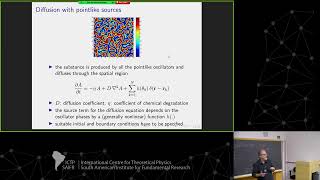
Phase and Frequency Synchronization of Nonlocally Coupled Oscillators
Explore phase and frequency synchronization in nonlocally coupled oscillators, delving into complex network dynamics and their applications.
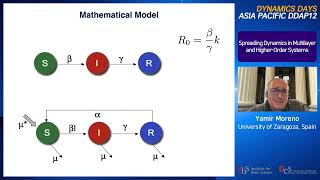
Contagion Dynamics on Single, Multilayer, and Higher-Order Networks
Explore contagion dynamics across network types, from single populations to multilayer and higher-order networks. Gain insights into modeling epidemics, social contagion, and future challenges in network science.
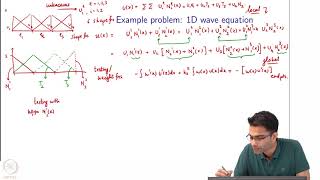
1D Finite Element Method: Wave Equation Basis and Testing Functions - Lecture 1
Explore basis and testing functions for 1D Finite Element Method in solving the 1D Wave Equation, enhancing understanding of numerical methods in computational physics.