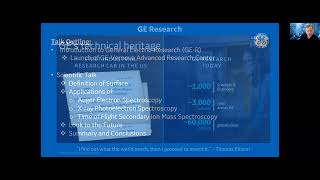
Surface Microscopy and Microanalysis in Industrial Research - AVS e Talk
Explore surface analysis techniques like AES, XPS, and ToF-SIMS for material optimization and problem-solving in industrial research, including data interpretation and external collaborations.
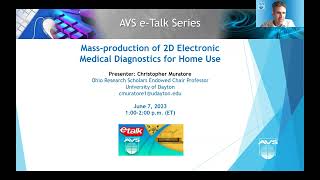
Mass Production of 2D Electronic Medical Diagnostics for Home Use
Explore mass production techniques for 2D electronic medical diagnostics, focusing on high-rate fabrication, sensitivity, and recyclability for widespread home use.
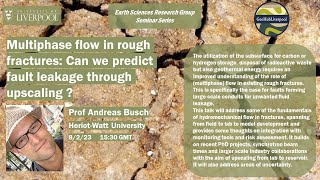
Predicting Fault Leakage Through Upscaling: From Lab to Reservoir
Explore hydromechanical flow in fractures, from lab to reservoir, for improved subsurface utilization in energy and waste storage applications.
Can a Solid State Quantum Simulator Help Us Understand Materials?
Explore quantum simulators' potential in understanding materials, comparing experimental results to classical computation and discussing future implications for condensed matter physics.
Yielding from a Rheological Perspective
Explore rheological perspectives on yielding, covering key milestones, experimental observations, and models in non-equilibrium processes for physics and biology.
Computational Rheology in Soft Matter
Explore computational rheology in soft matter, focusing on non-equilibrium processes in physics and biology. Gain insights from expert Mehdi Bouzid's comprehensive lecture.
A Microscopic, Experiment-Based View of the Yielding Transition - Part I
Explore microscopic perspectives on yielding transitions through experimental insights, focusing on non-equilibrium processes in physics and biology.
A Microscopic, Experiment-Based View of the Yielding Transition - Part II
Explore microscopic perspectives on yielding transitions through experimental insights, advancing understanding in non-equilibrium physics and biology.
The Physics of Highly Crosslinked Cytoskeletal Networks
Explore the physics of highly crosslinked cytoskeletal networks in this graduate-level lecture, delving into non-equilibrium processes in physics and biology.
Siderophile Elements - Superheroes of the Geochemical World
Explore the fascinating world of siderophile elements and their crucial role in geochemistry, with insights from Dr. Richard J. Walker's research.
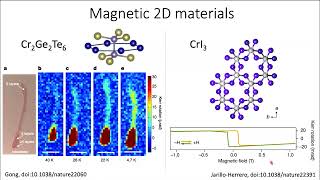
Materials Science and Discovery Powered by Machine Learning
Explore machine learning applications in materials science, focusing on innovative discovery techniques and computational advancements in the field.
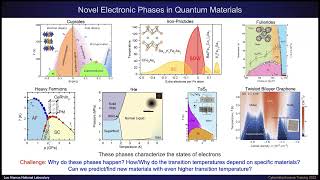
Recent Advances in Density Functional Theory for Complex Correlated Materials
Explore recent advances in density functional theory for complex correlated materials, presented by Dr. Christopher Lane of Los Alamos National Lab.
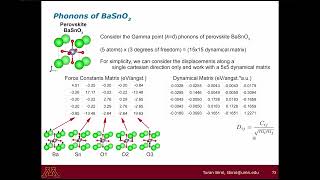
Phonons and Structural Transitions from DFT and Group Theory - Part 2
Explore phonons and structural transitions using DFT and group theory, advancing understanding of material properties and phase changes.
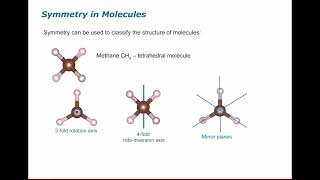
Phonons and Structural Transitions from DFT and Group Theory - Part 1
Explore phonons and structural transitions using DFT and group theory, gaining insights into fundamental concepts and advanced computational techniques.
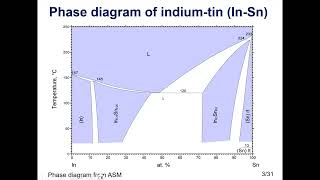
First Principles Thermodynamics
Explore computational condensed matter using first principles thermodynamics, gaining insights into advanced techniques and applications.
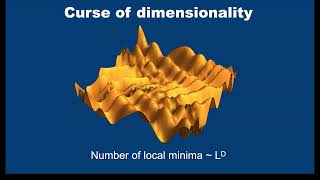
Structure Prediction with Computational Methods
Explore computational methods for predicting material structures, focusing on advanced techniques and their applications in materials science.
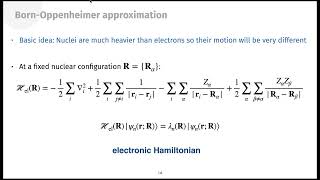
Lattice Dynamics
Explore lattice dynamics through an in-depth seminar, gaining insights into crystal structures and their vibrational properties from expert Prof. Bartomeu Monserrat.
CHGNet: A Pre-trained Universal Interatomic Potential for Electron-Coupled Ionic Systems
Explore CHGNet, a graph-neural-network-based machine-learning potential for modeling universal potential energy surfaces in large-scale simulations with complex electron interactions.
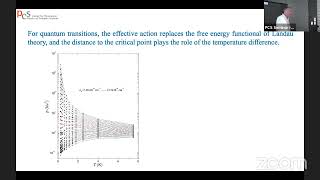
Quantum Scaling for the Metal-Insulator Transition in a Two-Dimensional Electron System
Explore quantum scaling for metal-insulator transitions in 2D electron systems, focusing on Gaussian approximation, critical exponents, and phase diagrams.
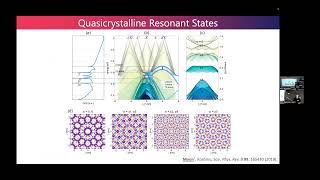
Quasicrystalline Resonant States and Nonlinear Landau Fan Diagram in van der Waals Superlattices
Explore quasicrystalline resonant states and nonlinear Landau fan diagrams in van der Waals superlattices, examining unique electron behaviors in incommensurate configurations and moiré potentials.
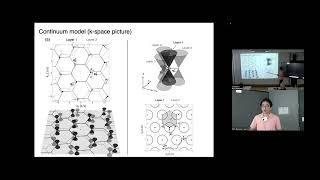
Exploring Moiré 2D Materials and Topological Quasicrystals
Delve into moiré 2D materials and topological quasicrystals, exploring theoretical perspectives on emergent behaviors, long-range continuum models, and fascinating phenomena in trilayer systems.