
Alginates: A Sustainable Solution to the Global Coffee Capsule Waste Problem
Discover how alginates from algae can revolutionize packaging, addressing global waste issues and creating sustainable solutions for coffee capsules and beyond.
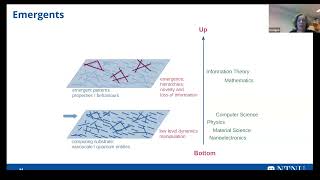
Emergent Computations for Emerging Technologies in Quantum Computing
Explore quantum materials' potential for novel computational approaches inspired by biological systems, addressing challenges in quantum computing through interdisciplinary collaboration.
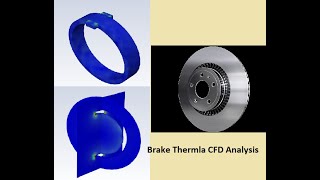
Brake Thermal Pad Sliding Mesh CFD Analysis - CHT Analysis
Explore advanced CFD techniques for brake thermal pad analysis, including sliding mesh and conjugate heat transfer methods.

Least Squares Regression for Polymer Prony Series
Explore viscoelastic material modeling using Prony series, focusing on Z matrix construction for specifying decay time constants in polymers.

Avoiding Metal Distortion in TIG Welding Different Metals
Master techniques to prevent metal distortion during TIG welding of stainless steel, carbon steel, and aluminum using laser tracking methods and proper machine settings for optimal results.
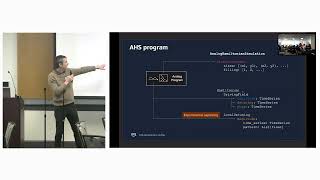
Quantum Phases of Rydberg Atoms on Shastry-Sutherland Lattice
Explore quantum phases and critical points of Rydberg atoms in frustrated Shastry-Sutherland lattice, validated through experimental testing on QuEra's quantum computer.
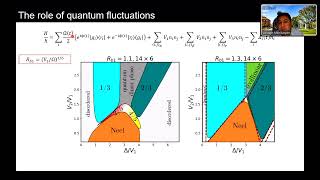
Quantum Phases of Rydberg Atoms on Shastry-Sutherland Lattice
Explore quantum phases and critical points of Rydberg atoms in frustrated Shastry-Sutherland lattice, validated through experimental testing on QuEra's quantum computer.
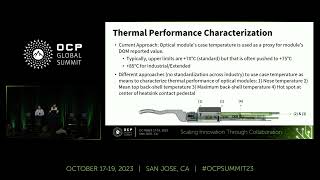
Thermal Characterization of High-Power Pluggable Optical Modules
Explore thermal management challenges and solutions for high-power optical modules, focusing on alternative methodologies beyond traditional case temperature measurements for next-gen transceivers.
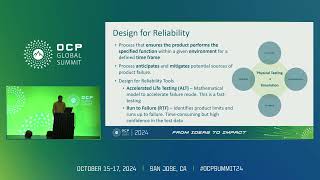
Interconnect Design Optimization and Predictive Reliability Models for Immersion Cooling Technology
Explore design optimization strategies for interconnect solutions in immersion cooling systems, focusing on reliability testing, failure modes, and performance enhancements for long-term durability.
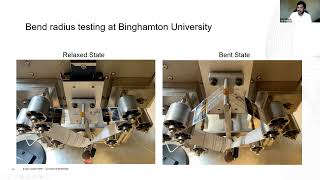
Metal Gel Conductor for Increased Durability in Flexible Hybrid Electronics Interfaces
Discover how Metal Gel conductors revolutionize Flexible Hybrid Electronics by enabling durable connections between rigid and soft components for reliable wearable technology and body-worn devices.
Towards Near-Term Quantum Simulation of Materials
Discover groundbreaking advances in quantum material simulation algorithms that reduce circuit depths by 6 orders of magnitude through innovative fermionic encoding and locality-based approaches.

물성 예측 마법사 - 화학과 딥러닝의 만남으로 세상을 예측하다
Discover how deep learning and chemistry combine to predict semiconductor material properties, revolutionizing development processes by reducing experimental needs and optimizing efficiency in manufacturing.
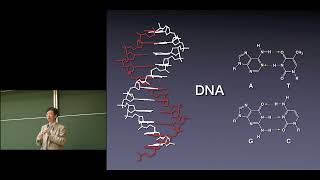
分子の自己組織化 - 2019年7月12日
Discover the fascinating principles of molecular self-assembly through an expert lecture by Professor Makoto Fujita, exploring how molecules spontaneously organize themselves into complex structures.
Moving Beyond Screening via Generative Machine Learning Models for Materials Discovery
Explore generative machine learning models for materials discovery, moving beyond screening to generate novel structures and chemistries using advanced algorithms and techniques.
Probing Water-2D Material Interfaces: Quantum and Classical Simulations on Defective and Rough Surfaces
Explore quantum and classical simulations of water-2D material interfaces, focusing on defects and roughness in hexagonal boron nitride. Gain insights into wettability, slip length, and interfacial properties for desalination and sensing applications.

Pre-training Molecular Graph Representation with 3D Geometry
Explore molecular graph representation learning, leveraging 3D geometry for enhanced drug and material discovery through self-supervised learning and the GraphMVP framework.

Quantitative Modeling of Magnetic Materials at the Atomic Scale
Explore quantitative modeling of magnetic materials at atomic scale, focusing on atomistic spin dynamics and quantum thermostat implementation for accurate thermodynamic calculations.
Using Sequence Data to Predict the Self-Assembly of Supramolecular Collagen Structures
Explore collagen self-assembly prediction using amino acid sequences. Learn to design custom periodic collagen structures for novel biomimetic materials.

Deltoidal Icositetrahedron Faceting on Alpha-Iron Crystals from the Moon's Surface
Explore crystallographic analysis of lunar iron crystals, examining unique deltoidal icositetrahedron faceting and its implications for understanding crystal growth in the lunar environment.
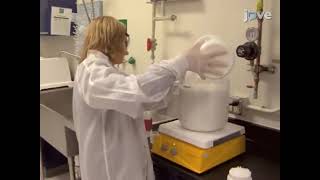
JOVE Convergent Polishing
Explore a convergent polishing process developed by Lawrence Livermore National Laboratory researchers for advanced materials and surfaces.
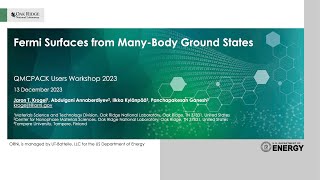
Fermi Surface Calculation with QMCPACK - 13/18
Explore Fermi surface calculations using QMCPACK in this advanced workshop presentation, focusing on cutting-edge techniques and applications in quantum physics.