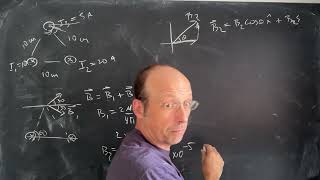
Magnetic Force on Three Wires - Physics Problem Solving
Solve complex magnetic force problems involving three wires using vector addition techniques for precise direction and magnitude calculations.
College Physics: Electromagnetic Induction - Chapter 20 Summary
Explore electromagnetic induction, covering motional EMF, magnetic flux, Faraday's law, and inductors in college-level physics.
College Physics Chapter 19 Summary - Magnetic Forces and Fields
Explore magnetic forces and fields, from basic concepts to advanced applications like particle behavior and solenoid fields. Master key principles through demonstrations and examples.

Nuclear Propulsion – From the Somewhat Reasonable to the Utterly Insane - Easterhegg 2019
Explore nuclear propulsion systems, from practical applications to outlandish concepts. Discover the potential and risks of harnessing nuclear reactions for rockets and other propulsion methods.
Testing the Massive Black Hole Paradigm and GR with Infrared Interferometry
Explore cutting-edge infrared interferometry techniques to study massive black holes and test General Relativity, featuring the GRAVITY near-IR beam combiner and its groundbreaking observations.
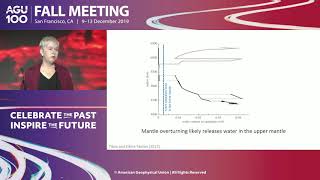
Evolution of the Differentiated Earth
Explore Earth's early evolution from accretion to habitability, covering magma oceans, differentiation, magnetic field formation, and the emergence of life-sustaining conditions.

Getting Beyond Earth - Exploring the Solar System
Explore the solar system through expert presentations on past and present missions, gaining insights into planetary bodies and Earth while understanding the importance of continued space exploration.
Design Optimal Discrete Magnetic Coils with Wolfram Language
Optimize discrete magnetic coil designs using spherical harmonic mapping and Wolfram Language's root-finding capabilities for precise, compact, and easily fabricated magnetic field generation.
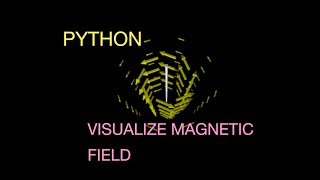
Building a Visual Model of the Magnetic Field with Python
Visualize magnetic fields around current-carrying wires using Python. Create interactive simulations to explore electromagnetic concepts.
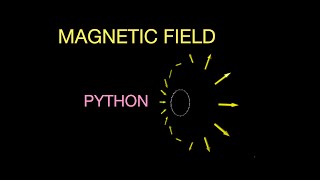
Visualizing the Magnetic Field of a Current Loop with Python
Visualize magnetic fields around current loops using Python. Learn to plot and scale vector fields for enhanced understanding.
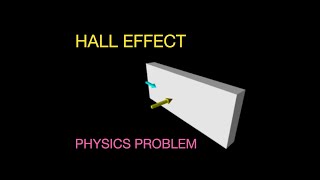
Physics Problem: Lorentz Force and the Hall Effect Sensor
Explore the Lorentz Force and Hall Effect through a practical problem, calculating electric fields, drift velocity, and potential difference in a metal bar.
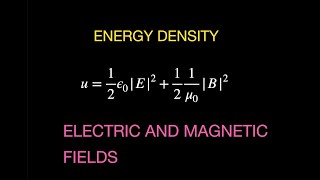
Finding the Energy Density for Electric and Magnetic Fields
Derive electric and magnetic field energy densities through step-by-step calculations and explanations.
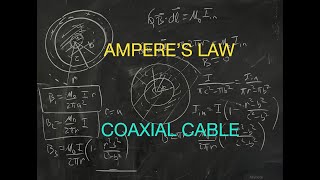
Ampere's Law: Magnetic Field due to a Coaxial Cable
Explore magnetic fields in coaxial cables using Ampere's Law, understanding key principles and applications in electromagnetic theory.
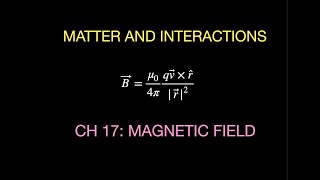
Matter and Interactions: Magnetic Field - Chapter 17 Summary
Explore magnetic fields, currents, and dipoles through interactive demos and key concepts in electromagnetism.
Magnetic Field due to a Wire - Python Calculation and Visualization
Explore magnetic fields created by wires through calculations and Python visualizations. Master theoretical concepts and practical applications in electromagnetism.
Magnetic Field due to a Loop of Current - Python Calculation Included
Derive the magnetic field from a current loop and perform numerical calculations using Python, enhancing understanding of electromagnetic principles.
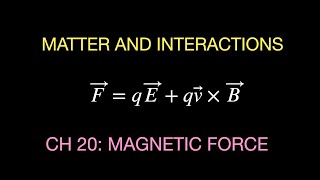
Matter and Interactions: Magnetic Force - Chapter 20 Summary
Explore magnetic force concepts, from charge interactions to practical applications like electric motors and the Hall Effect.
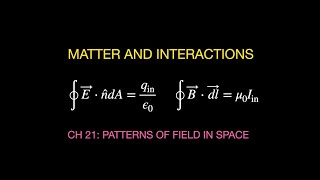
Matter and Interactions: Patterns of Fields in Space - Chapter 21 Summary
Explore fundamental concepts of electromagnetic fields, including flux, Gauss's Law, and Maxwell's equations, with practical applications and in-depth explanations.
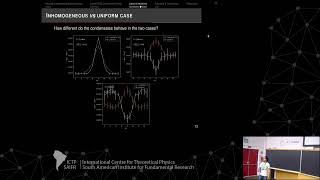
Lattice QCD with an Inhomogeneous Magnetic Background
Explore Lattice QCD simulations with inhomogeneous magnetic fields, uncovering their impact on strongly interacting matter and advancing our understanding of quantum chromodynamics.
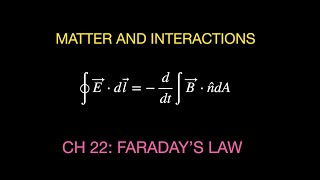
Faraday's Law and Electromagnetic Induction - Chapter 22 Summary
Explore Faraday's Law, Lenz's Law, and Maxwell's Equations. Understand inductors, transformers, and magnetic field energy density. Gain insights into electromagnetic principles and applications.
Physics 2 Course Summary - All the Big Ideas in 30 Minutes
Explore key concepts of calculus-based physics, covering second semester topics from Matter and Interactions textbook in a concise overview.