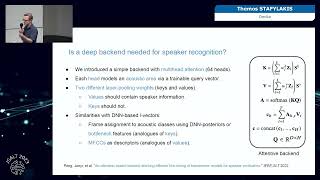
Extracting Speaker and Emotion Information from Self-Supervised Speech Models
Explore techniques for extracting speaker and emotion data from self-supervised speech models, enhancing speech recognition and analysis capabilities.
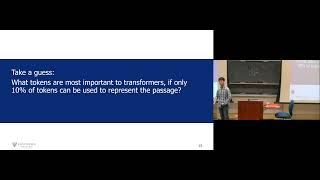
Nugget: Neural Agglomerative Embeddings of Text
Explore dynamic text embedding with Nugget, a novel approach for encoding language into meaningful units, enhancing semantic comparison and expanding contextual windows in language models.
Foundation Models and the Transfer of Embodied Autonomy
Explore challenges in developing foundation models for sequential decision-making, including transfer learning, and discuss future research directions in embodied autonomy.

Speech and Audio Processing in Non-Invasive Brain-Computer Interfaces at Meta
Explore non-invasive neural interfaces for AR devices using EMG signals, focusing on speech and audio technologies to enhance human-computer interaction and egocentric machine intelligence.
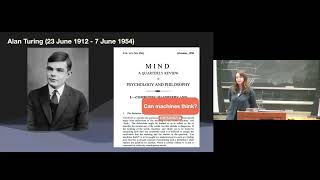
A Universe To Be Decided: Towards Specialized Foundation Models for Advancing Astronomy
Explore specialized foundation models in astronomy, including AstroLLaMa-1 and AstroLLaVA, to enhance scientific inquiry and democratize access to astronomical knowledge.
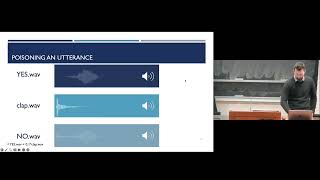
Adversarial and Poisoning Attacks Against Speech Systems - Where to Find Them
Explore vulnerabilities in machine learning systems, focusing on poisoning and adversarial attacks. Learn strategies, defense mechanisms, and implications for AI security.
Fighting Bias from Bias: Robust Natural Language Techniques to Promote Health Equity
Explore AI's role in addressing health disparities, examining clinical phenotyping, language model robustness, and efforts to identify stigmatizing language in medical records.
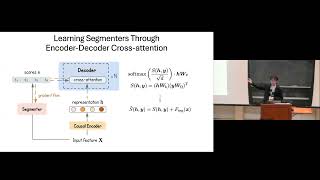
Streaming Sequence Transduction through Dynamic Compression
Explore efficient sequence-to-sequence transduction with STAR, a novel Transformer-based model for streaming ASR and simultaneous speech-to-text tasks.
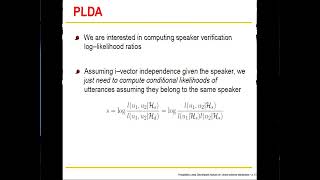
Probabilistic Linear Discriminant Analysis of i-Vector Posterior Distributions
Explore probabilistic linear discriminant analysis for i-vector posterior distributions in speaker recognition, enhancing understanding of advanced speech processing techniques.

Probabilistic Simulation Methods for Machine Learning in Science and Technology
Explore probabilistic numerics in machine learning, bridging computation and inference. Gain insights into physics-informed ML and adaptive solver integration for enhanced efficiency in scientific computing.
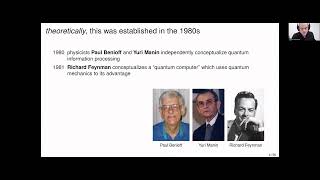
Quantum Computing for AI - Hype or Hope?
Explore quantum computing's potential impact on AI, examining promises, limitations, and realistic applications in machine learning and Bayesian network inference.
Aligning AI to Everyone via Reinforcement Learning
Explore reinforcement learning techniques for aligning AI with human values, fostering cooperation and trust in intelligent decision-making systems.
RLHF: How to Learn from Human Feedback with Reinforcement Learning
Explore reinforcement learning techniques for incorporating human feedback in AI systems, enhancing multi-agent and human-AI interactions in social contexts.
Concordia Contest 2024 - Basic Agent Development Tutorial
Develop cooperative AI agents for text-based environments using the Concordia framework. Advance language model intelligence in open-ended worlds similar to tabletop RPGs.
Computational Social Choice and AI Value Learning
Explore computational social choice and AI value learning, focusing on misspecification in RLHF, model interpretability, and foundation model capability evaluations.
Self-Play in Artificial Intelligence - Lecture by Noam Brown
Explore advanced AI techniques in imperfect-information games, focusing on self-play algorithms and their applications in poker and beyond.

Unsupervised Environment Design
Explore automatic generation of environments for training RL agents, from GenIE to Unsupervised Environment Design, bridging classical decision theory and deep learning.
Why an Event-Native Mindset Is Essential for Data Architecture
Embrace an Event-Native Mindset to build a responsive data architecture. Learn to model events, create an enterprise nervous system, and enable real-time action and prediction using event-driven knowledge architecture.
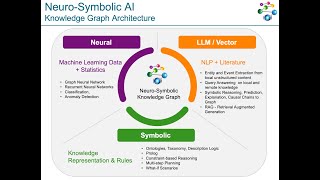
Neuro-Symbolic AI and AllegroGraph 8.0: Revolutionizing Enterprise Knowledge Graphs
Explore AllegroGraph 8.0's revolutionary features in Enterprise Knowledge Graphs and Neuro-Symbolic AI. Learn how it integrates LLMs, Machine Learning, Symbolic AI, and Logic to enhance AI accuracy and reliability.
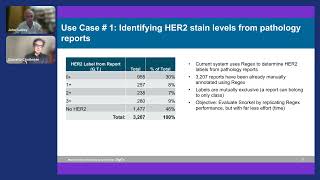
The Art of Building AI Systems - Rapid Training Data Creation
Learn techniques for rapidly creating annotated training data to build accurate and robust AI systems using clinical reports.
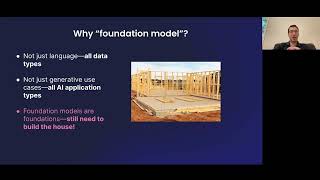
Data-Centric Development is Key to Production-Level AI
Explore data-centric AI development approaches for adapting foundation models to complex use cases, focusing on techniques for pre-training, instruction-tuning, and task-specific fine-tuning.