
Unify and Baseten - Boosting LLM Deployment
Supercharge LLM deployment by integrating Baseten model endpoints into Unify Platform. Learn dynamic routing, open-source model usage, and practical demonstrations for optimized AI workflows.
Influential Data Retrieval Explained
Explore RapidIn, a scalable framework for estimating training data influence in large language models. Learn about token-wise retrieval and its two-stage approach.

Efficient Multi-Prompt Evaluation Explained
Explore PromptEval, a novel method for estimating LLM performance across multiple prompts, enhancing evaluation accuracy within practical budgets. Gain insights from University of Michigan researcher Felipe Polo.
Aligning LLM-Assisted Evaluation of LLM Outputs with Human Preferences
Explore EvalGen, an interface for automated assistance in generating evaluation criteria and implementing assertions for LLM outputs aligned with human preferences.

The Janus Interface - Privacy Risks in Fine-Tuning Large Language Models
Explore how fine-tuning in large language models can amplify privacy risks, focusing on the novel Janus attack that recovers forgotten personal information from pre-training data.
Machine Learning in Congenital Heart Disease - From Information to Intelligence
Explore machine learning applications in congenital heart disease, transforming cardiac imaging data into intelligent diagnostic and treatment tools.
Deep Learning in NLP and Beyond - 2015
Explore advanced machine learning in NLP, focusing on recurrent neural networks and deep learning. Gain insights into future research directions for developing language-understanding machines.
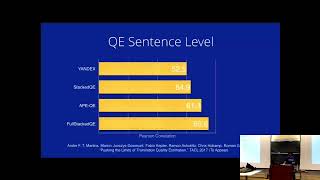
Combining AI and Crowd for Professional-Quality Translation at Scale
Explore how Unbabel combines AI and crowdsourcing to deliver fast, high-quality translations at scale, breaking down language barriers between companies and customers.
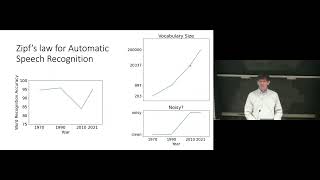
Zipf's Law Suggests a Three-Pronged Approach to Inclusive Speech Recognition
Explore Zipf's law in speech recognition, from frequent words to OOV challenges. Discover how power-law distributions impact language technologies and inclusive ASR development for diverse communities.
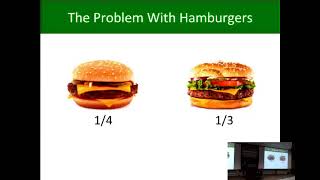
Towards Fast Autonomous Learners: Advances in Reinforcement Learning - 2015
Explore reinforcement learning for AI agents interacting with humans, focusing on sample efficiency and transfer learning to improve educational tools and decision-making systems.
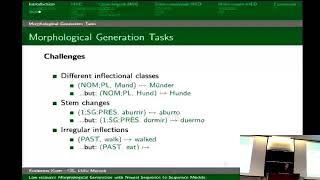
Low-resource Morphological Generation with Neural Sequence-to-Sequence Models
Explore neural sequence-to-sequence approaches for morphological generation in low-resource languages, including multi-task learning, cross-lingual transfer, and semi-supervised techniques.
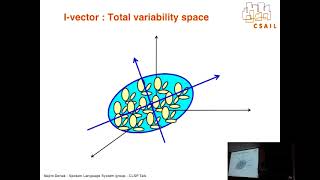
I-Vector Representation Based on GMM and DNN for Audio Classification - 2015
Explore I-vector approach for audio classification, including GMM mean modeling and recent subspace techniques. Learn about applications in language and dialect recognition using deep neural networks.
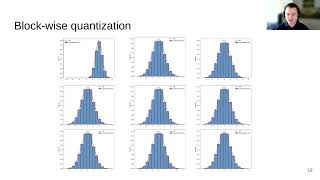
8-bit Methods for Efficient Deep Learning
Explore 8-bit methods for efficient deep learning, focusing on quantization techniques, optimizers, and inference for large language models to improve efficiency without performance loss.
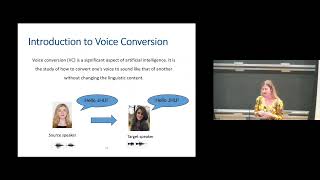
Speech Synthesis and Voice Conversion: Machine Learning Can Mimic Anyone's Voice
Explore cutting-edge voice conversion techniques, their potential, and limitations. Learn about speech synthesis advancements and resources for expressive voice conversion research.
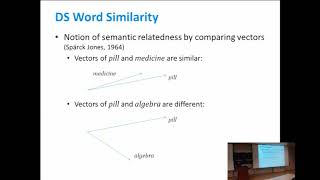
Towards Large-Scale Natural Language Inference with Distributional Semantics
Explore natural language inference using distributional semantics, covering summarization, semantic models, and knowledge induction for advanced text analysis.
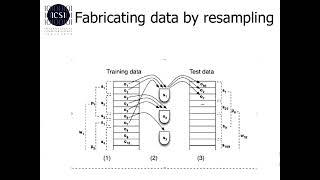
OUCH: Investigating Limitations of Hidden Markov Models in Speech Recognition
Explore speech recognition challenges, focusing on Hidden Markov Model limitations. Examine frame-to-frame independence assumptions and their implications for improving recognition accuracy.
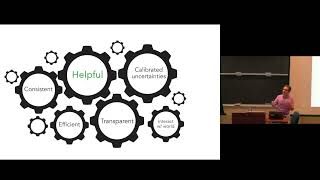
Building Helpful Language Models - Challenges and Solutions
Explore challenges and solutions in aligning language models, including self-instruction, source tracing, and web interaction. Gain insights into building robust, transparent AI systems for practical applications.
Automatic Detection and Monitoring of Parkinson's Disease from Language and Speech
Explore cutting-edge techniques for detecting and monitoring Parkinson's disease through speech and language analysis, presented by PhD student Anna Favaro from Johns Hopkins University.
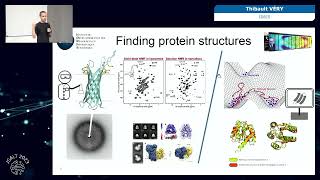
Deep Learning for Protein Structure Discovery
Explore deep learning techniques for uncovering protein structures, revolutionizing molecular biology and drug discovery.
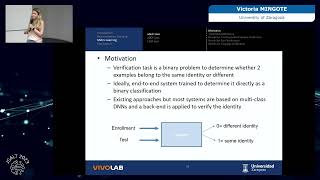
Representation and Metric Learning Advances for Face and Speaker Biometric Systems
Explore advances in representation and metric learning for face and speaker biometric systems, enhancing accuracy and efficiency in identity verification.
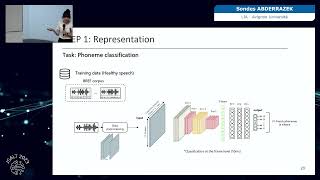
Deep Learning Interpretability and Explainability of Speech in a Clinical Context
Explore deep learning interpretability and explainability of speech in clinical settings, focusing on advanced techniques and their practical applications.